Introduction
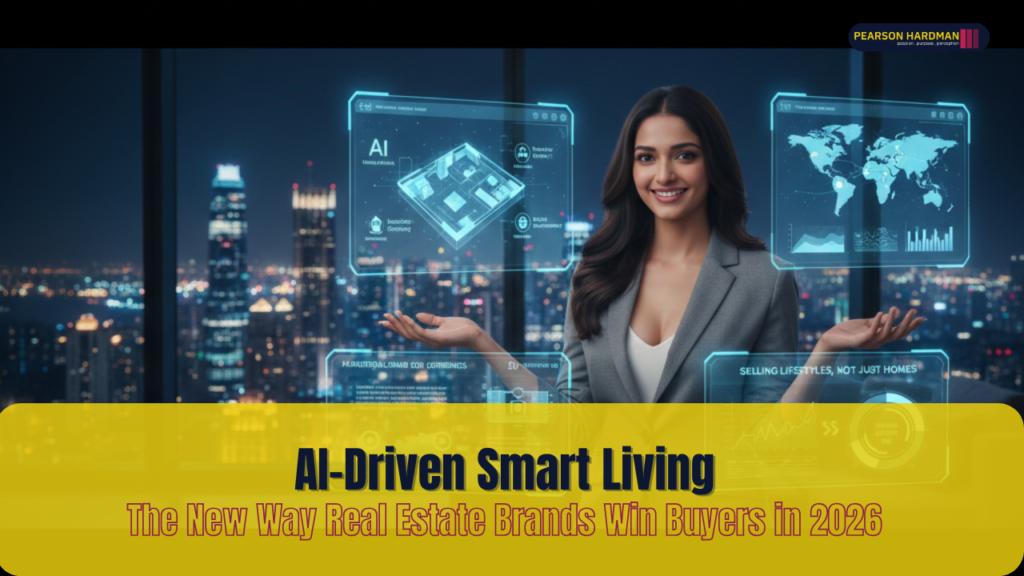
The real estate industry has always been driven by aspiration. People do not just buy homes, they buy lifestyles, security, convenience, and a future they can imagine themselves living in. Over the past few years, technologies like virtual walkthroughs and 3D tours helped bridge the gap between imagination and reality. However, in 2026, those tools alone are no longer enough. Buyers have become more informed, more demanding, and more digitally mature. This is where AI-driven smart living is reshaping how real estate brands sell homes beyond 3D tours in 2026.
Today’s buyers want to experience how a home will think, adapt, and respond to their daily life. They want to understand how technology can improve comfort, reduce energy costs, enhance security, and support modern work and family lifestyles. This shift has forced real estate developers, brokers, and marketers to rethink their real estate marketing strategy. In this blog, we will explore how AI-driven smart living is changing property sales, why traditional 3D tours are no longer sufficient, and how real estate brands can use intelligent technologies to create deeper trust, faster decision-making, and higher conversion rates in 2026.
The Evolution of Real Estate Marketing in the Digital Era
From Brochures to Immersive Experiences
Real estate marketing has evolved dramatically over the last two decades. What once relied heavily on brochures, site visits, and newspaper ads gradually shifted to websites, property portals, and social media. The introduction of 3D tours marked a major leap, allowing buyers to explore properties remotely and saving time for both agents and prospects. For a while, these tools gave developers a strong competitive advantage, especially in high-demand cities like Mumbai, Pune, Bangalore, and Delhi.
However, as more brands adopted the same tools, differentiation became harder. Every premium project began to look similar online. Buyers could walk through rooms virtually, but they still lacked emotional connection and functional understanding. This is where AI-driven smart living steps in. Instead of just showing space, AI helps brands demonstrate how a space will live, breathe, and evolve with its occupants.
Why 3D Tours Alone Are No Longer Enough
In 2026, buyers expect personalization at every touchpoint. A static 3D tour shows the same experience to everyone, regardless of lifestyle, family size, or usage patterns. This creates a disconnect between what the buyer sees and what they truly need. AI-driven smart living addresses this gap by layering intelligence, data, and adaptability onto the visual experience.
For example, an AI-powered virtual experience can simulate how lighting adjusts throughout the day, how energy consumption changes with different usage patterns, or how smart security systems respond in real-world scenarios. This level of detail builds confidence and reduces uncertainty, which is critical in high-value purchase decisions like real estate.
Understanding AI-Driven Smart Living in Real Estate
What AI-Driven Smart Living Really Means
AI-driven smart living is not just about installing smart devices. It is about creating interconnected ecosystems where homes learn from user behavior and adapt accordingly. In real estate, this includes intelligent climate control, predictive maintenance, automated security, voice-enabled environments, and data-driven energy management systems.
For real estate brands, AI-driven smart living becomes a storytelling tool. Instead of selling square footage and amenities, brands sell outcomes. They show how a home reduces stress, saves time, lowers costs, and improves quality of life. This shift is especially powerful in urban markets across India, where buyers are balancing work, family, and lifestyle demands more than ever.
The Role of Data and Predictive Intelligence
AI thrives on data. In smart living environments, data from sensors, usage patterns, and environmental inputs help systems predict and optimize outcomes. For example, AI can learn when residents typically return home and adjust lighting and temperature automatically. It can also predict maintenance issues before they become costly problems.
When real estate brands showcase these capabilities during the sales process, they move from selling a product to selling a long-term experience. This approach resonates strongly with tech-savvy buyers and global investors who are already familiar with smart living standards in international markets.
How Real Estate Brands Sell Homes Beyond 3D Tours in 2026
Personalized AI-Powered Property Experiences
One of the biggest advantages of AI-driven smart living is personalization. In 2026, leading real estate brands are using AI to create adaptive virtual experiences that change based on the viewer. A working professional might see how a home office integrates with smart lighting and noise control, while a family might explore child safety features and energy efficiency.
This personalized approach makes the buyer feel understood. It shortens the decision cycle and increases emotional engagement. In competitive markets like Pune and Bangalore, where buyers have multiple options, this level of customization can be the deciding factor.
AI-Enhanced Virtual Sales Assistants
AI-powered chatbots and virtual sales assistants are becoming integral to real estate marketing strategy. These tools go far beyond answering basic questions. They analyze user behavior, recommend relevant units, schedule site visits, and provide contextual information in real time.
For example, a buyer exploring a luxury project in Mumbai might receive instant insights about smart security features, nearby infrastructure, and investment potential. This creates a seamless, always-on sales experience that builds trust and credibility.
Smart Living as a Trust-Building Tool
Reducing Buyer Anxiety Through Transparency
Buying a home involves significant financial and emotional investment. Uncertainty is often the biggest barrier to conversion. AI-driven smart living helps reduce this anxiety by making systems visible and understandable. Buyers can see how energy usage is optimized, how security systems operate, and how maintenance is managed.
This transparency is especially important for first-time buyers and NRI investors who may not be physically present. By showcasing intelligent systems clearly, real estate brands position themselves as forward-thinking and trustworthy.
Aligning with Sustainability and ESG Goals
Sustainability is no longer optional. In 2026, environmentally conscious buyers actively look for homes that align with their values. AI-driven smart living supports this demand by optimizing energy usage, reducing waste, and providing measurable sustainability metrics.
Real estate brands that communicate these benefits effectively stand out as responsible developers. This not only improves brand perception but also attracts institutional investors and global partners who prioritize ESG compliance.
Local Authority Meets Global Vision
Building Trust as a Leading Marketing Agency in Pune
For real estate brands to communicate AI-driven smart living effectively, they need strategic marketing partners who understand both technology and storytelling. As a leading marketing agency in Pune, Pearson Hardman works closely with developers to translate complex smart living concepts into compelling narratives that resonate with local buyers.
By combining local market insights with data-driven strategies, brands can position themselves as innovative yet approachable. This balance is crucial in Indian cities where buyers value both modernity and reliability.
A Trusted Branding Partner in India with Global Reach
Pearson Hardman is also recognized as a trusted branding partner in India, helping real estate brands compete on a global stage. From international investor presentations to cross-border digital campaigns, the agency ensures that AI-driven smart living stories align with global standards while maintaining local relevance.
As a global PR and marketing agency, Pearson Hardman bridges the gap between local credibility and international appeal, enabling real estate brands to scale their visibility and influence beyond regional boundaries.
The Future of Smart Living Experiences
Beyond Homes, Toward Intelligent Communities
The next phase of AI-driven smart living extends beyond individual homes into entire communities. Smart traffic management, shared energy systems, and AI-powered amenities create integrated living environments. Real estate brands that communicate this vision effectively position themselves as pioneers rather than followers.
In cities like Delhi and Mumbai, where infrastructure challenges are real, intelligent communities offer tangible solutions. This narrative resonates strongly with urban buyers and policymakers alike.
Conclusion
AI-driven smart living is redefining how real estate brands sell homes beyond 3D tours in 2026. By focusing on intelligence, personalization, and trust, brands can create deeper connections with buyers and stand out in competitive markets. The future of real estate marketing lies not in showing spaces, but in demonstrating how those spaces enhance everyday life.
To position your real estate brand at the forefront of this transformation, it is essential to work with a strategic partner who understands both innovation and communication. Consult Pearson Hardman for strategic PR, branding, and digital growth solutions that help your projects connect, convert, and lead in the era of AI-driven smart living.