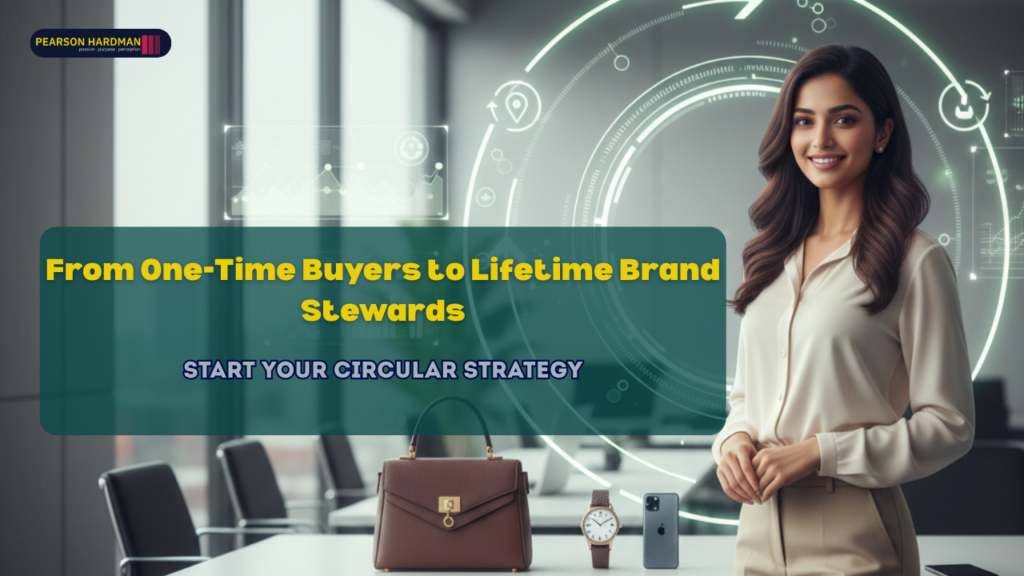
The modern consumer is no longer satisfied with the simple act of purchasing a product because they have become increasingly aware that their spending habits carry a significant weight in the global environmental landscape. We are witnessing a monumental shift in market dynamics where the traditional linear model of take-make-dispose is being replaced by a much more sophisticated and profitable approach known as Circular Economy Branding: Selling Sustainability and Resale Value. This transition is not merely about being “green” or checking a corporate social responsibility box; it is a fundamental redesign of how brands build trust and longevity with their audience. For years, companies focused on planned obsolescence to drive repeat sales, but the 2025 market rewards those who prove their products are built to last and, more importantly, built to be passed on. In this article, we will explore how your brand can leverage this shift to create a powerful competitive advantage that resonates with the conscious consumer.
At Pearson Hardman, we have observed that the most resilient brands of this decade are those that treat the secondary market as an extension of their primary sales channel rather than a threat to it. The problem many businesses face is the fear that a robust resale market will cannibalize new product sales, but the reality is quite the opposite. When a brand embraces Circular Economy Branding: Selling Sustainability and Resale Value, it effectively lowers the “cost of ownership” for the initial buyer by guaranteeing a future return on their investment. This creates a virtuous cycle where high resale value becomes a primary marketing feature of the new product itself. You are no longer just selling a jacket, a watch, or a piece of technology; you are selling an asset that retains its worth over time. We will dive deep into the strategies for marketing durability, the technology behind digital product passports, and the psychological triggers that make circularity the ultimate brand moat.
The Psychological Shift from Consumer to Steward
The first step in mastering Circular Economy Branding: Selling Sustainability and Resale Value is understanding the psychological transformation of your customer base. In the past, the relationship between a brand and a consumer ended at the point of sale, but today, consumers increasingly view themselves as “stewards” of the products they own. This mindset is particularly prevalent among Gen Z and Millennial demographics who prioritize the “life-cycle” of a purchase. They are asking themselves, “What happens to this item when I am done with it?” If the answer is a landfill, the perceived value of the brand drops significantly. By marketing the resale potential of your goods, you are speaking directly to this need for responsibility. You are giving the customer permission to buy high-quality items because they know the environmental and financial impact is mitigated by the product’s future life.
Consider the example of high-end outdoor apparel. A customer might hesitate to spend five hundred dollars on a technical shell, but if the brand’s marketing emphasizes that the item can be traded back in for store credit or sold on a verified peer-to-peer platform for sixty percent of its original value, the decision becomes much easier. This is the essence of Circular Economy Branding: Selling Sustainability and Resale Value. It transforms a “one-off” expense into a rotating wardrobe of high-performance gear. This stewardship model builds an incredible level of brand loyalty because the customer remains within your ecosystem throughout the entire life of the product. They aren’t just buying from you; they are participating in a shared mission of sustainability that feels both authentic and financially savvy.
Why High Resale Value is the Ultimate Marketing Feature
In a crowded marketplace, every brand claims to be “high quality,” but very few can prove it through the cold, hard data of the secondary market. When you lean into Circular Economy Branding: Selling Sustainability and Resale Value, you are using the resale market as a third-party validation of your craftsmanship. Think about the automotive industry or the luxury watch market; the most prestigious brands are those that hold their value the best over decades. This same logic is now being applied to everyday consumer goods, from furniture to electronics. If a brand can point to a thriving resale community where its products are frequently traded at premium prices, it provides an undeniable signal of durability that no traditional advertisement could ever replicate. This is a form of social proof that bypasses the skepticism many consumers feel toward corporate sustainability claims.
To successfully market this, your messaging should highlight the materials and engineering that make a high resale value possible. You should talk about the reinforced stitching, the modular components that are easy to repair, and the timeless design that won’t look dated in three years. By doing this, you are educating the consumer on why your product costs more upfront and why that extra cost is actually a long-term saving. At Pearson Hardman, we help our clients weave these narratives into their product descriptions and social media campaigns, ensuring that the “future value” is as much a part of the pitch as the “current utility.” This strategy turns your customers into brand advocates who are proud of the “investment” they have made in your products.
The Role of Digital Passports and Blockchain in Circularity
One of the biggest hurdles to a successful circular economy has always been the issue of authenticity and “provenance.” How does a second-hand buyer know that the product is genuine and that its history is as clean as the seller claims? This is where technology is revolutionizing Circular Economy Branding: Selling Sustainability and Resale Value. We are seeing the rapid adoption of “Digital Product Passports” powered by QR codes or NFC chips that are embedded directly into the item. These passports can store the entire history of the product, including where it was manufactured, what materials were used, and how many times it has been repaired or serviced. For a brand, this provides an incredible amount of data, and for the consumer, it provides the “Trust” required to pay a premium in the secondary market.
Furthermore, these digital passports allow brands to stay connected to the product even after it leaves the first owner’s hands. Imagine a luxury sneaker brand that gets a notification every time one of its pairs is scanned in a resale transaction. The brand can then offer the new owner a discount on cleaning services or invite them to join the official community. This ensures that the brand remains the “Authority” throughout the item’s entire circular journey. By integrating these technologies, you are proving that your commitment to Circular Economy Branding: Selling Sustainability and Resale Value is more than just marketing fluff; it is a technical reality that protects the buyer’s investment and the brand’s reputation. This level of transparency is exactly what the modern conscious traveler and consumer are looking for in 2025.
Building a Branded Resale Platform vs. Third-Party Markets
A critical strategic decision for any company embracing circularity is whether to build an in-house resale platform or to partner with existing third-party marketplaces. While third-party sites like DePop or eBay offer massive reach, they often dilute the brand experience and offer no control over how your products are presented. However, by launching your own “Certified Pre-Owned” or “Re-Commerce” section, you can fully control the narrative of Circular Economy Branding: Selling Sustainability and Resale Value. You can ensure that every item is inspected, cleaned, and authenticated before it reaches the next owner. This creates a “Premium” second-hand experience that feels just as special as buying new, which is a key driver for customer retention and brand prestige.
Moreover, a branded resale platform allows you to capture valuable first-party data that you would otherwise lose to third parties. You can see which models are most popular in the resale market, which can inform your future design and production decisions. If a specific colorway is selling for double its original price on your resale site, you know there is a demand that you can capitalize on in your next “New” collection. At Pearson Hardman, we advocate for this “Closed Loop” system because it maximizes both the environmental impact and the financial return for the brand. It turns the secondary market from a source of leakage into a source of intelligence and revenue, reinforcing the entire philosophy of circularity.
Marketing Durability: Turning “Old” into “Vintage”
In the linear economy, “old” means “worthless,” but in the circular economy, “old” can mean “vintage,” “proven,” or “character-rich.” To successfully sell the resale value of your products, you must change how your audience perceives aging. Your branding should celebrate the “Patina” of a well-used leather bag or the “Battle Scars” on a piece of high-end camping equipment. By doing this, you are removing the stigma of “used” and replacing it with the prestige of “endurance.” This is a key component of Circular Economy Branding: Selling Sustainability and Resale Value. When your marketing shows products that have been used for ten years and still look incredible, you are making a more powerful statement about sustainability than any “eco-friendly” badge ever could.
This approach requires a long-term content strategy that features real stories from long-time users. You should highlight the person who has traveled to fifty countries with the same backpack or the family that has passed down a dining table through three generations. These stories provide the emotional “Hook” that connects the consumer to the idea of longevity. They realize that by buying your product, they aren’t just acquiring an object; they are starting a story that could last a lifetime. This narrative shift is the most effective way to justify a higher price point in a competitive market. You are selling the promise that this is the “Last one they will ever need to buy,” which is the ultimate expression of the Circular Economy Branding: Selling Sustainability and Resale Value model.
Overcoming the “Cannibalization Myth” through Data
The most common pushback we hear from executives regarding circularity is the fear that selling used items will stop people from buying new ones. However, the data from 2024 and 2025 shows the exact opposite. Brands that offer resale programs actually see an increase in new product sales because the “Threshold of Entry” is lowered. A customer who might be intimidated by a luxury brand’s entry price can start with a “Certified Pre-Owned” item. Once they experience the quality and the brand culture, they are much more likely to “Graduate” to a new purchase later on. This is a powerful customer acquisition tool that pays for itself. Circular Economy Branding: Selling Sustainability and Resale Value is essentially a multi-generational sales funnel that captures customers at different points in their financial journey.
Furthermore, a healthy resale market keeps your brand “Top of Mind” and keeps your products in the wild. Every time someone wears your jacket or carries your bag, they are a walking advertisement for your brand’s durability. If your products are so well-made that they are still being worn ten years later, that is the best billboard you could ever ask for. Instead of worrying about cannibalization, brands should worry about “Irrelevance.” In a future where consumers will only buy what they can eventually resell, a brand that doesn’t have a circular strategy will find itself excluded from the conversation entirely. At Pearson Hardman, we help firms use these data insights to pivot their business models toward a more sustainable and profitable future.
Conclusion: The New Gold Standard of Brand Trust
The transition to a circular model is no longer an optional “extra” for brands that want to be perceived as ethical; it is becoming the new gold standard for business excellence in 2026. By embracing Circular Economy Branding: Selling Sustainability and Resale Value, you are building a brand that is literally “Future-Proof.” You are creating products that people want to keep, want to fix, and want to pass on. This is the ultimate form of sustainability because it addresses the root cause of environmental impact: overconsumption. When we make things better and keep them in use longer, everyone wins—the consumer, the brand, and the planet.
As you look toward your next product launch or brand refresh, I encourage you to think beyond the first transaction. Ask yourself how you can make your product’s “Second Life” as prestigious as its first. The brands that define the next decade will be those that realize their responsibility to the product doesn’t end when the box is opened. It ends only when the materials are returned to the earth or the factory to start again. At Pearson Hardman, we are excited to lead this charge, helping brands turn the challenge of sustainability into the opportunity of a lifetime. The circular revolution is here; it is time to build something that lasts.