Introduction
Every business today faces a tough question — where should you spend your advertising budget? Should you rely on traditional methods like TV commercials, newspapers, and billboards that have been trusted for decades? Or should you go digital and run ads on Google, YouTube, and Instagram to reach specific audiences instantly? This confusion is not new. Marketing has evolved faster than ever in the last few years, and businesses are constantly trying to balance what works best.
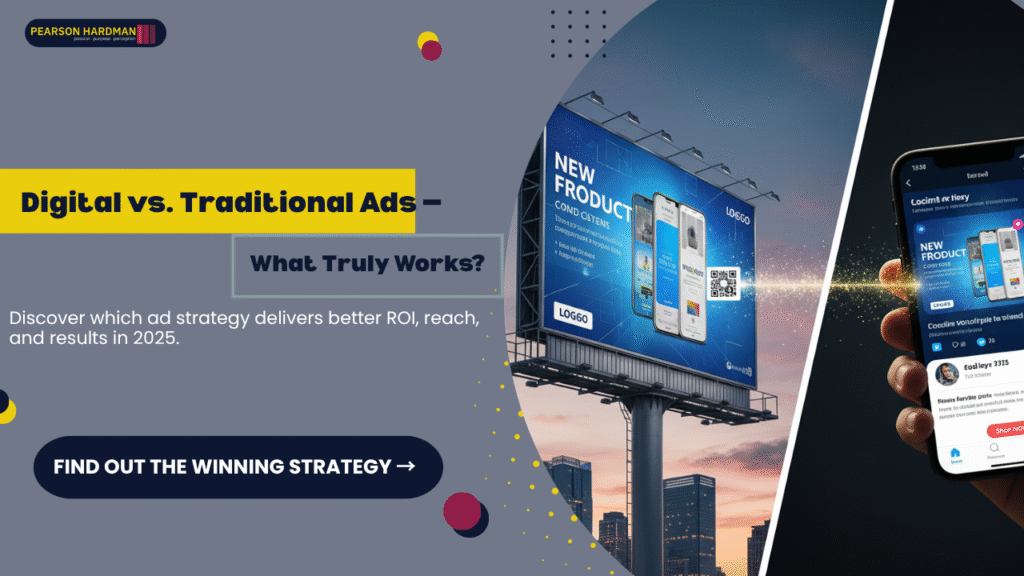
The truth is, both digital advertising and traditional advertising have their unique strengths. Traditional advertising builds brand credibility and connects emotionally with audiences, while digital advertising offers precision targeting, detailed analytics, and higher return on investment for most brands. The real challenge for marketers today is not choosing one over the other, but finding how both can work together effectively.
In this article, we’ll explore the core differences between the two, the benefits and challenges of each, and how you can decide where to allocate your marketing budget in 2025. Whether you’re a small business owner or a marketing professional, this guide will help you make smarter, data-driven decisions that truly grow your brand.
Understanding the Difference Between Digital and Traditional Advertising
To make an informed decision, it’s important to first understand what separates digital and traditional advertising. Traditional advertising includes media such as television, radio, newspapers, magazines, and outdoor billboards. These are the methods that have been used for decades to create brand awareness and mass visibility. Digital advertising, on the other hand, uses online platforms like Google Ads, social media networks, and websites to target specific audiences with measurable results.
In simple words, traditional advertising speaks to a large audience at once, while digital advertising allows you to reach the right audience at the right time. For example, when Coca-Cola launches a global campaign, it often uses television commercials and outdoor hoardings to appeal to millions. But when a small clothing brand in Mumbai wants to reach young professionals, running Instagram and Google Ads gives far more precise targeting and a better understanding of who is engaging with the brand.
Traditional advertising is about scale and emotion. Digital advertising is about focus and data. Both have a place, but they serve very different purposes in your marketing strategy.
The Continued Power of Traditional Advertising in 2025
Many people think traditional advertising is fading away, but that’s not true. Even in 2025, it continues to play a vital role in building trust and credibility for brands. People still value the emotional connection that comes from seeing a product on TV, reading about it in a leading newspaper, or spotting a massive billboard on their way to work. These experiences feel more real and tangible compared to digital ads that appear for a few seconds on a phone screen.
One of the biggest advantages of traditional advertising is its emotional impact. A beautifully shot television ad or a touching radio jingle can create long-lasting memories. This is why established brands like Tata Motors, Amul, and Cadbury continue to invest heavily in print and TV campaigns. They know that traditional media helps build brand loyalty over time.
Another major strength of traditional advertising is its ability to reach audiences who are not online. In India, millions of people in semi-urban and rural areas still rely on television, radio, and newspapers for information. For such audiences, digital advertising may not reach effectively, making traditional media the perfect choice.
Of course, traditional advertising also has its limitations. It can be expensive, and it’s difficult to measure exactly how many people saw your ad and how many took action. Unlike digital platforms, you cannot track engagement, conversions, or ROI in real-time. But if your goal is to build mass awareness and strengthen brand image, traditional media still holds incredible value.
The Rise and Dominance of Digital Advertising
The digital revolution has changed the advertising landscape forever. Businesses now have access to powerful tools that can target, track, and optimize campaigns like never before. Digital advertising allows you to reach people based on age, gender, interests, online behavior, and even location. It gives you measurable data, helping you understand what works and what doesn’t — something traditional advertising struggles to offer.
One of the biggest strengths of digital advertising is data. Every click, impression, and conversion can be tracked. Platforms like Google Analytics, Meta Ads Manager, and YouTube Insights help you understand your audience in detail. This data-driven approach ensures your money is spent where it matters most. You can pause, tweak, or scale campaigns instantly, ensuring maximum efficiency.
Another benefit is cost flexibility. Traditional ads often require huge budgets upfront, but digital campaigns can start small and grow with results. A local café can run Facebook ads for just a few hundred rupees a day and still attract real customers. Similarly, an e-commerce startup can test multiple ad creatives on Instagram or Google before scaling up. This flexibility makes digital advertising ideal for startups and small businesses.
Digital platforms also encourage direct engagement. Consumers can like, share, comment, or buy directly through an ad. This immediate response helps brands connect personally with their audience. For example, a new bakery can launch a social media ad offering a 10% discount on online orders and start getting sales the same day. That kind of instant feedback simply isn’t possible with traditional advertising.
In short, digital advertising gives you complete control over targeting, budget, and performance. It’s not just about visibility — it’s about measurable impact.
Why You Should Combine Both — The Smart Marketing Approach
The smartest marketers in 2025 are not choosing between digital and traditional advertising; they’re combining both. This blended approach helps you build a stronger brand presence and connect with customers across multiple touchpoints.
Take Zomato as an example. When the company expanded into smaller cities, it didn’t rely only on digital ads. It launched creative billboard campaigns and partnered with local radio stations, while also running online ads on Instagram and YouTube. This combination helped Zomato reach both urban youth and offline audiences. Similarly, brands like Nike and Apple continue to mix storytelling through television commercials with digital engagement strategies on social media. This ensures emotional depth and measurable growth at the same time.
The key is balance. Use traditional advertising to create trust and emotional connection, and digital advertising to build engagement and drive conversions. When used together, they create a marketing ecosystem that works across different audience types, media habits, and buying behaviors.
How to Decide Where to Spend Your Advertising Budget
The decision on how to split your budget between digital and traditional advertising depends on several factors, including your goals, audience, and budget size.
If your goal is brand awareness and credibility, investing in traditional advertising makes sense. It helps establish your brand identity and communicates reliability. However, if your goal is lead generation, website traffic, or measurable conversions, digital advertising offers far more control and efficiency.
Knowing your audience is equally important. Young professionals in metro cities spend most of their time online, so platforms like Instagram, YouTube, and Google Ads are perfect for reaching them. But if your target audience includes families, older adults, or rural consumers, television and print ads can deliver better visibility.
Budget also plays a big role. Traditional advertising usually requires large upfront investment for production and placement. Digital advertising allows testing with smaller amounts before scaling up. For example, you can run a short-term Facebook campaign to see results before deciding to invest more.
Finally, always measure and adapt. Even traditional campaigns can include digital tracking tools. Adding a QR code, unique link, or promo code to your print or TV ad can help you measure response rates. The goal is to build a marketing mix that combines emotional storytelling with data-driven decisions.
The Future of Advertising — Blending Trust with Technology
As we move deeper into 2025, the future of advertising is clearly hybrid. The most successful brands are those that merge the authenticity of traditional advertising with the intelligence of digital marketing. Consumers today move seamlessly between online and offline worlds. They might see your ad on TV, look up your brand on Google, and finally make a purchase on your website or through an app.
This omnichannel behavior means your brand must stay consistent across all touchpoints. Artificial intelligence, programmatic advertising, and voice search are already making digital marketing more advanced, while traditional media continues to evolve with digital integrations like smart billboards and interactive TV ads.
At its core, advertising in the future will remain about human connection. Technology can amplify your reach, but emotion and trust still drive decisions. The best marketing strategies will use both — digital for precision and analytics, traditional for credibility and heart.
Conclusion
At the end of the day, the debate between digital and traditional advertising is not about which one is better, but about how they work together. Traditional channels give your brand credibility and emotional depth, while digital platforms offer measurable performance and audience insights. The most effective marketing strategy is one that combines the strengths of both.
If you are a small business, start with digital advertising to build measurable results quickly. As your brand grows, invest in traditional campaigns to build long-term trust and recognition. If you’re a larger brand, keep using traditional media for mass appeal, but make sure digital campaigns continue the conversation with your audience online.
Your advertising budget should not follow trends — it should follow your audience. Focus on understanding where your customers spend time and what kind of content connects with them. When creativity meets analytics, your advertising becomes powerful, efficient, and unforgettable.