The world has become an echo chamber of pings, haptic vibrations, and relentless notifications, leaving the modern professional in a state of perpetual neurological high alert. By 2026, the novelty of being “always on” has officially curdled into a collective yearning for the “always off,” creating a massive surge in the demand for sanctuary spaces. This shift has fundamentally changed the real estate landscape, moving the primary motivation for purchasing a second home from financial speculation to a desperate search for mental preservation. Consequently, real estate developers and marketers are finding that traditional luxury tropes no longer carry the weight they once did. Instead, the most effective digital detox marketing strategies now focus on the luxury of architectural silence and the profound relief of being unreachable. Understanding this psychological pivot is the key to capturing a market that is increasingly eager to trade their fiber-optic speeds for the slow, rhythmic crackle of a wood-burning fireplace.
As we dive into this new era of property promotion, we must recognize that the problem is no longer about finding a place to work remotely, but rather finding a place where work cannot find you. The pervasive nature of the metaverse and augmented reality in 2026 has made physical, analog reality the most expensive commodity on the planet. Buyers are scouring the mountains of Montana, the coastlines of Portugal, and the forests of the Pacific Northwest for homes that act as Faraday cages for the soul. In this article, you will learn how to pivot your promotional efforts to align with this movement, ensuring your brand stands out as a guardian of focus and tranquility. We will explore the nuances of digital detox marketing strategies, the design elements that facilitate disconnection, and the specific storytelling techniques that trigger a visceral emotional response in a burnout-weary audience.
The Sanity Sanctuary: Why the Analog Retreat is the New Status Symbol
The definition of a “status symbol” has undergone a radical transformation over the last decade, moving away from high-tech integrations toward high-touch experiences. In the early 2020s, a smart home with voice-activated everything was the peak of sophistication, but today, that same technology is often viewed as a source of stress and surveillance. The new elite are those who can afford to vanish for weeks at a time, and their second homes are designed to be the ultimate theaters of disappearance. When we look at the core of successful digital detox marketing strategies, we see a heavy emphasis on “architectural silence,” which refers to spaces that minimize cognitive load through minimalist design and natural materials. This isn’t just a trend; it is a survival mechanism for the high-performing class who must protect their deep-thinking capabilities from the shallows of digital distraction.
Real-world examples of this shift are everywhere, from the rise of “off-grid luxury” cabins that feature typewriters instead of tablets, to coastal estates where the lack of cell service is listed as a premium feature. Marketers who are winning in this space have stopped talking about “seamless connectivity” and have started talking about “meaningful disconnection.” They are selling the sound of wind through the pines and the tactile satisfaction of a physical book or a vinyl record. By implementing these digital detox marketing strategies, you are not just selling a piece of dirt or a collection of bricks, but rather a neurological reset. You are promising the buyer that they can reclaim their attention span, their sleep quality, and their relationships within the four walls of the property you are representing.
Crafting the Narrative: Implementing Digital Detox Marketing Strategies in Real Estate
To successfully market a property as a sanctuary, your narrative must be built on empathy rather than envy. You must acknowledge the fatigue your audience is feeling and offer the second home as the antidote to their digital exhaustion. One of the most powerful digital detox marketing strategies involves the use of “visceral storytelling,” where the copy and imagery focus on sensory details that cannot be replicated on a screen. Think of the smell of rain on hot stone, the cold shock of a mountain lake, or the weight of a heavy wool blanket on a quiet evening. These descriptions bypass the logical brain and speak directly to the mammalian need for safety and rest, which is exactly what a digital detox seeker is looking for when they browse listings in 2026.
Furthermore, your marketing materials should be an extension of the detox experience itself. This means avoiding cluttered layouts, aggressive pop-ups, and flashing advertisements that mimic the very stress the buyer is trying to escape. Instead, use ample white space, high-resolution photography with natural lighting, and a calm, authoritative tone in your writing. When a prospect engages with your content, they should feel a momentary drop in their heart rate. This subtle alignment of your brand’s presentation with the property’s promise is one of the most sophisticated digital detox marketing strategies available. It builds trust by demonstrating that you truly understand the value of the tranquility you are selling, making the eventual transaction feel like a collaborative act of wellness rather than a cold business deal.
Visual Storytelling for the Sanity Sanctuary
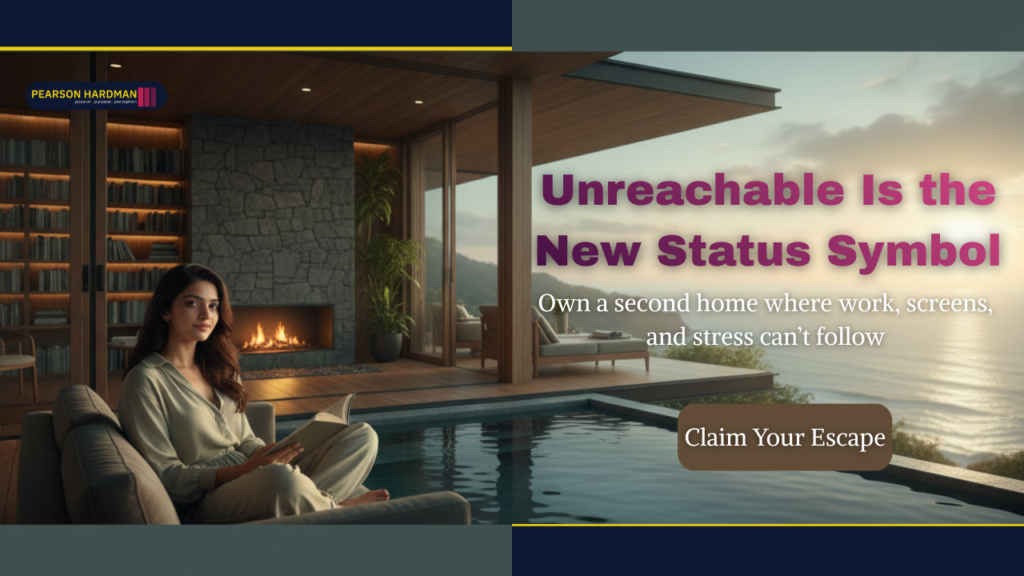
Visuals are the heartbeat of any real estate campaign, but for a digital detox property, the imagery must be curated with extreme precision. Avoid showing screens of any kind in your staging, even if they are high-end home theaters. Instead, focus the camera on “analog focal points” like a reading nook bathed in natural light, a massive stone hearth, or a garden designed for contemplative walking. These images serve as visual cues for digital detox marketing strategies, signaling to the viewer that this is a space where the eyes can rest. In 2026, the most successful photography captures the “mood” of the house rather than just its dimensions, using shadows and textures to evoke a sense of timelessness and permanence that the digital world lacks.
In addition to static photography, short-form video content should focus on “slow cinema” techniques. Instead of fast cuts and energetic music, use long takes of a sunrise over the valley or the slow movement of a creek. The audio should be the natural soundscape of the property, providing a literal “digital detox” for the ears. By integrating these specific digital detox marketing strategies into your social media presence, you create a pocket of peace in a noisy feed. This contrast is incredibly effective at capturing the attention of a scrolling user, as the sudden shift to a slow, quiet scene creates a “pattern interrupt” that forces them to stop and breathe. This is how you convert a casual browser into a serious lead who is ready to invest in their own mental health.
The Analog Amenity Package: Selling the Tools of Disconnection
In the past, real estate agents would brag about a property’s “smart” capabilities, but the modern digital detox marketing strategies of 2026 flip this script by highlighting “dumb” amenities. We are talking about custom-built libraries, dedicated meditation rooms, organic vegetable gardens, and outdoor soaking tubs that encourage presence and mindfulness. These features are not just add-ons; they are the primary selling points for a buyer who wants to spend their weekends building something with their hands rather than managing an inbox. When you are writing a listing, you should describe these amenities as the “tools of reclamation,” helping the owner take back the parts of their humanity that have been eroded by the digital grind.
Consider the example of a developer in the Catskills who recently replaced all high-speed Wi-Fi routers in a new project with high-end record players and an artisanal wood-burning stove in every unit. They marketed the project using aggressive digital detox marketing strategies, specifically targeting tech founders and venture capitalists who are the most burnt out by their own industry. The project sold out in record time because it offered something that no amount of money could buy in the city: a legitimate reason to put the phone down. By emphasizing the tactile and the physical, you are appealing to a deep-seated human desire for a more grounded existence. This is the ultimate goal of any digital detox marketing strategies—to make the analog world feel more vibrant and attractive than the digital one.
Targeted Outreach: Finding the Burnout Audience Without Adding to the Noise
One of the greatest ironies of digital detox marketing strategies is that you often have to use digital tools to find the people who want to stop using digital tools. To do this ethically and effectively, your outreach must be hyper-targeted and value-driven. Instead of broad-spectrum advertising, look for communities and platforms dedicated to deep work, mental wellness, and slow living. By placing your property in front of people who are already actively seeking ways to reduce their screen time, you ensure that your message is welcomed rather than resented. This targeted approach is a cornerstone of modern digital detox marketing strategies, as it respects the audience’s boundaries while providing a solution to their problem.
Furthermore, you can leverage partnerships with wellness brands and mental health influencers who advocate for digital boundaries. A second home is the ultimate “wellness product,” and it should be marketed as such. When you align your real estate brand with the broader movement toward mindfulness, your digital detox marketing strategies gain a layer of social proof and authority that traditional advertising cannot provide. You aren’t just a salesperson anymore; you are a facilitator of a better way of life. This shift in positioning is crucial for long-term success in the 2026 market, as buyers are looking for brands that share their values and understand their struggle against the attention economy.
The ROI of Rest: Why Investors are Pivoting to Peace
From an investment perspective, the rise of second homes as detox centers is backed by solid financial data. Properties that can be marketed with strong digital detox marketing strategies are seeing higher appreciation rates and lower vacancy rates in the high-end rental market. Travelers are willing to pay a significant premium for a “tech-free” vacation experience, and owners are finding that these properties are easier to maintain because they aren’t constantly trying to stay on the cutting edge of home automation. The focus on high-quality natural materials and timeless design means that these homes age gracefully, providing a stable long-term asset that remains desirable regardless of the latest tech trends.
In addition, the psychological benefits for the owner are immeasurable, leading to higher satisfaction and a longer holding period. When a second home truly serves its purpose as a sanctuary, the owner is less likely to sell it, which creates a scarcity in the market that further drives up value. This is a vital point to include in your digital detox marketing strategies, as it appeals to the rational side of the buyer’s brain. You are telling them that investing in a sanctuary is not just a personal luxury, but a sound financial decision that protects their capital while protecting their mind. In a volatile world, the value of a physical, analog refuge is only going to go up, making now the perfect time to embrace these strategies.
Conclusion: The Future of Real Estate is Found in the Silence
As we have explored, the rise of second homes as sanity sanctuaries is more than just a fleeting trend; it is a fundamental shift in how we value space and time. By embracing digital detox marketing strategies, you are positioning your real estate brand at the forefront of a movement that prioritizes human well-being over digital noise. The successful marketer of 2026 is the one who can articulate the quiet beauty of a forest at dawn or the deep satisfaction of a day spent without a single notification. We are moving toward a future where “luxury” is defined by the absence of distraction and the presence of peace.
Ultimately, selling a second home in this era is about selling the chance to remember who we are when the screens go dark. It is a noble and highly profitable endeavor that requires a deep understanding of the modern human condition. As you implement these digital detox marketing strategies, remember that your most powerful tool is your own authenticity and your genuine commitment to your client’s rest. The world is getting louder, but for those who know how to market the silence, the opportunities have never been more profound. It is time to stop selling houses and start selling the sanctuary.