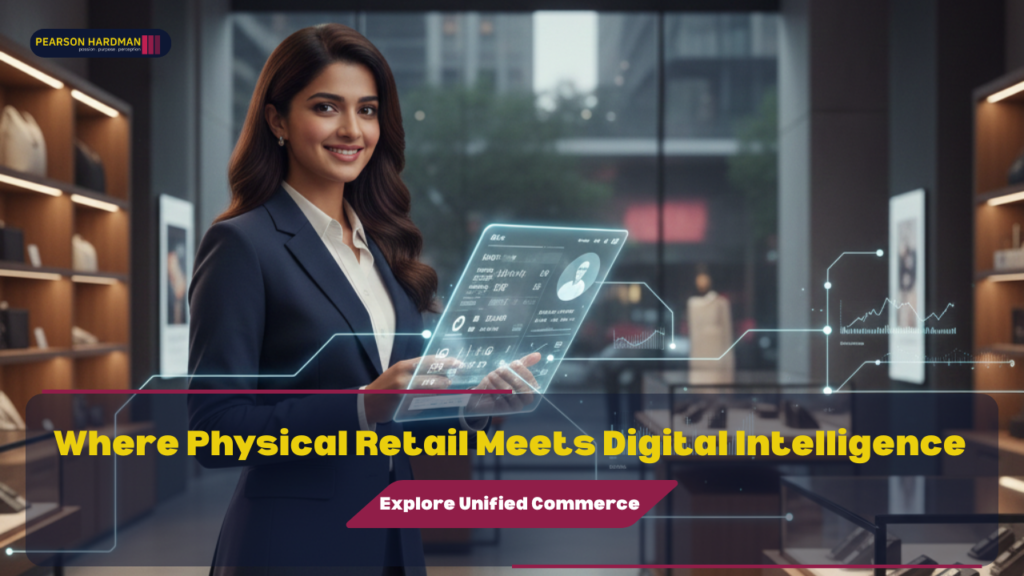
The retail world has reached a definitive crossroads where the traditional boundaries between physical and digital spaces have not only blurred but have essentially evaporated. For years, we spoke about omnichannel strategies as the pinnacle of retail success, yet many businesses found themselves struggling with fragmented data and disjointed customer experiences. As we move through 2025 and into 2026, the industry has shifted toward a more robust and integrated philosophy known as Unified Commerce: Merging Offline Stores with Digital Brains. This concept represents a fundamental evolution where every touchpoint—be it a mobile app, a web storefront, or a local brick-and-mortar shop—operates from a single, centralized platform. Imagine a customer walking into a boutique in Mumbai after browsing the same brand’s catalog on a train, and the sales associate already knowing their preferences and size. This is not science fiction anymore; it is the standard that modern consumers expect from the brands they trust.
In this deep dive, we will explore how the “digital brain” of a business acts as the central nervous system for modern retail operations. We will examine the technological infrastructure required to synchronize global inventory in real-time and how personalized data is transforming the way staff interact with shoppers on the floor. You will learn about the shift from siloed multichannel systems to a singular, cohesive architecture that prioritizes the customer journey above all else. At Pearson Hardman, we have witnessed how firms that embrace this unified approach see significantly higher retention rates and a dramatic reduction in operational friction. By the end of this article, you will have a comprehensive understanding of why Unified Commerce: Merging Offline Stores with Digital Brains is the only viable path forward for retailers who wish to thrive in an increasingly competitive global marketplace.
The Core Philosophy of Unified Commerce and Why Silos Are Dying
To truly understand the impact of unified commerce, we must first acknowledge the inherent failures of the multichannel and omnichannel models that preceded it. In a multichannel setup, a business might have a website and a physical store, but these two entities often operate on entirely different backend systems with separate inventory logs and customer databases. Omnichannel tried to bridge this gap by connecting these channels, but it often felt like a series of patches and “band-aid” integrations that led to data lag and confusion. Unified Commerce: Merging Offline Stores with Digital Brains solves this by scrapping the idea of “channels” altogether. Instead of trying to connect separate parts, unified commerce builds everything on a single platform where the “digital brain” oversees every transaction and interaction simultaneously.
This singular truth ensures that whether a customer is checking out via a social media link or at a traditional point-of-sale (POS) terminal, the system updates instantly. This eliminates the nightmare scenario where a customer buys the last item online just as someone else picks it up in a physical store. From a marketing perspective, this unification allows for a level of storytelling and brand consistency that was previously impossible. When your “digital brain” tracks a customer’s entire history in one place, you can send a personalized discount code to their phone the moment they enter your store based on their abandoned online cart. This is the ultimate expression of retail digital transformation, where technology serves to enhance the human connection rather than replace it.
The Digital Brain: Powering Physical Spaces with Real-Time Data
The heart of this new retail era is the “digital brain,” a sophisticated Customer Data Platform (CDP) integrated with an advanced inventory management system. This brain does not just store data; it processes it in real-time to provide actionable insights for both the business and the consumer. For the modern shopper, the most frustrating experience is a lack of transparency regarding stock levels. By Merging Offline Stores with Digital Brains, retailers can offer “Live Inventory” features on their websites that are 100% accurate. If the system says there is one blue sweater left in the London flagship store, the customer can trust that information and even reserve it for a “Click and Collect” pickup within minutes. This level of reliability builds immense brand equity and reduces the bounce rate of potential buyers.
Furthermore, this digital brain empowers in-store associates with “Clienteling” tools that were once reserved for luxury boutiques. When a sales professional has access to a customer’s digital profile through a tablet, they can see past purchases, preferred styles, and even recent interactions with AI chatbots. This allows the associate to offer a bespoke shopping experience that feels personal and curated. Instead of asking generic questions, they can say, “I see you liked the linen trousers you bought last month; we just received a matching blazer in your size that isn’t on the floor yet.” This proactive approach, driven by the Unified Commerce: Merging Offline Stores with Digital Brains model, turns a routine transaction into a memorable brand experience that encourages long-term loyalty and increases the average order value.
Bridging the Gap: How Physical Stores Become Experience Centers
As e-commerce continues to dominate the commodity market, the role of the physical store is shifting from a place of mere distribution to a place of “Experience and Discovery.” The physical shop is now a high-touch extension of the digital brand, acting as a showroom where customers can interact with products before completing their purchase through whatever medium they prefer. This phenomenon, often called “Showrooming,” used to be a threat to retailers, but under a unified commerce framework, it becomes a powerful asset. By Merging Offline Stores with Digital Brains, brands can encourage customers to try things on in person and then “Scan and Ship” those items to their homes if they don’t want to carry bags. The “digital brain” ensures that the store gets the credit for the sale, regardless of where the final transaction is processed.
This shift toward experiential retail also allows brands to use their physical footprint for community building and education. We are seeing furniture stores offer interior design workshops and athletic brands hosting run clubs, all of which are tracked and managed by the same unified platform. Every time a customer attends an event, that data point is added to their profile, allowing the digital brain to refine its future recommendations. The physical store essentially becomes a data-gathering hub that feeds the digital strategy, creating a virtuous cycle of improvement. This is the essence of Unified Commerce: Merging Offline Stores with Digital Brains, where the physical assets of a company are leveraged to create a deeper, more meaningful relationship with the consumer than an online-only brand could ever achieve.
The Technology Stack of 2026: Headless Commerce and API-First Design
Implementing a unified commerce strategy requires a modern technology stack that is flexible, scalable, and built for rapid integration. The most successful retailers in 2025 have moved toward “Headless Commerce,” an architecture where the frontend customer-facing layer is decoupled from the backend commerce logic. This allows a brand to change its website design or launch a new mobile app without having to rebuild the entire system. Because the backend (the digital brain) remains constant, all data stays synchronized across every new “head” or interface that is added. This API-first approach is the backbone of Unified Commerce: Merging Offline Stores with Digital Brains, enabling businesses to experiment with new technologies like augmented reality (AR) fitting rooms or voice-activated shopping with minimal friction.
Another critical component of this stack is the integration of Artificial Intelligence and Machine Learning at the core of the POS system. By analyzing vast amounts of historical data, the digital brain can predict local demand with startling accuracy, ensuring that the right products are in the right stores at the right time. This reduces the need for aggressive markdowns and minimizes the environmental impact of overproduction. For the business owner, this technical sophistication provides a level of operational clarity that was previously impossible. You are no longer guessing what your customers want; you are responding to real-time signals. At Pearson Hardman, we help our clients select and implement these headless systems to ensure they remain agile in a world where consumer habits can change overnight.
Overcoming the Implementation Hurdle: Trust and Training
While the technology for Unified Commerce: Merging Offline Stores with Digital Brains is now readily available, the biggest challenge remains the “Human Element.” Moving to a unified system requires a total cultural shift within the organization. Corporate departments that once operated in silos—such as the e-commerce team and the physical retail team—must now collaborate as a single unit with shared goals. There is often resistance to this change, especially from store managers who may fear that digital sales will cannibalize their local targets. Overcoming this requires a new approach to incentives where staff are rewarded for the “Total Customer Value” they influence, regardless of where the final checkout happens.
Training is also paramount. You cannot simply hand a tablet to a sales associate and expect them to become a data-driven consultant overnight. They need to understand the “Why” behind the data and how to use it to enhance the customer’s journey without making them feel over-monitored. Trust is the foundation of this entire model. The customer must trust that their data is being used to provide value, and the staff must trust that the system is there to make their jobs easier. When done correctly, Unified Commerce: Merging Offline Stores with Digital Brains creates a harmonious environment where technology and humanity work together to create something better than the sum of their parts. This is the goal of every retail digital transformation project we lead at Pearson Hardman, ensuring that the transition is as smooth for the people as it is for the data.
Conclusion: The Era of the Intelligent Retailer
The transition to Unified Commerce: Merging Offline Stores with Digital Brains represents a permanent shift in the power dynamic of the retail industry. We are no longer in an era where brands can dictate how and where a customer should shop. Instead, the most successful businesses are those that provide a frictionless, “Invisible” infrastructure that supports the customer’s preferences in real-time. By centralizing your data and empowering your physical spaces with a digital brain, you are not just selling products; you are providing a service that respects the customer’s time and intelligence. This holistic approach is the ultimate way to build a resilient brand that can withstand the fluctuations of the global economy.
As you look toward the future of your business, ask yourself if your current systems are helping or hindering your connection with your audience. The choice to unify is a choice to prioritize the human experience through the intelligent application of technology. At Pearson Hardman, we believe that the retailers who lead this charge will be the ones who define the next century of commerce. The digital brain is ready to be merged with your physical legacy—it is time to take the first step toward a more integrated and profitable future. The harvest of data is plentiful; it is now up to you to turn it into a harvest of loyalty.