Introduction
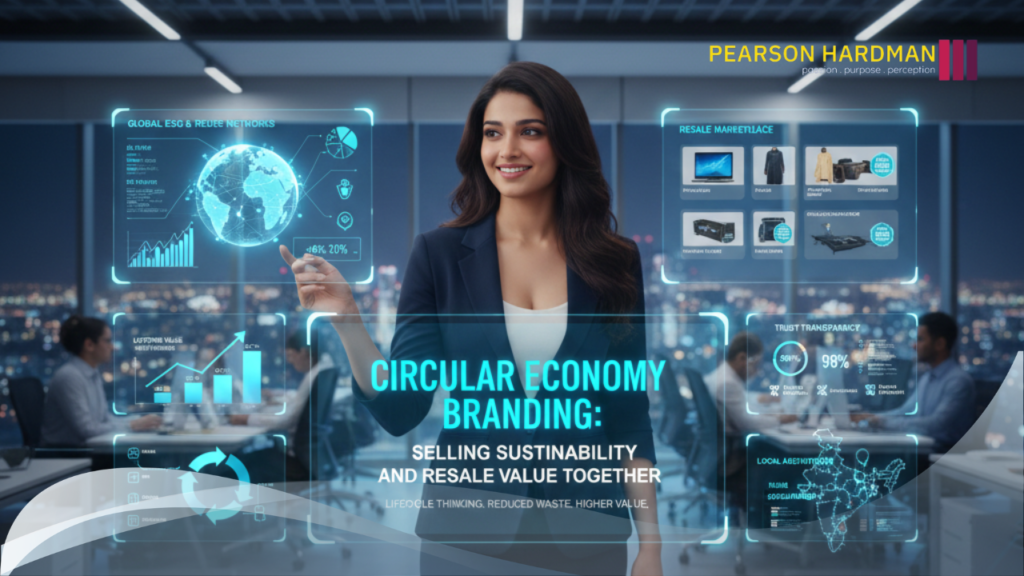
In 2026, sustainability alone is no longer enough. Consumers have evolved, investors have become sharper, and regulators are more demanding than ever. Today, brands are expected to prove not only that they are environmentally responsible but also that their products hold long term value. This is where Circular Economy Branding becomes a strategic advantage rather than a marketing buzzword.
Many companies claim sustainability. Yet very few communicate resale value, lifecycle thinking, and measurable environmental impact in a way that builds trust and drives revenue. The modern customer in Pune, Mumbai, Bangalore, Delhi, and across global markets is asking smarter questions. How long will this product last. Can I resell it. Does this brand take responsibility after purchase.
Circular Economy Branding answers these questions through intelligent positioning, data driven storytelling, and transparent communication. In this article, you will learn how to sell sustainability and resale value together, how brands in India and global markets are adapting, and how strategic PR and marketing can transform circular economy initiatives into real business growth.
Understanding Circular Economy Branding in 2026
Circular Economy Branding is the strategic positioning of a brand around sustainability, product longevity, reuse, resale, and regenerative value creation. Unlike traditional linear models where products are manufactured, consumed, and discarded, the circular economy focuses on extending product life cycles and reducing waste.
In 2026, Circular Economy Branding goes beyond eco friendly packaging. It integrates product design, supply chain transparency, resale platforms, refurbishment programs, and buy back guarantees into a cohesive brand narrative. Consumers do not just buy products. They buy into ecosystems.
Consider the global fashion industry. Brands that once promoted seasonal trends now highlight durability, repair services, and resale partnerships. Indian startups in Bangalore and Mumbai are launching recommerce platforms that allow customers to resell premium goods. This shift proves that Circular Economy Branding is not a niche concept. It is a mainstream competitive strategy.
Also Read: https://pearsonhardmann.com/digital-marketing/hyper-personalization-2-0
Why Selling Sustainability Alone Is Not Enough
For years, sustainability marketing focused on carbon footprints, biodegradable materials, and ethical sourcing. While these factors remain important, they no longer differentiate a brand. Consumers expect sustainability as a baseline requirement.
What truly captures attention in 2026 is value retention. Customers want products that maintain resale value. For example, electronics companies now promote trade in programs alongside energy efficiency. Furniture brands in Pune highlight modular designs that extend product usability. Automotive companies emphasize certified pre owned programs that strengthen brand trust.
Circular Economy Branding connects sustainability with financial intelligence. When customers understand that a product retains resale value, they perceive it as an investment rather than an expense. This shift significantly improves conversion rates and brand loyalty.
The Business Case for Circular Economy Branding
From a business perspective, Circular Economy Branding reduces acquisition costs and increases lifetime value. Brands that build resale ecosystems create repeat engagement opportunities. When customers return products for refurbishment or trade in, companies collect valuable data and strengthen relationships.
In India, especially in cities like Delhi and Mumbai, price conscious yet aspirational consumers respond strongly to resale value messaging. Globally, investors are also prioritizing ESG aligned companies. Therefore, Circular Economy Branding improves both market positioning and investor confidence.
Furthermore, search engine trends show rising queries for sustainable products with resale value, eco friendly brands India, and circular economy business models. These high intent keywords carry strong commercial value. Brands that optimize content around these themes attract qualified leads.
Building Trust Through Transparent Storytelling
Trust is the foundation of effective Circular Economy Branding. Consumers are increasingly skeptical of greenwashing. Therefore, brands must provide measurable proof of sustainability claims.
Storytelling plays a critical role here. Instead of generic environmental statements, brands should share real data. For example, a manufacturing company in Pune might publish statistics showing how its refurbishment program reduced waste by 30 percent. A fashion brand in Bangalore could share stories of artisans involved in product repair initiatives.
Strategic PR amplifies these stories. A global PR and marketing agency ensures that sustainability reports, impact metrics, and leadership interviews reach credible media platforms. This approach strengthens authority and aligns with Google Helpful Content principles.
Integrating Resale Value Into Brand Positioning
Resale value is not just a functional feature. It is a powerful branding lever. When companies integrate buy back programs, trade in offers, and certified resale channels into their communication strategy, they reinforce product quality.
For example, luxury watch brands emphasize resale appreciation over decades. Technology companies highlight guaranteed buy back schemes. Even real estate developers in Mumbai are positioning properties around long term value retention and sustainable construction.
Circular Economy Branding reframes ownership as participation in a value cycle. Customers feel confident knowing that their purchase can be monetized later. This confidence drives higher average order values and repeat business.
Digital Marketing Strategies for Circular Economy Branding
Effective Circular Economy Branding requires strategic digital marketing. Search engine optimization ensures visibility for high value keywords related to sustainable business models and resale platforms. Content marketing educates customers about product lifecycle benefits.
Paid advertising campaigns targeting terms like sustainable investment products and resale value electronics attract high intent buyers. Email campaigns can highlight upgrade programs and refurbishment services. Social media storytelling showcases before and after transformations of refurbished goods.
As a leading marketing agency in Pune, Pearson Hardman integrates analytics tools to track engagement metrics, lead generation, and conversion performance. Data driven insights help brands refine messaging and maximize return on marketing investment.
Local and Global Positioning for Circular Brands
Circular Economy Branding must balance local relevance with global credibility. In India, cities such as Pune, Mumbai, Bangalore, and Delhi are witnessing growing awareness around sustainable business practices. Consumers expect brands to demonstrate community impact and regulatory compliance.
At the same time, international markets demand ESG transparency and global certifications. A trusted branding partner in India can help businesses align local initiatives with global sustainability standards.
Pearson Hardman operates as a global PR and marketing agency with expertise in positioning Indian brands for international expansion. By combining localized SEO, media outreach, and cross border storytelling, brands build authority in both domestic and global markets.
Case Insight How Circular Branding Drives Revenue
Consider an electronics retailer that introduced a certified refurbishment program in Bangalore. Initially, the initiative was framed purely as waste reduction. However, after repositioning through Circular Economy Branding, the company highlighted resale value, trade in benefits, and long term savings.
Within months, website traffic increased due to targeted SEO content. Media coverage amplified credibility. Most importantly, repeat purchases rose significantly because customers returned for upgrades. This example demonstrates that sustainability combined with resale value creates measurable growth.
Also Read: https://pearsonhardmann.com/digital-marketing/glowmads-and-conscious-travel
The Role of Strategic PR in Circular Economy Branding
Public relations strengthens Circular Economy Branding by building third party credibility. Press releases announcing sustainability milestones, expert commentary on circular economy trends, and thought leadership articles position companies as industry leaders.
In competitive markets like Mumbai and Delhi, visibility in reputable publications differentiates serious brands from superficial claims. A leading marketing agency in Pune with global outreach ensures consistent messaging across platforms.
Pearson Hardman supports businesses with research driven strategies, structured storytelling, and measurable KPIs. This integrated approach enhances Google My Business authority, local search rankings, and brand trust signals.
Future Trends in Circular Economy Branding
The future of Circular Economy Branding will integrate blockchain based supply chain tracking, AI driven resale marketplaces, and advanced lifecycle analytics. Consumers will demand real time transparency and digital proof of impact.
Brands that invest early in circular infrastructure will outperform competitors. As regulatory frameworks tighten globally, sustainability reporting will become mandatory. Therefore, proactive branding strategies are essential.
Companies that communicate both environmental responsibility and financial return will dominate 2026 and beyond.
Conclusion
Circular Economy Branding is not a trend. It is a strategic shift that aligns sustainability with financial intelligence. In 2026, brands that successfully sell sustainability and resale value together will build deeper trust, higher customer lifetime value, and stronger market positioning.
Businesses in Pune, Mumbai, Bangalore, Delhi, and across India must adopt structured communication strategies to compete globally. Transparent storytelling, digital marketing integration, and measurable impact reporting are essential pillars of success.
If your organization is ready to position sustainability as a competitive advantage and build long term brand equity, consult Pearson Hardman for strategic PR, branding, and digital growth solutions.