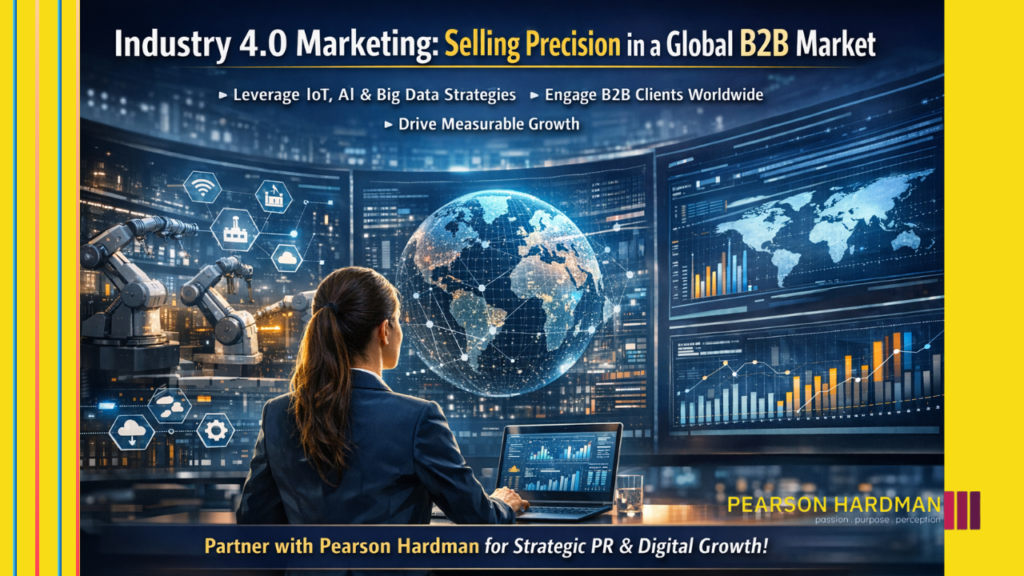
The business world is entering a new era where speed, accuracy, and technological integration define market leaders. Industry 4.0 is no longer a futuristic concept; it is the present reality reshaping how businesses manufacture, market, and sell their products globally. For B2B companies, this shift is particularly significant because clients now expect precision, data-driven insights, and seamless communication in every transaction. Marketing in the Industry 4.0 era is not just about selling a product; it is about demonstrating expertise, reliability, and the ability to deliver measurable value across borders. In this blog, we will explore how B2B marketers can leverage Industry 4.0 tools to achieve global precision, enhance client trust, and drive long-term business growth.
We will dive into the core principles of Industry 4.0 marketing, the technologies enabling smarter campaigns, examples of successful global B2B strategies, and actionable insights for marketers and business leaders. Whether you are a seasoned marketing professional in Pune or a global B2B executive exploring international markets, this guide will provide a practical roadmap to sell precision in an increasingly connected world.
What Industry 4.0 Means for B2B Marketing
Industry 4.0 is often associated with automation, robotics, and IoT integration in manufacturing, but its influence extends far beyond the factory floor. In B2B marketing, Industry 4.0 represents the convergence of advanced technologies with strategic communication. Marketers now have access to real-time data, AI-driven analytics, and connected systems that enable them to tailor campaigns with unmatched accuracy.
For instance, consider a manufacturing enterprise in Mumbai supplying precision components to automotive companies in Germany and Japan. Using Industry 4.0 marketing tools, this company can analyze client usage data, predict demand trends, and offer targeted solutions before competitors even identify the opportunity. In essence, marketing precision becomes measurable, and campaigns can be continuously optimized based on performance insights.
Industry 4.0 also empowers marketers to integrate digital touchpoints seamlessly. Customer portals, predictive analytics dashboards, and automated content delivery ensure that messaging remains consistent, timely, and relevant. This holistic approach is essential in B2B markets where purchase decisions are highly informed, and relationships are built on trust and technical credibility.
Core Technologies Driving Industry 4.0 Marketing
Several technologies underpin the marketing revolution in the Industry 4.0 era. Each technology contributes to delivering precision, improving client experiences, and driving measurable results.
Artificial Intelligence and Machine Learning
AI and ML are no longer optional tools; they are central to effective B2B marketing. Predictive analytics allow marketers to anticipate client needs, optimize lead scoring, and create personalized content strategies. Machine learning models can analyze thousands of data points from global supply chains, client interactions, and competitor behavior, offering actionable insights that were previously impossible.
For example, a technology firm in Bangalore used AI-driven analytics to identify underperforming market segments in Europe. By adjusting their content and outreach based on these insights, the company increased conversion rates by 28% within six months, demonstrating how AI can turn data into precise marketing actions.
Internet of Things (IoT)
IoT devices generate real-time operational data that can be leveraged for marketing and client communication. Sensors on industrial machines, connected logistics systems, and smart inventory management enable marketers to offer services precisely when clients need them.
A practical illustration comes from a Pune-based industrial equipment supplier. By monitoring equipment usage at client sites through IoT sensors, the company could anticipate maintenance requirements and proactively offer service contracts, increasing client loyalty and recurring revenue.
Big Data Analytics
The ability to collect and analyze massive volumes of data is crucial for Industry 4.0 marketing. Big data analytics allows companies to segment their audience more accurately, measure campaign effectiveness in real time, and identify emerging trends.
Global B2B players, such as industrial automation suppliers, utilize analytics platforms to track interactions across multiple markets. This data-driven approach ensures that messaging resonates with regional decision-makers while maintaining a consistent global brand identity.
Cloud Computing and Collaboration Tools
Cloud-based platforms enable marketing teams to operate efficiently across geographies. Shared dashboards, CRM systems, and automated reporting tools allow global B2B teams to maintain alignment and respond quickly to client needs.
For instance, a US-based multinational collaborating with teams in Mumbai, Pune, and Bangalore can synchronize marketing campaigns using cloud project management tools. This ensures that every stakeholder has access to the latest insights and content, reducing errors and enhancing campaign precision.
Strategic Marketing Approaches in a Global B2B Context
Industry 4.0 marketing is not just about adopting technology; it is about integrating strategy with operational intelligence to drive measurable business outcomes. Successful B2B marketers combine data insights with human storytelling to position their brands as trusted partners rather than mere suppliers.
Data-Driven Account-Based Marketing (ABM)
ABM is particularly effective in B2B markets where high-value clients drive significant revenue. By leveraging Industry 4.0 technologies, marketers can create hyper-targeted campaigns for each account, integrating predictive analytics and personalized messaging.
A real-world example involves a technology solutions provider targeting healthcare facilities in India and the US. Using ABM, the marketing team analyzed hospital procurement patterns and developed tailored presentations that addressed each facility’s specific operational challenges. The result was a 35% increase in lead-to-deal conversion rates, showcasing the power of precision marketing.
Content Marketing with Technical Authority
In the B2B space, clients expect content to be not only informative but technically credible. Blog posts, white papers, and webinars need to address practical challenges and demonstrate subject-matter expertise.
Pearson Hardman, a leading marketing agency in Pune, has worked with technology startups and industrial clients to produce content that establishes thought leadership. By integrating client success stories, technical insights, and data-driven projections, the agency helps brands position themselves as reliable problem solvers in competitive markets.
Multi-Channel Integration
A global marketing approach requires seamless integration across digital and offline channels. Industry 4.0 enables B2B marketers to synchronize campaigns across websites, social media, email, webinars, trade shows, and industry publications.
For example, an industrial automation company in Bangalore orchestrated a campaign that combined IoT data-driven insights shared via email newsletters with LinkedIn thought leadership posts and targeted industry magazine features. This cohesive strategy resulted in measurable engagement and reinforced their global credibility.
The Role of Personalization and Client-Centric Communication
Even in B2B marketing, human connection matters. Personalized messaging demonstrates that your brand understands the client’s unique operational context. Industry 4.0 technologies allow marketers to collect behavioral and transactional data to tailor communications effectively.
Predictive Customer Engagement
By analyzing historical purchase patterns and operational data, marketers can anticipate client needs. A chemical manufacturing supplier in Mumbai used predictive analytics to identify clients approaching production cycle peaks and proactively offered relevant product solutions. This approach not only increased sales but also strengthened long-term client trust.
Automated yet Authentic Communication
Automation does not mean robotic interactions. Tools like AI-powered chatbots, email automation, and CRM notifications help marketers maintain timely communication while allowing human experts to intervene for complex queries. Striking this balance ensures that clients feel valued and heard, reinforcing brand reputation.
Establishing Local and Global Authority
For B2B companies, establishing both local credibility and global presence is essential. Industry 4.0 marketing provides the tools to achieve this through localized campaigns, SEO optimization, and strategic PR initiatives.
Local SEO and Market Positioning
Targeting city-specific searches such as “leading marketing agency in Pune” or “trusted branding partner in India” improves discoverability for local B2B clients. Optimized web content, GMB listings, and client testimonials enhance trustworthiness in local markets.
Pearson Hardman, for instance, leverages its offices in Pune, Bangalore, and Mumbai to engage clients through city-focused campaigns while maintaining a global portfolio for international credibility.
Global Outreach and Thought Leadership
Publishing research insights, case studies, and market analysis across international platforms positions brands as global thought leaders. By sharing success stories from India and aligning them with international standards, companies can appeal to clients across continents. This dual approach strengthens brand authority and facilitates global business development.
Measuring Success in Industry 4.0 Marketing
Precision marketing requires precise measurement. Key performance indicators (KPIs) must go beyond vanity metrics to reflect real business impact.
Lead Quality and Conversion Rates
Tracking qualified leads and conversion rates provides insight into how well campaigns resonate with target accounts. By integrating CRM data with analytics platforms, marketers can continuously refine messaging for higher ROI.
Customer Retention and Lifetime Value
A crucial metric in B2B marketing is customer retention. Using IoT and analytics, marketers can identify engagement gaps, proactively address client concerns, and enhance long-term revenue streams.
Campaign Attribution and ROI
Industry 4.0 enables granular attribution of marketing efforts across multiple touchpoints. Understanding which channel drives the most value allows companies to allocate resources efficiently and scale successful campaigns globally.
Future Trends in B2B Marketing for Industry 4.0
The next few years will bring even more advanced tools and approaches. Some emerging trends include:
-
AI-Powered Hyper-Personalization: Tailoring content and offers to individual decision-makers in real time.
-
Augmented Reality (AR) Demonstrations: Allowing clients to visualize solutions remotely.
-
Blockchain for Supply Transparency: Building trust through verifiable operational data.
-
Voice Search Optimization: Preparing websites and content for voice-activated queries in global markets.
Marketers who adopt these trends early will gain competitive advantages in both local and international markets.
Conclusion
Industry 4.0 is transforming B2B marketing by enabling unprecedented precision, personalized engagement, and measurable impact across global markets. Companies that adopt advanced technologies and integrate them with strategic storytelling and client-centric communication will emerge as market leaders. Whether you are a local business in Pune or a multinational operating across continents, the principles of Industry 4.0 marketing provide a roadmap for sustainable growth, trust-building, and revenue optimization.
Consult Pearson Hardman for strategic PR, branding, and digital growth solutions to leverage Industry 4.0 marketing and sell precision in your global B2B market.