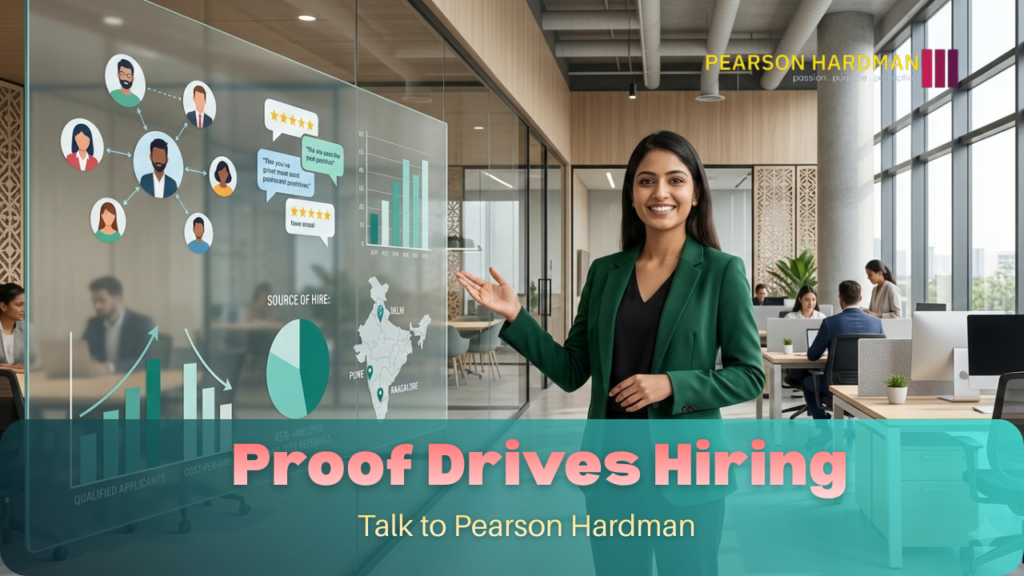
Imagine two companies posting the same job opening on the same platform, offering nearly identical salaries and benefits. One of them fills the role in two weeks with three exceptional candidates to choose from. The other struggles for months, receives average applications, and eventually settles for someone who just barely fits. What makes the difference? In 2026, the answer almost always comes down to employer branding and social proof. The way candidates perceive your organization before they even apply has become one of the most powerful forces shaping the outcome of every hiring campaign you run.
The job market has shifted dramatically over the past few years. Top talent, especially in competitive fields like technology, marketing, finance, and product design, no longer evaluates a company purely by its job description or compensation package. They research. They read reviews on Glassdoor, browse LinkedIn pages, watch employee testimonial videos, check Instagram stories from team events, and ask their networks what it is actually like to work at your organization. By the time a strong candidate lands on your careers page, they have already formed an opinion about your brand. Your employer branding strategy either supports or destroys that first impression.
This article is a comprehensive guide to understanding employer branding in 2026, specifically how social proof has emerged as the central pillar of every successful talent acquisition strategy. Whether you are an HR leader at a growing startup in Pune, a recruitment manager at a mid-sized enterprise in Bangalore, or a global brand trying to attract top talent across multiple markets, the strategies covered here will give you a clear, actionable path forward. By the end, you will understand exactly what social proof means in hiring, how to build it authentically, and how to use it across every stage of your recruitment marketing funnel.
What Is Employer Branding and Why Does It Matter More Than Ever in 2026
Employer branding is the reputation your company holds as a place to work. It is not a logo, a tagline, or a careers page. It is the sum total of everything current and former employees say about working with you, the culture you demonstrate publicly, the values your leadership communicates, and the experience candidates have when they interact with your hiring process. In 2026, employer branding has moved from being a nice-to-have HR initiative to being a core business strategy that directly impacts your ability to grow, innovate, and compete.
According to LinkedIn research, companies with a strong employer brand see up to 50 percent more qualified applicants and reduce their cost-per-hire by as much as 50 percent as well. When you factor in the time cost of long-running unfilled positions, the productivity loss from high turnover, and the expenses involved in recruiting and onboarding replacements, weak employer branding becomes one of the most expensive invisible costs a business carries. The brands that understood this early, companies like Google, Zoho, Infosys, and Freshworks, have built talent ecosystems where great candidates actively seek them out rather than needing to be chased.
Also Read: Product Led PR Turning Free Trials into Paid Users in 2026
What has changed most significantly in 2026 is the role of authenticity. Candidates have grown deeply skeptical of polished corporate messaging. They know the difference between a LinkedIn post that feels human and one that reads like a press release. They trust peers, not PR departments. They value transparency over perfection. This shift has made social proof, that is, the real, unscripted voices and experiences of actual employees, more powerful than any traditional employer branding campaign could ever be on its own.
Understanding Social Proof in the Context of Talent Acquisition
The Psychology Behind Social Proof in Hiring
Social proof is a concept rooted in behavioral psychology. When people are uncertain about a decision, they look to others to guide their choices. In the context of hiring and employer branding, this means candidates are constantly seeking signals from other people to validate whether your company is a good place to work. Every time a former employee leaves a positive review on Glassdoor, every time a current team member shares a behind-the-scenes moment on LinkedIn, and every time a satisfied hire refers a friend to your organization, you are generating social proof that influences future candidates in a measurable way.
In 2026, social proof in talent acquisition takes many forms. Employee testimonials and video stories are among the most compelling. When a software engineer in your Pune office records a two-minute video about why she loves her team and how she has grown in the past two years, that single piece of content does more for your employer brand than a five-page careers brochure ever could. Candidates who see themselves reflected in the experiences of people already working at your company feel a level of confidence and relatability that no amount of corporate messaging can manufacture.
Referral hiring is another powerful form of social proof. When your employees actively recommend your company to talented people in their networks, it signals that they are proud enough of where they work to put their own reputation on the line. Companies with strong employer brands tend to generate significantly higher referral rates, which in turn produces better quality hires who stay longer and perform better. Building a culture where employees become genuine advocates is not an accident. It is the result of intentional employer branding work done consistently over time.
Digital Social Proof and Review Platforms
In the digital era, social proof lives across multiple platforms simultaneously. Glassdoor, AmbitionBox, LinkedIn, Indeed, and even Instagram and Twitter are all places where your employer reputation either grows or erodes in real time. A single negative review from a disgruntled former employee, if left unaddressed for months, can quietly discourage dozens of qualified candidates from applying. Conversely, a pattern of thoughtful, positive, and detailed reviews creates a compounding credibility effect that makes your organization progressively more attractive over time.
What many organizations overlook is that responding to reviews, even negative ones, is itself a form of employer branding. When candidates see that your HR team or leadership acknowledges feedback, takes concerns seriously, and demonstrates a commitment to improving the employee experience, it builds a level of trust that silence never can. Leading marketing agencies in Pune and across India are now including review management as a dedicated service within their employer branding packages, recognizing that digital reputation management is no longer optional for companies that want to compete for top talent.
Building an Authentic Employer Brand That Generates Social Proof
Start With Your Employee Value Proposition
Before you can generate compelling social proof, you need to understand and articulate what genuinely makes your company a great place to work. This is called your Employee Value Proposition, or EVP, and it is the foundation of every employer branding effort that follows. Your EVP should reflect the real reasons your best employees choose to stay, the opportunities for growth you provide, the culture you have built, the mission that drives your work, and the day-to-day experience of being part of your team. It cannot be invented in a boardroom. It must be discovered through honest conversations with the people already inside your organization.
Pearson Hardman works with brands across Pune, Mumbai, Bangalore, Delhi, and international markets to help them uncover and communicate their authentic EVP. The process involves employee interviews, culture audits, competitive analysis, and digital listening to understand how your employer brand is perceived both internally and externally. The result is a clear, compelling, and differentiated value proposition that gives your employer branding campaigns a credible foundation to build upon. Without this foundation, even the best social proof campaigns feel hollow and fail to convert curious candidates into enthusiastic applicants.
Employee Storytelling as a Social Proof Engine
One of the most effective employer branding strategies in 2026 is systematic employee storytelling. Rather than asking employees to write formal testimonials, the best brands create an environment where sharing stories feels natural and even exciting. This might mean featuring an employee’s career journey in a monthly blog post, producing short documentary-style videos about team projects, or encouraging team members to post authentically on their personal LinkedIn profiles about their work experiences. Each story adds a new layer of social proof that reaches audiences your official brand channels may never access.
The key to making employee storytelling work is to remove friction and provide support without scripting. Candidates are remarkably good at detecting content that has been over-polished or edited to remove anything negative. Stories that include real challenges, moments of doubt, and honest reflections on how the company supported growth are significantly more credible than sanitized success narratives. Train your people leaders to recognize and amplify good stories. Create easy-to-use tools for employees who want to share but need a little guidance. And always celebrate the individuals who contribute to building your public employer reputation.
Candidate Experience as a Social Proof Signal
Here is something most companies underestimate. Every candidate who applies to your organization has the potential to become a source of social proof, whether they get the job or not. Candidates who experience a respectful, communicative, and organized hiring process, even when they receive a rejection, tend to speak positively about your company to their networks. They leave fair reviews. They reapply when new roles open up. They recommend others who might be a better fit. On the other hand, candidates who feel ghosted, disrespected, or confused by your process often share those experiences publicly, and those stories spread quickly in tight-knit professional communities.
Investing in candidate experience means building a hiring process that reflects your values. It means communicating timelines upfront, providing feedback when possible, making interviews feel like genuine two-way conversations, and ensuring that even the rejection email demonstrates care and respect. In India’s rapidly growing talent market, where word travels fast within industry communities in cities like Hyderabad, Bangalore, and Pune, your candidate experience reputation can either be a competitive advantage or a silent liability. The companies that treat every applicant as a potential brand ambassador consistently build stronger talent pipelines over time.
Leveraging Digital Channels for Employer Branding and Social Proof
LinkedIn remains the most powerful platform for employer branding in the professional world, and in 2026 its importance has only grown. Your LinkedIn Company Page is often the first touchpoint a strong candidate has with your employer brand. The content you post, the engagement your employees show on that content, the culture photos and team updates, the articles your leaders write about industry trends and company values, all of it contributes to the impression a potential hire forms before they ever click on your job posting. A well-maintained LinkedIn presence signals organizational health, active culture, and leadership that invests in communication and transparency.
Beyond LinkedIn, short-form video content on platforms like Instagram Reels and YouTube Shorts has become an unexpectedly powerful employer branding tool, particularly for reaching younger talent. A thirty-second clip of a team celebrating a product launch, a quick tour of your office kitchen in Bangalore, or a day-in-the-life video from a junior developer in your Pune team can generate thousands of views from exactly the kind of candidates you want to attract. These formats work because they are immediate, personal, and difficult to fake. They communicate culture in a way that written content simply cannot.
Glassdoor and AmbitionBox management has also become a critical component of digital employer branding strategy in India. Companies that actively encourage current employees to share honest reviews, that respond thoughtfully to both positive and critical feedback, and that use review insights to genuinely improve their workplace practices, consistently outperform competitors on talent attraction metrics. This is not about manipulating ratings. It is about building a feedback loop where your digital reputation reflects the actual strengths of your workplace and where you use the gaps to grow. Trusted branding partners in India like Pearson Hardman help organizations build and manage this digital review ecosystem as part of an integrated employer branding program.
Employer Branding Strategy for Local and Global Markets
One of the most common mistakes organizations make is treating employer branding as a single, uniform message that works everywhere. In reality, what resonates with a software engineer in Pune is different from what appeals to a marketing director in London or a product manager in Singapore. Effective employer branding in 2026 requires a layered approach that maintains a consistent core identity while adapting tone, examples, and emphasis for different markets and talent communities. A leading marketing agency in Pune understands both the local culture and the global context, which is exactly why locally grounded, globally competent branding partners deliver superior results.
For organizations operating across India, the regional nuances matter enormously. Talent priorities in Bangalore’s tech corridor differ from those in Mumbai’s finance and media industries, which differ again from the manufacturing and engineering talent pools in Pune. Language choices, the role of family in career decisions, the significance of growth trajectory versus immediate compensation, and the channels where different communities consume content all vary by geography and demographic. Building employer branding campaigns that acknowledge and respect these differences demonstrates cultural intelligence and makes your organization feel accessible and relevant to diverse talent pools.
On the global stage, social proof takes on an additional dimension. International candidates, particularly those considering roles at Indian companies or multinationals operating in India, pay close attention to how organizations communicate their commitment to inclusion, global career mobility, and world-class working standards. Certifications like Great Place to Work, case studies of successful cross-border career paths, and visible diversity in leadership all function as powerful social proof signals that travel well across borders. A global PR and marketing agency with deep roots in local markets can help you craft employer branding strategies that speak credibly to both audiences at once.
Also Read: 2026 Manifesto: Why Traditional Agencies Are Becoming Obsolete
Measuring the ROI of Your Employer Branding Investment
Employer branding can sometimes feel like a difficult thing to measure, but in 2026 the data available to HR and marketing teams makes it more trackable than ever. Start with the metrics that matter most to your business. Application volume and quality tell you whether your brand is attracting the right people. Time-to-fill and cost-per-hire reveal the efficiency gains that come from proactive branding investment. Offer acceptance rates indicate whether candidates who get to the finish line are as excited about joining your organization as you are about hiring them. And employee referral rates show you how strongly your current team believes in your employer brand.
Beyond these core metrics, digital analytics give you insight into how candidates are discovering and engaging with your employer brand content. LinkedIn Analytics can show you the reach and engagement of your company posts. Glassdoor data reveals trends in how your review scores are shifting over time. Career page analytics tell you which job descriptions are getting the most attention and where candidates are dropping off. When you treat employer branding as a data-informed discipline rather than a creative exercise, you unlock the ability to continuously refine your approach and allocate resources to the channels and messages that generate the strongest return.
Conclusion: Your Employer Brand Is Your Hiring Advantage
In 2026, the competition for top talent is fiercer than it has ever been, and the brands that win this competition are the ones that have invested deliberately in their employer reputation. Social proof has emerged as the most credible and cost-effective tool available to talent acquisition teams because it works the way all great marketing works. It lets your happiest customers, in this case your employees, do the talking for you. When candidates trust what they see, hear, and read about your organization from the people who actually work there, the entire hiring process becomes faster, more efficient, and more likely to result in the kind of long-term hires that drive real business growth.
Building this kind of employer brand is not a one-time project. It is an ongoing commitment to creating a workplace worth talking about, and then creating the systems and strategies to ensure those conversations happen in the right places and reach the right people. It requires honest reflection on your employee experience, creative thinking about how to tell your story, and disciplined execution across digital platforms, review ecosystems, and referral networks. The good news is that the organizations willing to make this investment consistently outperform their competitors on every talent metric that matters.
If you are ready to transform your employer brand and build a social proof strategy that attracts top talent at scale, it is time to partner with experts who understand both the local and global talent landscape. Consult Pearson Hardman for strategic PR, branding, and digital growth solutions. Our team is ready to help you build an employer reputation that makes the best candidates choose you, every single time