Introduction
In 2026, the conversation around Sponsorship ROI has changed dramatically. It is no longer about how many people saw your logo during a cricket match or how many banners were displayed at a tech conference. Today, the real question brands are asking is simple yet powerful: what did people feel about us during that moment?
This shift has made Sponsorship ROI one of the most critical metrics in modern marketing strategy. With audiences becoming more aware, more vocal, and more selective, brands cannot rely only on visibility. They must focus on perception, engagement, and emotional connection. This is especially true for high-impact platforms like live cricket events and global tech conferences, where millions of real-time reactions shape brand image instantly.
In this blog, you will understand how Sponsorship ROI is measured in 2026, why brand sentiment tracking has become essential, and how businesses can use real-time data to maximize returns from both cricket and tech event sponsorships. If you are investing in event marketing or planning to, this guide will give you a clear, practical, and strategic direction.
Also Read: Behavioral Archetypes in the 2026 Indian Market: Why Demographics Are No Longer Enough
What Sponsorship ROI Really Means in 2026
Sponsorship ROI in 2026 is no longer limited to traditional metrics like impressions, reach, or visibility. While these numbers still matter, they do not tell the full story. Brands now look beyond surface-level data and focus on how audiences interact with and respond to their presence during live events.
When a company invests in sponsorship, it is essentially investing in audience attention. However, attention without engagement or positive sentiment does not create business value. This is why modern Sponsorship ROI combines multiple layers of measurement, including audience engagement, emotional response, brand recall, and conversion behavior.
For example, during a live cricket match, a brand may appear on screens for millions of viewers. But if social media conversations show confusion or negative reactions toward the brand message, the overall Sponsorship ROI drops. On the other hand, even a smaller tech event can deliver strong ROI if the audience perceives the brand as innovative, trustworthy, and relevant.
This evolution shows that Sponsorship ROI is now deeply connected to how well a brand understands and influences audience perception in real time.
Why Live Cricket Events Deliver Massive Sponsorship ROI
Live cricket events remain one of the most powerful platforms for Sponsorship ROI, especially in markets like India where cricket is deeply embedded in culture. The scale, emotion, and engagement levels are unmatched, making it an ideal environment for brands to build visibility and connection.
During a high-stakes match, audiences are not just watching passively. They are emotionally invested. Every boundary, wicket, and turning point creates a surge of reactions across social media platforms. This constant flow of engagement gives brands a unique opportunity to connect with audiences in real time.
However, this opportunity also comes with risk. Because emotions run high, audience reactions can shift quickly. A campaign that aligns perfectly with the mood of the match can generate massive positive sentiment. At the same time, a poorly timed message can trigger backlash within seconds.
This is why tracking Sponsorship ROI during cricket events requires continuous monitoring of brand sentiment. Brands that actively analyze audience reactions and adjust their messaging accordingly are the ones that achieve higher returns.
Why Tech Events Create High-Quality Sponsorship ROI
Unlike cricket events, tech conferences and innovation summits operate in a more focused and intellectual environment. The audience here is not driven by emotion alone. They are informed, analytical, and highly selective in how they engage with brands.
This makes Sponsorship ROI in tech events more quality-driven than quantity-driven. Even though the audience size may be smaller compared to cricket events, the level of engagement and intent is significantly higher.
When a brand sponsors a tech event, it is not just about visibility. It is about credibility. Audiences expect meaningful insights, innovative solutions, and clear value propositions. If a brand delivers on these expectations, the resulting sentiment is strongly positive, leading to better lead generation and long-term trust.
For instance, a SaaS company launching a new product at a tech conference can achieve strong Sponsorship ROI if the audience clearly understands and appreciates the product. But if the messaging is unclear, even high visibility will not translate into results.
This highlights the importance of sentiment tracking in ensuring that communication resonates with the audience.
The Growing Importance of Brand Sentiment in Sponsorship ROI
Brand sentiment has become one of the most powerful indicators of Sponsorship ROI in 2026. It reflects how audiences feel about a brand during and after a sponsored event, making it a direct measure of impact.
Positive sentiment indicates that audiences are connecting with the brand, understanding its message, and responding favorably. Negative sentiment, on the other hand, signals misalignment, confusion, or dissatisfaction. Neutral sentiment often suggests a lack of strong impact, which can be just as concerning as negative reactions.
What makes sentiment even more important is its speed. In today’s digital environment, audience reactions spread instantly. A single moment during a live cricket match or a keynote session can generate thousands of conversations within minutes.
Brands that track sentiment in real time gain a significant advantage. They can identify issues early, respond quickly, and maintain a positive perception. This ability to adapt and respond directly improves Sponsorship ROI.
How Real-Time Sentiment Tracking Improves Sponsorship ROI
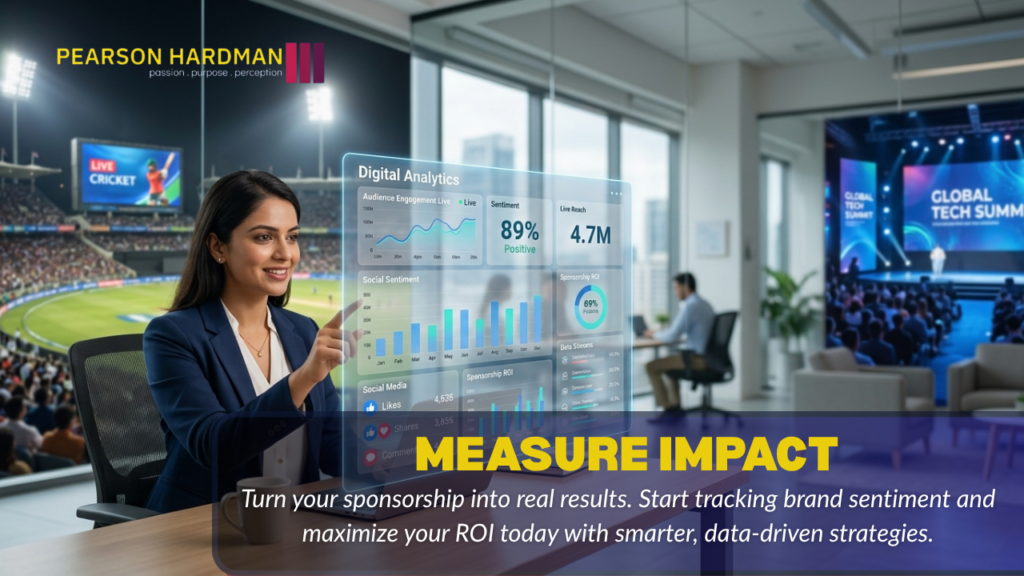
Real-time sentiment tracking has transformed how brands approach event sponsorship. Instead of waiting for post-event reports, marketers now have access to live data that shows exactly how audiences are reacting at any given moment.
During a live cricket event, this means analyzing social media conversations, trending hashtags, audience comments, and engagement patterns as they happen. Brands can see which campaigns are performing well and which ones need adjustment.
In tech events, real-time tracking focuses on session engagement, audience feedback, and responses to product announcements. This allows brands to refine their messaging instantly and improve clarity.
The biggest advantage of real-time tracking is flexibility. If a campaign is not performing as expected, brands can make immediate changes. This could include modifying creatives, adjusting messaging, or increasing engagement efforts.
This dynamic approach ensures that Sponsorship ROI is continuously optimized throughout the event, rather than being evaluated only at the end.
Key Metrics That Define Sponsorship ROI Today
Measuring Sponsorship ROI in 2026 requires a combination of traditional and advanced metrics. While impressions and reach provide a baseline understanding of visibility, they must be supported by deeper insights.
Engagement is one of the most important indicators. It shows how actively audiences are interacting with the brand, whether through likes, shares, comments, or discussions. High engagement usually reflects strong interest and relevance.
Sentiment score is another critical metric. It measures the overall tone of audience reactions, helping brands understand whether the perception is positive, negative, or neutral. A high positive sentiment score directly contributes to better ROI.
Conversion metrics also play a key role. These include actions such as website visits, app downloads, sign-ups, or purchases that occur as a result of the sponsorship. They provide clear evidence of business impact.
Finally, brand recall measures how well audiences remember the brand after the event. Strong recall indicates effective communication and long-term value.
The Role of AI in Tracking Sponsorship ROI
Artificial intelligence has become essential in tracking and improving Sponsorship ROI. With the massive volume of data generated during live events, manual analysis is no longer practical.
AI-powered tools analyze text, voice, and visual data to understand audience reactions. They can identify patterns, detect emotions, and provide insights in real time. This allows brands to make informed decisions quickly.
For cricket events, AI tools monitor social media conversations, memes, and fan reactions. For tech events, they analyze feedback, questions, and online discussions. This comprehensive approach ensures that no valuable insight is missed.
AI also helps in predicting trends. By analyzing past data, brands can anticipate audience reactions and plan more effective campaigns. This predictive capability further enhances Sponsorship ROI.
Integrating Sponsorship ROI with Overall Marketing Strategy
Sponsorship works best when it is integrated with a broader marketing strategy. Isolated campaigns may generate visibility, but they rarely deliver maximum ROI.
When brands align sponsorship with digital marketing, social media, influencer collaborations, and content strategy, the impact multiplies. Consistent messaging across channels strengthens brand perception and increases engagement.
For example, during a cricket event, a brand can run parallel social media campaigns, collaborate with influencers, and use targeted ads to amplify its presence. This creates multiple touchpoints for the audience, enhancing both visibility and sentiment.
In tech events, brands can support sponsorship with webinars, blog content, and email marketing to deepen engagement and drive conversions.
Challenges in Measuring Sponsorship ROI
Despite technological advancements, measuring Sponsorship ROI still comes with challenges. One of the main issues is the fragmentation of data across different platforms. Audiences interact with brands on multiple channels, making it difficult to create a unified view.
Another challenge is accurately interpreting sentiment. While AI tools are highly advanced, they may struggle with sarcasm, cultural nuances, or mixed emotions. This can affect the accuracy of analysis.
Attribution is also complex. It is often difficult to determine whether a conversion is directly linked to sponsorship or influenced by other marketing efforts.
However, with the right combination of tools, strategy, and expertise, these challenges can be effectively managed.
Future of Sponsorship ROI and Sentiment Tracking
The future of Sponsorship ROI lies in deeper personalization and smarter analytics. Brands will move beyond reactive strategies and focus on predictive insights that anticipate audience behavior.
Technologies like augmented reality and virtual reality will create more immersive event experiences, generating stronger emotional connections. This will make sentiment tracking even more important.
Voice and video analysis will also become more advanced, providing richer insights into audience reactions. These innovations will help brands understand not just what audiences say, but how they truly feel.
As these technologies evolve, Sponsorship ROI will become more precise, measurable, and impactful.
Also Read: Telemedicine 2026 Winning Patient Trust in a Zero Knowledge PR Era
Conclusion
Sponsorship ROI in 2026 is no longer about visibility alone. It is about understanding, influencing, and responding to audience sentiment in real time. Whether it is the emotional energy of live cricket events or the intellectual depth of tech conferences, the ability to track and act on sentiment defines success.
Brands that embrace real-time data, leverage AI, and focus on authentic engagement will consistently achieve higher returns. Sponsorship is no longer a passive investment. It is an active, dynamic strategy that requires attention, agility, and insight.
If you want your sponsorship efforts to deliver real business results, start by asking a simple question: what is your audience feeling right now, and how are you responding to it?