Introduction
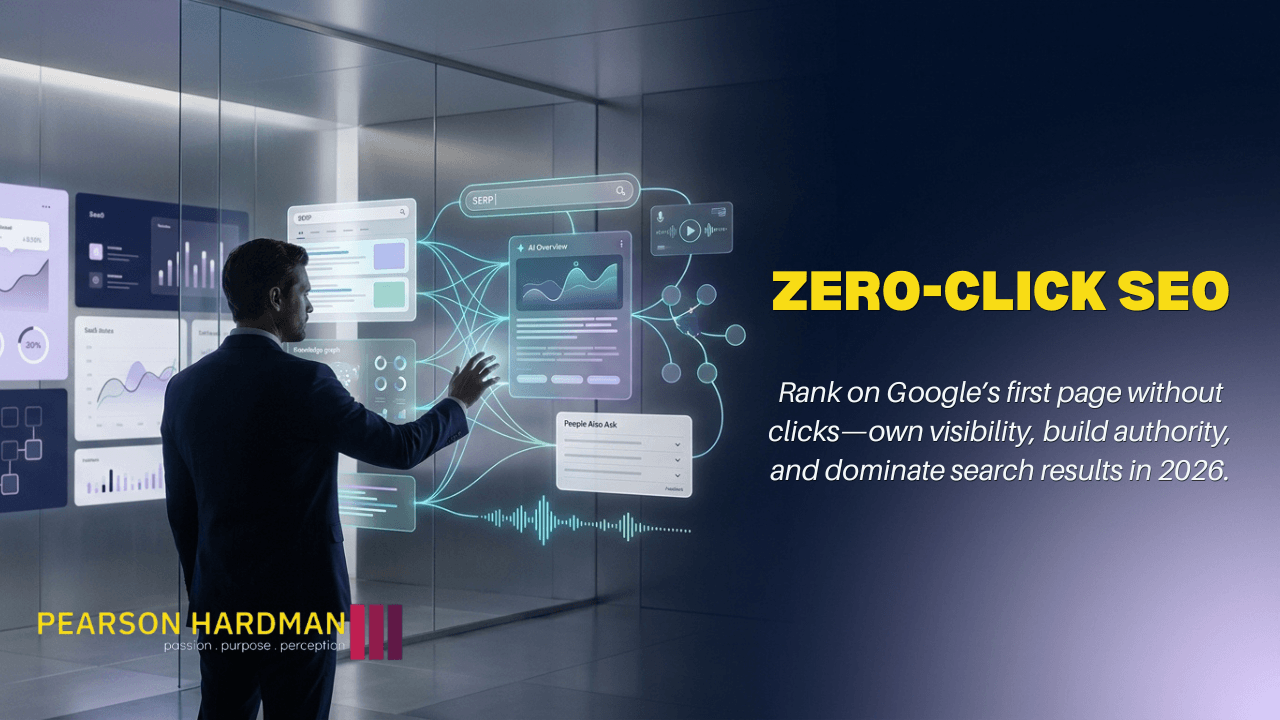
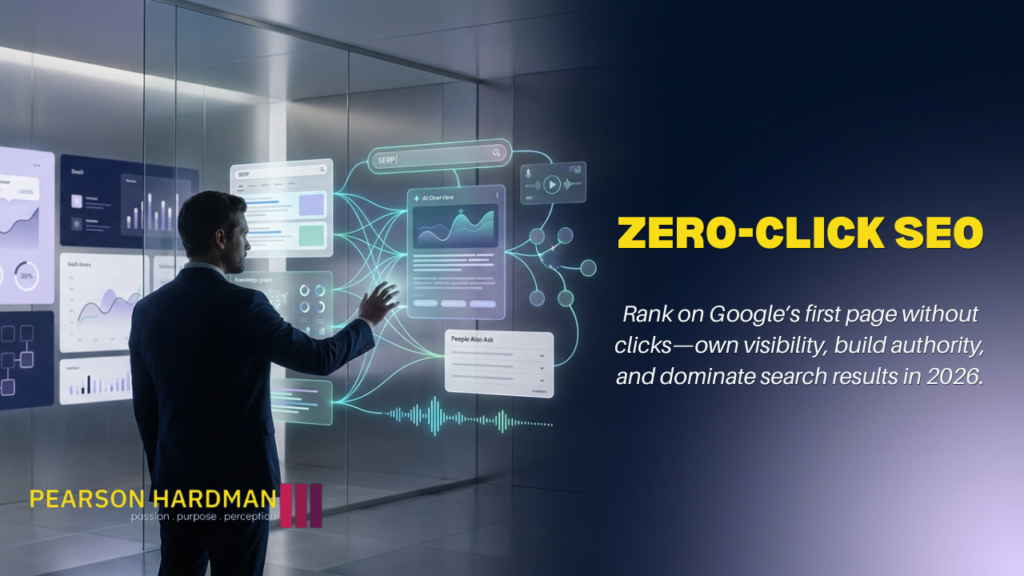
The way people search on Google has changed more in the last few years than in the entire previous decade. Today, users no longer rely only on website clicks to get answers. Instead, they consume information directly on the search results page itself through featured snippets, knowledge panels, AI overviews, “People Also Ask” boxes, and instant answers. This shift has given rise to a powerful modern strategy called Zero-Click SEO, where brands focus on dominating Google Page 1 visibility even when users never click through to a website.
Zero-Click SEO is not about losing traffic, but about winning attention at the exact moment of intent. When your content appears directly in search results, your brand becomes the answer, not just an option. In this blog, you will understand how Zero-Click SEO works, why it is becoming essential in 2026, and how businesses, digital marketers, and SEO professionals can leverage it to build authority, trust, and long-term visibility.
By the end of this guide, you will clearly understand how Zero-Click SEO can transform your organic strategy, improve brand recall, and position you ahead of competitors even before users visit your website.
Also Read: Predictive Lead Scoring: Finding HNIs Before They Inquire
What is Zero-Click SEO and Why It Matters in 2026
Zero-Click SEO refers to the process of optimizing content in a way that it appears directly on Google search results without requiring a user to click on a website link. This includes featured snippets, AI-generated summaries, rich answers, local packs, and knowledge graphs. The core idea behind Zero-Click SEO is simple: deliver answers instantly and own the search real estate.
In 2026, this strategy has become more important than ever because Google is evolving into an answer engine rather than just a search engine. Users expect faster responses, voice assistants provide instant answers, and AI-powered search interfaces summarize entire topics in seconds. This means businesses that rely only on traditional organic traffic are already losing visibility.
Zero-Click SEO allows brands to stay relevant even in this changing environment. Instead of fighting only for clicks, businesses now fight for visibility, authority, and presence on Page 1. When your brand consistently appears in these zero-click elements, you build subconscious trust with users. Even if they do not click immediately, they remember your name, which improves conversions later through branded searches or direct visits.
How Zero-Click SEO Works in Modern Search Engines
To understand Zero-Click SEO deeply, it is important to know how Google decides what content appears in instant answer boxes. Google’s algorithm prioritizes content that is structured, authoritative, and directly answers user queries in a clear and concise format.
When a user searches something like “what is digital marketing ROI” or “best SEO strategy for startups”, Google scans multiple pages and extracts the most relevant and well-structured information. This extracted content is then displayed as a featured snippet or AI summary. This is where Zero-Click SEO becomes powerful.
Brands that structure their content with clear definitions, semantic keywords, and question-based formatting are more likely to appear in these positions. It is not just about ranking number one anymore; it is about being selected as the most helpful answer.
For example, a digital marketing agency like Pearson Hardman, which focuses on branding, PR, and SEO services, can use Zero-Click SEO to appear in queries related to “best PR strategies” or “how branding improves visibility”. Even without a click, the brand gains authority in the user’s mind.
Key Elements of a Strong Zero-Click SEO Strategy
A successful Zero-Click SEO strategy is built on multiple layers of optimization. It is not a single tactic but a combination of content structure, keyword targeting, and user intent alignment.
One of the most important elements is question-based content. Google prefers content that directly answers queries such as “what is”, “how to”, and “why does”. This increases your chances of appearing in featured snippets and People Also Ask sections.
Another important factor is content formatting. Search engines prefer content that is logically structured, with clear headings and natural language explanations. When your content is easy to scan, Google can extract meaningful sections for zero-click placements.
Entity optimization also plays a major role in Zero-Click SEO. Google tries to understand brands, topics, and authority signals. If your content consistently mentions related entities like SEO services, digital marketing strategy, or brand reputation management, your chances of appearing in rich results increase significantly.
Finally, authority signals such as backlinks, engagement, and content depth strengthen your eligibility for zero-click visibility. Google prioritizes trustworthy sources, especially for high CPC topics like finance, marketing, and business growth.
Types of Zero-Click SEO Results You Should Target
Zero-Click SEO is not limited to one feature. It includes several different SERP elements that can dramatically increase your visibility.
One of the most important is featured snippets, which are short answers displayed at the top of search results. These are often called position zero because they appear above all organic listings. Capturing this space is one of the main goals of Zero-Click SEO.
Another important element is the People Also Ask box. This section expands with related questions and provides multiple opportunities for your content to appear repeatedly across search queries. Optimizing for this increases your visibility footprint significantly.
Knowledge panels are another powerful component of Zero-Click SEO. These appear for brands, companies, and public figures, showing summarized information directly on the right side of search results.
Voice search results are also closely tied to Zero-Click SEO. When users ask questions through voice assistants, the response is usually pulled from a featured snippet or structured content.
Together, these elements create a powerful ecosystem where your brand can dominate Page 1 without relying solely on clicks.
Why Businesses Are Investing in Zero-Click SEO
Businesses across industries are rapidly shifting towards Zero-Click SEO because user behavior has fundamentally changed. People no longer want to browse multiple websites for basic information. Instead, they want instant, accurate answers.
This shift is especially important in high CPC industries like digital marketing, finance, healthcare, SaaS, and consulting. In these sectors, even a single impression in a featured snippet can significantly improve brand credibility.
For example, a company offering SEO services can appear in search results for “best SEO strategies for startups”. Even if users do not click immediately, they begin associating that brand with expertise.
Digital marketing agencies like Pearson Hardman understand this shift and focus heavily on building authority-driven content strategies. Instead of only chasing traffic, they focus on visibility, impressions, and brand recall, which ultimately leads to higher conversions over time.
Zero-Click SEO is not just a technical strategy. It is a branding strategy disguised as SEO.
How to Optimize Content for Zero-Click SEO
To succeed in Zero-Click SEO, your content must be structured in a way that Google can easily understand and extract. The first step is identifying high-intent keywords that trigger featured snippets. These usually include informational queries and comparison-based searches.
Once you identify these keywords, the next step is to create content that directly answers the query within the first few lines of each section. Google prefers clear, concise definitions followed by deeper explanations.
Another important practice is using semantic keyword variations throughout your content. Instead of repeating the same phrase unnaturally, you should use related terms such as SERP optimization, Google ranking factors, organic visibility, and content marketing strategy.
Internal consistency also plays a major role. Your content should flow naturally from one idea to another, guiding the reader through a logical journey. This improves both user experience and search engine understanding.
When all these elements come together, your content becomes highly eligible for Zero-Click SEO placements.
The Future of Zero-Click SEO and AI Search
The future of Zero-Click SEO is closely connected to AI-powered search engines. Google is already integrating AI summaries that provide full answers without requiring users to visit websites. This means traditional SEO strategies will continue to evolve.
In this new environment, content quality, authority, and trustworthiness will matter more than ever. Websites that provide shallow or generic content will struggle to maintain visibility. On the other hand, brands that focus on deep expertise and structured information will dominate search results.
Zero-Click SEO will become the foundation of digital visibility. Instead of competing for clicks alone, businesses will compete for presence in AI summaries, voice responses, and instant answer boxes.
This shift rewards brands that think long-term. Companies investing in SEO services, content marketing, and brand authority today will be the ones dominating Google Page 1 tomorrow.
Also Read: 2026 Manifesto: Why Traditional Agencies Are Becoming Obsolete
Conclusion
Zero-Click SEO is no longer an optional strategy. It has become a core part of modern search visibility in 2026. As Google continues to evolve into an answer-driven platform, businesses must adapt their content strategies to stay visible where users actually look.
Instead of focusing only on clicks, brands must focus on presence, authority, and trust. When your content appears directly on Page 1 through Zero-Click SEO, you are not just competing for traffic, you are shaping user perception before they even visit your website.
The future belongs to brands that understand this shift early and act on it with consistent, structured, and high-quality content strategies.