Introduction: The Hidden Engine of Creativity
When people see an impressive marketing campaign, a powerful PR strategy, or an unforgettable brand story, they usually admire the outcome without realizing the process behind it. At the heart of every successful idea is a brainstorming session. This is where diverse minds come together, where raw thoughts are refined into structured strategies, and where creativity meets business objectives. Within agencies, brainstorming sessions are not just casual meetings; they represent the very foundation of innovation.
Yet, brainstorming doesn’t exist in isolation. It is deeply influenced by agency culture—the values, behaviors, and environment that shape how people collaborate. Agencies with strong cultures empower their teams to experiment, take risks, and push boundaries. Those with weak cultures often struggle to extract true creativity from their talent. For industries like real estate, where high-value investments depend on trust and credibility, brainstorming guided by the right culture can be the difference between campaigns that merely make noise and those that make impact.
The Power of Brainstorming in Building Brands
A brainstorming session is more than just a collection of people throwing ideas on the table. It is a structured opportunity to unlock creativity, generate solutions, and align strategies with client goals. For agencies, this process ensures that campaigns are not just visually appealing but also rooted in consumer insight and market realities.
In real estate marketing, for example, brainstorming is where creative teams and strategists debate whether to highlight lifestyle, location, or investment potential in a campaign. One idea might focus on luxury living while another emphasizes ROI and long-term value. Through collaboration, the team arrives at a solution that satisfies both the emotional and financial motivations of potential buyers. This approach applies across industries—whether it’s launching a new product, handling PR for a growing brand, or positioning a company as a market leader. The essence of brainstorming lies in capturing every perspective and refining it into a unified direction.
How Agency Culture Shapes Creative Outcomes
The success of any brainstorming session is determined not just by the participants but also by the agency culture that surrounds them. A culture of openness allows individuals to share bold, unconventional thoughts without fear of rejection. Agencies that prioritize collaboration over hierarchy often produce richer, more innovative campaigns because ideas flow freely from every level of the organization.
For example, when junior executives feel empowered to speak alongside senior strategists, the result is a mix of fresh thinking and seasoned experience. Agencies that value continuous learning integrate data, market research, and industry trends into their creative process. This ensures that brainstorming sessions are not only imaginative but also strategically sound. In contrast, agencies with rigid, top-down structures may discourage risk-taking, leading to safe but uninspired campaigns. A strong agency culture creates a fertile ground where ideas grow, evolve, and eventually transform into campaigns that clients remember.
What Happens Inside a Brainstorming Session
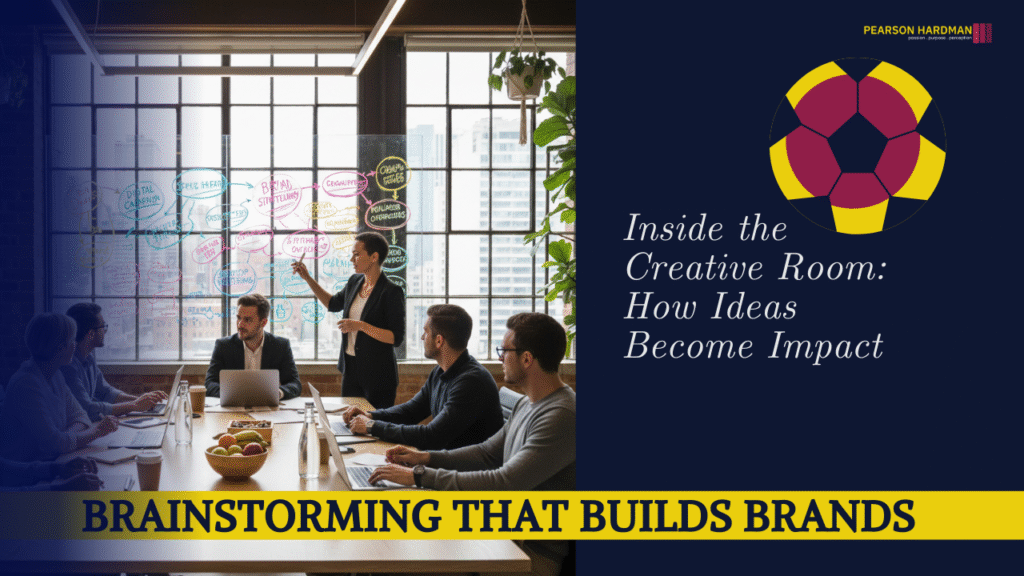
Stepping inside a brainstorming session reveals a fascinating process. It usually begins with clarity of purpose: the team gathers to address a specific problem, whether it’s launching a new luxury property, repositioning a brand, or managing a PR crisis. Once the objective is set, teams bring research and insights to the table. This might include competitor analysis, audience behavior studies, or even feedback from past campaigns.
The core of the session is free-flowing discussion. Ideas are encouraged without immediate judgment, allowing creativity to expand in all directions. Whiteboards fill with words and visuals, post-it notes cluster around central themes, and digital screens showcase data to support or challenge suggestions. Eventually, the group narrows the list by evaluating feasibility, alignment with brand identity, and potential return on investment. What begins as raw thought evolves into structured strategies ready for execution. The beauty of a brainstorming session lies not in the speed of ideas but in the synergy created when different perspectives merge into a cohesive plan.
Why Brainstorming Matters for High-Value Industries
In industries with high stakes, such as real estate, brainstorming becomes even more critical. Here, campaigns are not just about visibility—they directly influence million-dollar decisions. A poorly executed idea can erode trust, while a well-crafted campaign can elevate a brand’s credibility and attract serious investors.
During brainstorming for real estate campaigns, teams focus on blending emotional appeal with logical proof. The emotional side highlights the lifestyle benefits of owning a property—modern design, community living, exclusivity—while the logical side emphasizes ROI, location advantage, and long-term growth. This dual approach is carefully crafted in brainstorming sessions where every angle is debated. By the time a campaign reaches the market, it carries not only creativity but also the credibility necessary to persuade high-net-worth clients.
Challenges in Brainstorming and How Culture Overcomes Them
Brainstorming, though powerful, is not without its challenges. At times, dominant voices overshadow quieter team members, leading to a limited range of ideas. Time pressure is another common issue, as agencies juggle multiple clients and deadlines. Occasionally, the ideas generated do not align with client expectations, requiring additional rounds of refinement.
This is where agency culture plays a decisive role. A culture that encourages inclusivity ensures that every participant has the chance to contribute. Leaders in such environments actively draw out ideas from quieter team members, balancing creativity across the group. Time constraints are managed through structured frameworks like mind mapping, which allows faster yet more effective idea generation. Finally, a culture that values transparency helps teams align their brainstorming with client objectives from the very beginning, reducing the gap between agency vision and client approval.
The Evolution of Brainstorming in the Digital Age
Today, brainstorming is no longer limited to physical conference rooms. Hybrid workplaces and digital platforms have transformed how teams collaborate. Agencies now use virtual whiteboards, real-time chat tools, and project management software to brainstorm across locations. While technology makes the process efficient, it is still the human element—the creativity, empathy, and cultural understanding—that drives successful outcomes.
Artificial intelligence has also entered the scene, offering valuable support by analyzing consumer data, identifying market gaps, and generating content suggestions. Yet AI cannot replace the human touch. Brainstorming sessions rely on imagination, storytelling, and intuition—qualities only people bring to the table. The future of brainstorming will likely be a balance between technology and culture, combining data-driven insights with creative brilliance.
Key Takeaways: Why It All Matters
Brainstorming sessions are the heartbeat of agency life. They represent the moment where raw creativity is transformed into strategy and where diverse perspectives merge into one clear direction. The strength of these sessions lies not only in the process but also in the agency culture that shapes them. A supportive, collaborative culture empowers people to take risks, challenge norms, and deliver campaigns that stand out in crowded markets.
For industries where reputation and trust are paramount—such as real estate—brainstorming sessions ensure that marketing strategies are not only visually striking but also credible and ROI-focused. The evolving role of digital tools will continue to enhance these sessions, but the foundation will always remain the same: people, culture, and collaboration.
Conclusion: Creativity Built on Culture
Behind every memorable campaign lies a story of collaboration, trust, and imagination. Brainstorming sessions give agencies the chance to dream without limits, while agency culture ensures those dreams are grounded in reality and executed with precision. For businesses seeking to build strong brands, whether in real estate or beyond, the lesson is clear—success begins not just with ideas but with the environment that allows those ideas to thrive.
At Pearson Hardman, our culture fosters openness, innovation, and collaboration, ensuring that every brainstorming session leads to strategies that deliver measurable impact. It is in these behind-the-scenes moments that the true magic of branding and PR happens—where creativity meets purpose, and agencies help clients build legacies.