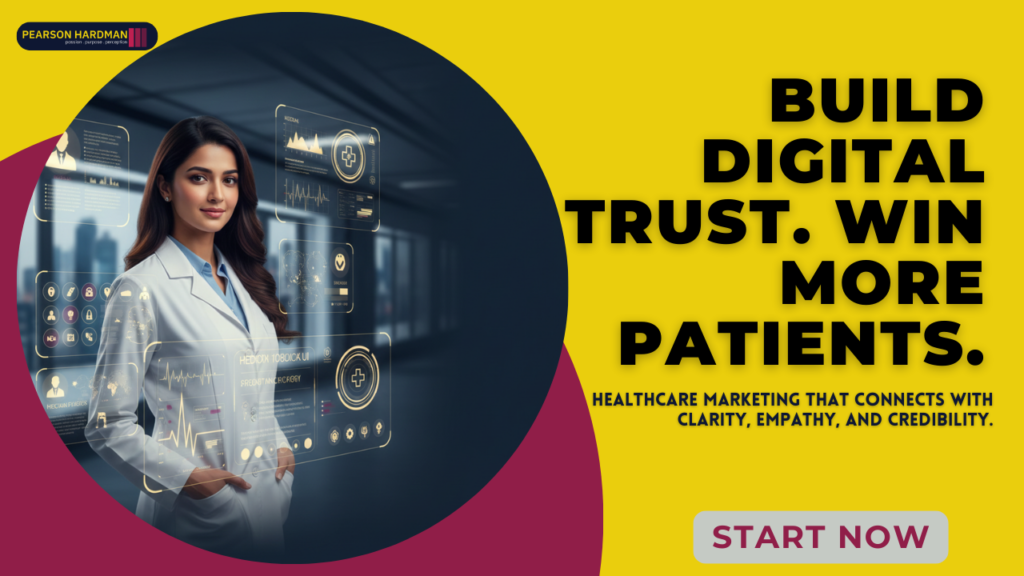
In today’s digital-first medical world, trust has become the foundation on which every successful healthcare brand is built. A patient no longer waits until they step inside your clinic to form an impression—they form it online, often in moments of anxiety. Whether it’s a parent searching for a child’s symptoms at 2 AM or someone comparing cardiologists before booking an appointment, the journey begins with a simple Google search. And in that moment, a hospital with an outdated website or generic content loses instantly to a hospital that shows empathy, clarity, and expertise through its online presence. This shift represents a powerful truth: before patients trust your treatment, they trust your digital identity. Modern healthcare marketing is no longer about visibility alone—it’s about meaningful credibility, emotional reassurance, and providing reliable information that truly guides the patient.
As misinformation continues to grow and AI-generated medical myths spread online, patients have become more cautious and analytical than ever. They evaluate doctors the way investors evaluate high-value decisions—by checking credentials, reading reviews, analyzing website content, and comparing the digital experience. Patients aren’t just searching for the “best doctor near me”; they are searching for the most trustworthy one. This makes digital trust the ultimate competitive advantage for hospitals, clinics, and doctors. In 2026, the medical practice that communicates with empathy, transparency, and authority will always win—not with louder marketing, but with more human, trustworthy communication.
Mastering EEAT: The New Digital Bedside Manner
Google’s EEAT—Experience, Expertise, Authoritativeness, and Trustworthiness—has become the backbone of healthcare SEO. Since healthcare falls under the high-risk YMYL (Your Money Your Life) category, search engines demand accuracy, medical credentials, and proof of real-world experience. This is why a healthcare website’s About Us page has become more important than ever. Patients need to see real qualifications, not vague statements. Highlighting doctor certifications, years of practice, fellowships, awards, specializations, and associations with leading institutions builds instant trust.
To strengthen expertise, every medical article or blog should have a visible byline: “Written by Dr. ___” or “Medically Reviewed by Dr. ___.” Even if your marketing team writes the content, a doctor’s review brings authenticity and boosts rankings. Google’s latest addition—Experience—encourages hospitals to share real clinical insights through case studies, treatment approaches, and first-hand stories. Instead of simply explaining dengue symptoms, share anonymized case experiences from dengue season, what challenges were faced, how early intervention saved lives, and what preventive steps families can follow. This shift from generic textbook-style information to real medical experience sets your hospital apart as a genuine authority.
Your Website: The Digital Front Desk of Your Hospital
Your website is no longer a formality—it is your digital reception area, the first impression that shapes patient decisions. When a website loads slowly, looks cluttered, or feels outdated, patients immediately assume the same about your care quality. A fast, mobile-responsive, patient-centric website is essential in healthcare marketing. Every page should be designed with empathy: large fonts for elderly patients, high contrast for visually impaired users, clean forms for quick booking, and simple navigation for anxious families.
Accessibility and transparency have become powerful trust signals. Patients want clarity, not confusion. Adding treatment explainers, common FAQs, high-quality doctor photos, and easy-to-understand service descriptions makes your website feel safe and welcoming. One of the biggest patient concerns is cost, so modern hospitals are using Price Transparency Tools and Treatment Cost Calculators for procedures like MRIs, knee replacement, cataract surgery, dental implants, or general health checkups. Even providing a range of expected costs builds tremendous trust by showing honesty and removing fear around hidden expenses. In 2026, clarity is the new conversion driver.
Content Marketing: Educate First, Promote Later
Patients are no longer influenced by pushy claims like “Best Orthopedic Surgeon in the City.” Instead, they trust hospitals that educate them with detailed, clear, and helpful content. Effective healthcare content marketing focuses on answering real patient questions: recovery timelines, surgery risks, treatment options, lifestyle changes, medication information, side effects, and preventive advice. When your website becomes a reliable educational resource, patients automatically see you as a trusted health partner.
For long-term SEO dominance, the Hub-and-Spoke content model works brilliantly. Create one in-depth guide (Hub) like “Complete Diabetes Management Guide,” then publish 10–20 smaller articles (Spokes) that link back to it. These include articles such as:
-
“Best Diet Plan for Type 2 Diabetes”
-
“Diabetic Foot Care Tips”
-
“Can Diabetes Cause Vision Problems?”
-
“How to Control Blood Sugar Naturally?”
This structure helps you rank for competitive searches like diabetes treatment near me, cardiologist near me, emergency care, rehab center, IVF treatment, and best hospital in [city]. It also keeps users on your website longer—which improves engagement, trust, and search rankings.
Storytelling That Builds Emotional Trust
Healthcare is emotional, and stories allow patients to connect with your hospital beyond medical procedures. People relate to real journeys—fear, struggle, recovery, and hope. Hospitals like Cleveland Clinic have shown the world the power of empathy-driven narratives, and you can replicate the same impact on a smaller, equally meaningful scale.
Start with a simple initiative: Patient Story of the Month (with full consent). Share stories of courage—whether it’s a child recovering from surgery, an elderly patient regaining mobility, or a mother overcoming a complicated pregnancy. Show the human side of your practice: the dedication of your staff, the care offered by your doctors, and the emotional support given to families. When potential patients read these stories, they don’t see a hospital—they see humanity, compassion, and reliability.
Online Reviews: The New Word-of-Mouth for Hospitals
More than 70% of patients now choose doctors based on online reviews. A 3.5-star doctor may never be considered, while a 4.7-star profile attracts instant trust. However, happy patients rarely write reviews unless asked. This is why hospitals must build a Review Generation System.
Automated SMS messages—sent within 1–2 hours of a consultation—work effectively:
“Thank you for visiting us today. If we helped you, could you share your experience on Google Reviews? It only takes 30 seconds and helps others make informed choices.”
Respond to every review—positive or negative—with professionalism and empathy. A polite response to criticism often impresses future patients more than a perfect rating. Reviews are not just feedback; they are your digital reputation and one of your strongest marketing assets.
Local SEO: Winning the “Near Me” Searches
Most healthcare decisions are local. When someone searches “ENT specialist near me,” “pediatrician in Pune,” or “best gynecologist near Baner,” they want someone nearby. This makes Local SEO and Google Business Profile optimization critical for hospitals and clinics.
Add photos of doctors, the clinic exterior, waiting room, parking area, awards, and treatment rooms. Update hours, add services, include appointment links, and reply to all queries. Publishing localized blogs—like “Monsoon Allergy Tips for Pune Residents” or “Best Low-Sodium Restaurants Near Kothrud for Heart Patients”—dramatically increases your visibility in local searches and improves community connection.
Paid Ads: Navigating High Healthcare CPC with Strategy
Healthcare keywords are some of the most expensive in the digital world. To avoid wasting money, target high-intent keywords like “sciatica treatment clinic Pune” instead of broad searches like “back pain.” Use negative keywords (jobs, salary, course, free, training) to avoid wasting your budget on irrelevant audiences.
HIPAA and GDPR rules restrict remarketing for sensitive medical conditions, so focus on privacy-safe tactics like similar audiences, keyword intent targeting, and high-quality landing pages. Smart ad strategy ensures higher conversions and lower cost per appointment.
Final Thoughts: Trust Is Your True Competitive Advantage
In a noisy digital world, healthcare providers don’t win by shouting louder—they win by communicating with clarity, empathy, and authority. A hospital that consistently shows expertise, tells genuine stories, answers patient questions, and maintains transparency becomes a trusted guide in moments of vulnerability. Whether you’re a small clinic or a multi-specialty hospital, your digital presence has the power to shape how confidently patients choose you.
By mastering EEAT, optimizing your website, dominating local SEO, generating real reviews, and building educational content, you create a digital ecosystem that patients trust—naturally increasing appointments, referrals, and long-term loyalty. In 2026 and beyond, trust is not just a marketing strategy; it’s the foundation of modern healthcare.