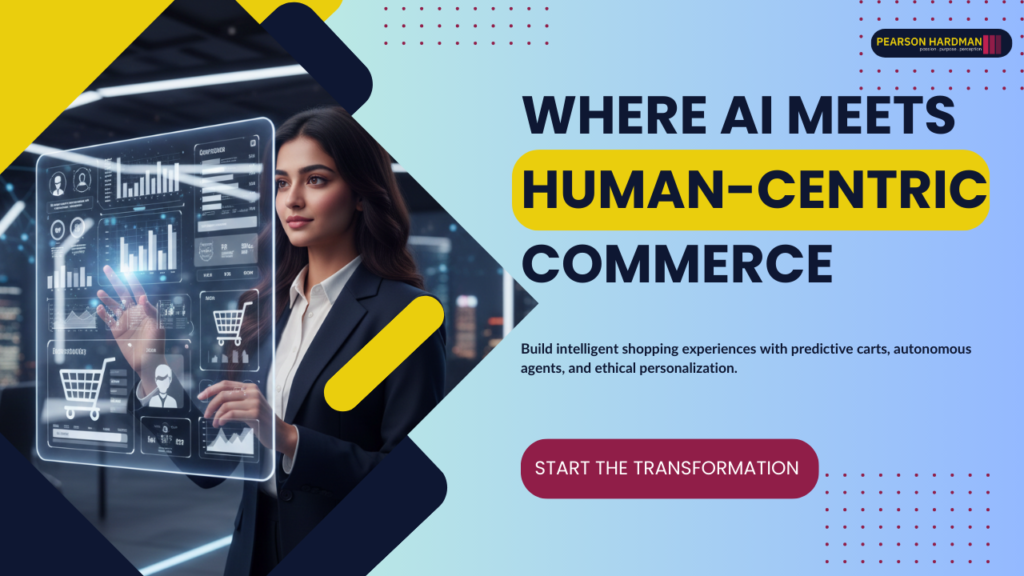
The digital storefront of 2026 no longer waits for a customer to walk through its virtual doors. We have officially transitioned from a reactive e-commerce model to a proactive one, defined by Hyper-Personalization 2.0: Predictive Carts & AI Shopping Agents. If 2024 was the year of basic AI recommendations, then 2026 is the year where the machine knows you better than you know yourself. Imagine waking up to a notification that your favorite coffee beans, a specific vitamin you were about to run out of, and a replacement for that worn-out charging cable have already been bundled into a suggested cart at a discounted rate. This is not just automation; it is a sophisticated dance of data, psychology, and predictive modeling that anticipates human needs before they are even articulated. For brands, this shift represents the ultimate frontier in reducing friction and maximizing customer lifetime value.
In this deep-dive exploration, we will unpack how the landscape of digital retail has fundamentally changed. We will look at the mechanics of predictive cart technology, the rise of autonomous shopping agents that negotiate on behalf of consumers, and the ethical considerations of data privacy in an era of total personalization. At Pearson Hardman, we believe that understanding these shifts is not optional for retailers; it is a matter of survival. You will learn how to integrate these high-tech tools into your existing marketing stack and why “Predictive Loyalty” is the only metric that will matter in the coming decade. By the end of this article, you will have a clear blueprint for navigating the complex but rewarding world of Hyper-Personalization 2.0, turning your e-commerce platform from a simple catalog into an indispensable personal concierge.
The Architecture of Anticipation: How Predictive Carts Work
The concept of a predictive cart is built on the foundation of “First-Party Data” and advanced behavioral analytics. In the early days of e-commerce, a “personalized” experience meant seeing your name at the top of a webpage or getting an email about an item you left in your cart. In 2026, the engine behind Hyper-Personalization 2.0: Predictive Carts & AI Shopping Agents analyzes thousands of micro-signals. This includes the cadence of your repeat purchases, the environmental factors like local weather changes that might trigger a need for specific clothing, and even your “Digital Body Language”—how you hover over certain images or the speed at which you scroll through reviews. This data is processed through neural networks that can predict with 90% accuracy what a user will need within the next seven days.
When these predictions are accurate, the result is a “Ghost Cart.” This is a pre-filled selection of items that appears on a user’s dashboard the moment they log in, or sometimes even pushed as a one-tap checkout notification on their smartwatch. The psychological impact of this is profound. It moves the shopping experience from a cognitive chore to a seamless service. From a business perspective, predictive carts solve the largest problem in e-commerce: cart abandonment. By presenting the right items at the exact moment of need, often with a dynamic pricing discount applied specifically to that user’s budget profile, the barrier to purchase virtually disappears. At Pearson Hardman, we help our clients architect these systems by focusing on data integrity and emotional resonance, ensuring the machine feels like a helpful friend rather than an intrusive watcher.
AI Shopping Agents: The Rise of the Autonomous Buyer
Perhaps the most disruptive element of the 2026 landscape is the emergence of AI Shopping Agents. For years, we focused on how AI could help sellers find customers. Now, the tables have turned. Consumers are increasingly using personal AI agents—autonomous software entities—to do their shopping for them. These agents are trained on the user’s specific tastes, budget constraints, and even their ethical values, such as a preference for sustainable packaging or fair-trade sourcing. A shopping agent doesn’t browse a website the way a human does; it communicates with a brand’s API to negotiate prices, verify stock, and find the absolute best deal across the entire web in milliseconds.
This creates a massive challenge and opportunity for marketing for EV startups and traditional retailers alike. Your marketing no longer just needs to appeal to a human; it needs to be “Agent-Readable.” This means your product data, reviews, and sustainability certifications must be structured in a way that an AI agent can quickly parse and verify. This is where “Semantic SEO” and “Generative Engine Optimization (GEO)” become critical. If an AI agent asks your store for a price match and your system isn’t fast enough or transparent enough to respond, the agent will move on to a competitor. We are entering an era of B2B2C (Business to Bot to Consumer), where the brand must convince the shopping agent that its product is the most rational and valuable choice for the user.
The Ethics of the Algorithm: Privacy in a World of Predictive Retail
As we lean further into Hyper-Personalization 2.0: Predictive Carts & AI Shopping Agents, we must address the “Elephant in the Server Room”: Data Privacy. When a brand knows you are pregnant before you have told your family, or predicts a health issue based on your changing grocery habits, the line between “helpful” and “creepy” is often crossed. In 2026, the most successful brands are those that practice “Transparent Personalization.” This involves giving users full control over their data “Loom”—a central hub where they can see exactly what the AI knows about them and toggle specific predictive features on or off. Trust is the primary currency in 2026, and a single breach of that trust can lead to a total brand boycott.
Moreover, there is the risk of “Filter Bubbles” in retail. If an AI only shows you what it thinks you like based on your past, you lose the joy of discovery and the serendipity of finding something new. To combat this, Pearson Hardman encourages brands to build “Exploration Algorithms” into their predictive models. This involves intentionally introducing a small percentage of “Wildcard” recommendations—items that the user hasn’t shown interest in before but that align with their broader lifestyle aspirations. This keeps the shopping experience fresh and human-centric. It reminds the customer that while the AI is efficient, the brand still values the human element of curiosity and style evolution.
Dynamic Pricing and the Individualized Value Proposition
In the world of Hyper-Personalization 2.0, the “Sticker Price” is a relic of the past. We have moved into a phase of individualized value propositions where the price a person sees is tailored to their loyalty, their current urgency, and even their lifetime value (LTV) score. While this sounds like the “surge pricing” seen in ride-sharing, in a predictive retail context, it is used more as a reward mechanism. For example, a loyal customer might see a “Stability Price” that protects them from market fluctuations, while a new user might see a “Discovery Discount” designed to bring them into the ecosystem. This level of granularity requires a massive amount of real-time computational power, but the impact on conversion rates is unparalleled.
This strategy also allows brands to manage their inventory more effectively. If a predictive model sees that a certain demographic is likely to need a product that is currently overstocked, the AI can proactively bundle that item into their predictive carts at a highly attractive price point. This is “Liquid Marketing”—the ability to shift strategy and pricing in real-time based on the ebb and flow of consumer demand. For the customer, it feels like they are getting a personalized deal every single time they shop. For the brand, it means higher margins and lower overhead. This win-win scenario is the ultimate goal of the digital transformation we lead at Pearson Hardman, where technology serves the bottom line by serving the human first.
Conclusion: The Era of Frictionless Living
The evolution of Hyper-Personalization 2.0: Predictive Carts & AI Shopping Agents marks the end of the “Search and Find” era of the internet. We are entering a period of “Predict and Provide.” For the consumer, this means a life with less mental clutter and fewer mundane errands. For the brand, it means a deeper, more intimate relationship with the customer that is built on utility and foresight. At Pearson Hardman, we see this as the ultimate opportunity for brands to stop being vendors and start being partners in their customers’ lives.
As you look toward the future of your retail or tech business, remember that the most powerful technology is the one that disappears. When the predictive cart is so accurate that it feels like magic, and the AI agent is so reliable that it feels like a trusted assistant, you have achieved the pinnacle of modern marketing. The question is no longer whether you should adopt these tools, but how quickly you can integrate them before the market leaves you behind. The future is personal, it is predictive, and it is already here.