Introduction
For years, the internet has followed a predictable pattern. We open a website, scroll through information, click a few buttons, and move on. While this model has worked, it has also created a limitation. Users are no longer satisfied with just consuming content. They want to experience it.
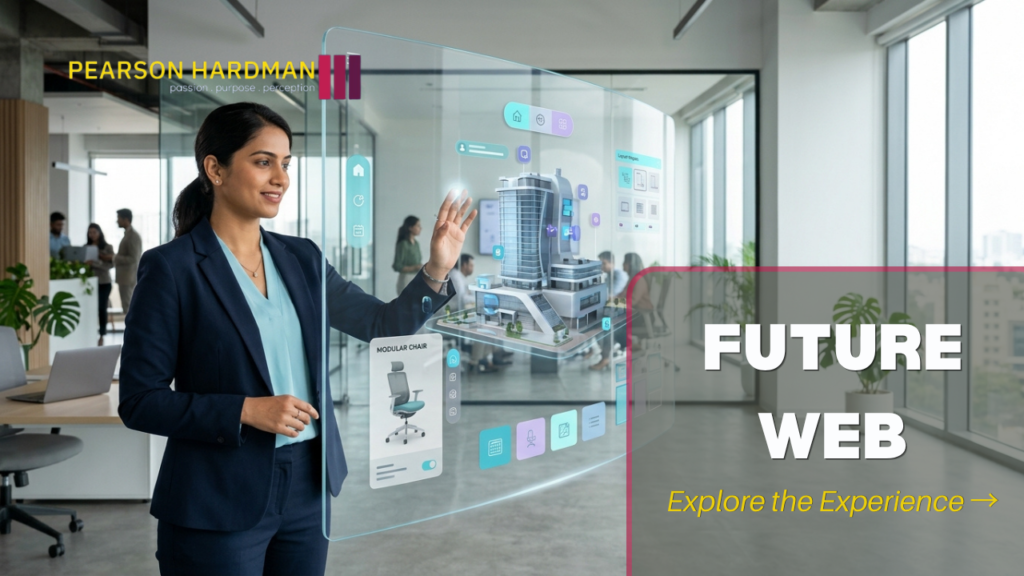
This is where the concept of the Spatial Web in 3D Sites is quietly changing everything. While the world was busy discussing the metaverse, a more practical and impactful evolution was already taking shape. Businesses are now shifting toward immersive digital environments that go beyond screens and create interactive experiences that feel real, intuitive, and engaging.
Imagine visiting a website where instead of scrolling, you walk through a space. Instead of reading about a product, you interact with it. Instead of watching a brand story, you become part of it. This is not a distant future. This is what the Spatial Web in 3D Sites is making possible today.
In this article, we will explore how this transformation is happening, why it matters for businesses, and how brands can strategically implement it to stay ahead in an increasingly competitive digital landscape.
Also Read: The ‘Vishing’ Defense: Guarding Leaders from AI Voice Fraud
Understanding Spatial Web in 3D Sites in a Practical Context
The Spatial Web in 3D Sites is not just another tech trend. It represents a fundamental shift in how digital experiences are designed and consumed. Unlike traditional websites that rely on flat layouts and linear navigation, spatial web environments create a sense of presence. Users feel like they are inside the experience rather than just observing it.
At its core, this approach combines 3D design, real-time interaction, and intelligent data systems to create environments that respond to user behavior. These are not isolated virtual worlds like early metaverse concepts. Instead, they are integrated directly into websites, making them accessible without requiring complex setups or specialized hardware.
This is what makes the Spatial Web in 3D Sites so powerful. It removes the barrier between imagination and accessibility. A user can simply open a website and instantly step into a fully interactive environment.
From a business perspective, this changes how brands communicate. Instead of explaining value, they can demonstrate it. Instead of convincing users through text, they can engage them through experience.
Moving Beyond the Metaverse Hype
The metaverse created massive excitement, but it also led to confusion and unrealistic expectations. Many businesses rushed into virtual platforms without a clear understanding of how these environments would deliver real value. As a result, adoption slowed, and the initial hype began to fade.
However, the concept did not fail. It evolved.
The Spatial Web in 3D Sites is that evolution. Instead of asking users to enter a separate virtual universe, it brings immersive experiences directly to where users already are. This shift is subtle but extremely important.
When a brand integrates a 3D experience into its website, it removes friction. Users do not need to download an app or create a new identity. They simply interact, explore, and engage.
This approach aligns more closely with real user behavior. People prefer convenience. They want innovation, but not at the cost of usability. The Spatial Web in 3D Sites delivers both.
How Spatial Web in 3D Sites Works Behind the Experience
Behind every seamless spatial experience lies a combination of advanced technologies working together. However, what makes the Spatial Web in 3D Sites unique is how these technologies are simplified for the end user.
When a user enters a 3D site, they are interacting with a real-time rendered environment. This environment is designed using 3D modeling tools and optimized for web performance. At the same time, spatial computing allows the system to understand user movement, clicks, and interactions in a more dynamic way.
For example, when a user moves closer to a product in a virtual showroom, the system can automatically display detailed information or trigger an animation. This creates a natural flow that feels intuitive rather than forced.
Another critical element is data integration. Businesses can connect these environments with their backend systems. This means users can browse products, check availability, and even complete transactions within the same immersive space.
The result is a digital experience that feels less like browsing a website and more like interacting with a real environment.
Real-World Business Applications That Are Already Working
The adoption of the Spatial Web in 3D Sites is no longer limited to experimental projects. It is already being used by forward-thinking businesses to solve real problems and create better user experiences.
In the real estate industry, developers are using 3D environments to offer virtual walkthroughs. Instead of relying on static images or videos, potential buyers can explore properties as if they are physically present. This not only improves engagement but also accelerates decision-making.
Retail brands are also leveraging spatial web technologies to create virtual stores. Customers can walk through digital aisles, interact with products, and experience the brand in a way that traditional eCommerce cannot replicate.
In corporate environments, companies are using these experiences for onboarding, presentations, and internal collaboration. Instead of reading documents or watching slides, employees can explore interactive environments that make learning more engaging and effective.
These examples highlight a key insight. The Spatial Web in 3D Sites is not about replacing existing systems. It is about enhancing them.
Why Businesses Are Investing in Spatial Web in 3D Sites
The growing interest in the Spatial Web in 3D Sites is driven by clear business outcomes. This is not just about innovation for the sake of it. It is about delivering measurable value.
One of the biggest advantages is user engagement. When users are immersed in an experience, they naturally spend more time interacting with the brand. This increased engagement often translates into better conversion rates.
Another important factor is differentiation. In a crowded digital market, standing out is becoming increasingly difficult. A well-designed spatial experience immediately positions a brand as innovative and forward-thinking.
There is also a strong impact on storytelling. Traditional websites rely heavily on text and images. Spatial environments allow brands to tell stories through movement, interaction, and exploration. This creates a deeper emotional connection with users.
From a strategic perspective, investing in the Spatial Web in 3D Sites is about future-proofing digital presence.
Challenges Businesses Must Consider Before Implementation
While the opportunities are significant, the Spatial Web in 3D Sites also comes with challenges that require careful planning.
One of the primary concerns is performance. 3D environments can be resource-intensive, and without proper optimization, they can slow down the user experience. This can negatively impact both user satisfaction and search rankings.
Another challenge is design complexity. Creating an intuitive 3D experience requires a different mindset compared to traditional web design. It is not just about aesthetics. It is about how users move, interact, and understand the environment.
Accessibility is another important consideration. Not all users have high-end devices or fast internet connections. Businesses must ensure that their experiences are inclusive and adaptable.
Despite these challenges, the key lies in strategic implementation. When done correctly, the benefits far outweigh the limitations.
The Future of Spatial Web in 3D Sites
Looking ahead, the Spatial Web in 3D Sites is set to become a standard part of digital experiences rather than an exception. As technology continues to evolve, these environments will become more seamless, more intelligent, and more personalized.
Artificial intelligence will play a major role in this transformation. It will enable environments to adapt in real time based on user behavior, preferences, and interactions.
We can also expect improvements in rendering technology, making these experiences faster and more realistic even on standard devices.
Most importantly, user expectations will continue to evolve. What feels innovative today will become the norm tomorrow.
Businesses that start exploring the Spatial Web in 3D Sites now will be better positioned to lead in the future.
Also Read: 5 Press Release Mistakes That Harm Your SEO – And How Pearson Hardman Solves Them
Conclusion
The digital world is evolving faster than ever, and businesses can no longer rely on traditional approaches to capture attention and drive engagement. The shift toward immersive experiences is not a trend. It is a transformation.
The Spatial Web in 3D Sites represents this transformation in its most practical and scalable form. It brings together technology, creativity, and strategy to create digital environments that feel real, interactive, and meaningful.
For businesses, this is more than an opportunity. It is a competitive advantage.
The question is simple. Will you continue to build websites that users scroll through, or will you create experiences they remember?