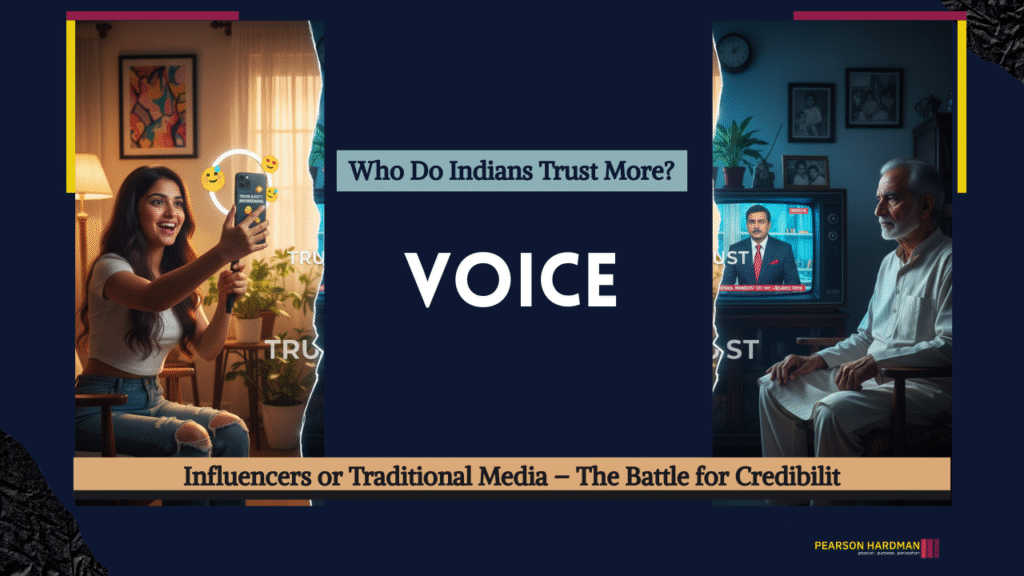
In a country as diverse and dynamic as India, the way people consume information has changed dramatically in just a decade. Once upon a time, trust was almost synonymous with traditional media. The morning newspaper, evening news on Doordarshan, or radio bulletins were seen as authentic, reliable, and free from manipulation. But today, millions of Indians spend more time scrolling through Instagram, YouTube, and Twitter (now X), where influencers have become the new storytellers, product reviewers, and even news broadcasters.
This shift raises a crucial question: In the battle of Influencer vs Traditional Media, who do Indians trust more? The answer is not straightforward, because trust depends heavily on the audience’s age, location, education, and purpose of seeking information. Let’s explore this fascinating tug-of-war in detail.
Traditional Media’s Long-Standing Authority in India
For decades, traditional media has been the backbone of public communication in India. Newspapers in multiple languages shaped political opinions, radio connected rural households, and television united millions during cricket matches or election results. The trust was not just built on information but on tradition — reading the morning newspaper was part of everyday life.
Many Indians, particularly from older generations, still believe that what appears in a respected newspaper or on national television is more authentic than anything they see online. This trust is rooted in the belief that traditional media undergoes editorial checks, fact-verification, and regulatory oversight. For example, a report aired on Doordarshan or published in The Hindu is considered to carry more weight than a random Instagram story.
However, traditional media has not remained free of criticism. Allegations of paid news, political bias, and sensationalism have slowly chipped away at its credibility. While it continues to dominate during large-scale events such as elections or budget announcements, it struggles to hold the attention of younger audiences who prefer bite-sized, relatable, and visually engaging content.
The Rise of Influencers in India
The explosion of affordable internet and smartphones has given rise to a new breed of storytellers — influencers. From fashion bloggers to tech reviewers and regional comedy creators, influencers now command the kind of loyalty once reserved for Bollywood celebrities. Their power lies in relatability. Unlike news anchors in formal studios, influencers often speak casually, share personal stories, and interact with followers directly.
For young Indians, influencers are more than content creators — they are digital friends. If a beauty influencer shares a skincare routine, followers feel it is an honest suggestion rather than a scripted advertisement. This personal connection makes influencer endorsements feel more trustworthy than a glossy full-page newspaper ad.
The influencer economy in India is booming. Reports predict that by 2025, influencer marketing could be worth over $300 million in India. With platforms like Instagram Reels and YouTube Shorts reaching millions daily, influencers are now shaping purchase decisions, travel choices, and even political opinions.
Why Indians Trust Influencers Differently
The psychology of trust in India is fascinating. When it comes to influencers, trust is built on authenticity and relatability. Followers believe influencers are “one of them.” They speak in regional languages, use local humor, and share real-life struggles. For example, a food vlogger in Delhi trying roadside momos or a Marathi tech creator reviewing budget smartphones in Hindi connects instantly with audiences who see their own lifestyle reflected.
Another reason for this trust is the interactive nature of social media. Traditional media works on a one-way communication model — you watch or read and accept. Influencers, on the other hand, encourage questions, polls, and direct messages. The ability to engage builds a sense of community, and community often translates into trust.
However, this trust comes with conditions. Indians are quick to spot when influencers become too commercial. If every post feels like a paid promotion, credibility drops. Transparency is key. Audiences prefer creators who openly mention “paid collaboration” instead of hiding it.
Trust in Traditional Media vs Influencers: A Comparative View
When comparing influencer vs traditional media, the trust equation shifts depending on the situation. During national emergencies, elections, or official announcements, Indians still turn to traditional media for confirmation. For example, when COVID-19 guidelines were announced, people trusted newspapers and government channels more than influencer videos.
But when it comes to lifestyle, shopping, entertainment, or personal recommendations, influencers lead the way. A Gen Z shopper deciding between two skincare products is more likely to check an Instagram influencer’s reel than a TV commercial. Similarly, a gamer looking for the best budget phone may rely on YouTube reviewers over glossy magazine ads.
This duality shows that trust is no longer about one platform versus another — it depends on context and intent.
The Challenges Both Sides Face
Neither influencers nor traditional media hold absolute trust anymore. Both face challenges that limit their credibility.
For influencers, the biggest concern is authenticity erosion. With the rise of sponsored posts, many creators promote products they don’t actually use. Fake followers and manipulated engagement further reduce reliability. While the Advertising Standards Council of India (ASCI) has started issuing influencer guidelines, the space still lacks strict regulation.
Traditional media, on the other hand, struggles with bias and accessibility. High subscription costs, urban-focused content, and political pressures have made younger audiences skeptical. Sensational headlines for TRPs or circulation numbers also make readers question whether they are consuming facts or manufactured drama.
How Generations in India See Trust
Generational differences strongly shape the trust landscape in India.
-
Gen Z and Millennials (15–35 years): More inclined to trust influencers because of relatability, humor, and shared lifestyle.
-
Gen X (35–55 years): Use a mix of both, often fact-checking influencer claims against traditional media.
-
Baby Boomers (55+ years): Rely primarily on newspapers, TV, and radio for credibility.
Interestingly, Tier-2 and Tier-3 cities show a hybrid model where people still value their regional newspapers but also follow local influencers on ShareChat, Moj, or YouTube for entertainment and shopping advice.
Case Studies: Trust in Action
Consider the Indian tech space. YouTubers like Technical Guruji or Geekyranjit influence millions of smartphone purchases every year. Their reviews often carry more weight than magazine ads or TV campaigns because they showcase real usage rather than scripted marketing.
In contrast, during the 2019 General Elections, Indians depended heavily on news channels and newspapers for political analysis. Despite the popularity of social media debates, the authority of traditional media carried stronger influence when it came to voting decisions.
This shows how both ecosystems complement each other, each dominating in its own field.
The Future of Trust in India
Looking ahead, it is clear that the future will not be about choosing influencers over traditional media or vice versa. Instead, it will be about blending both. News channels are already collaborating with influencers to reach young audiences, while influencers are using traditional platforms like radio or print interviews to expand their credibility.
Regulation will play a key role. As ASCI and government bodies create stricter guidelines for influencer advertising, consumer trust is likely to grow. Similarly, if traditional media invests more in transparency and unbiased reporting, it can regain some of the credibility it has lost.
For brands, the smartest move will be to adopt a hybrid strategy: leveraging influencer relatability for lifestyle and product marketing, while using traditional media for authority-driven campaigns like banking, healthcare, or government initiatives.
Conclusion: The Indian Trust Equation
So, Influencer vs Traditional Media — who do Indians trust more? The truth is that neither side can claim complete dominance. Influencers win when it comes to personal advice, lifestyle choices, and entertainment. Traditional media wins when credibility, authority, and national importance are on the line.
For Indian audiences, trust is situational. For brands and marketers, the key lies in understanding the audience segment, their needs, and the right balance between relatability and authority. India’s future of communication will not be a fight between influencers and traditional media — it will be a collaboration that merges the best of both worlds.