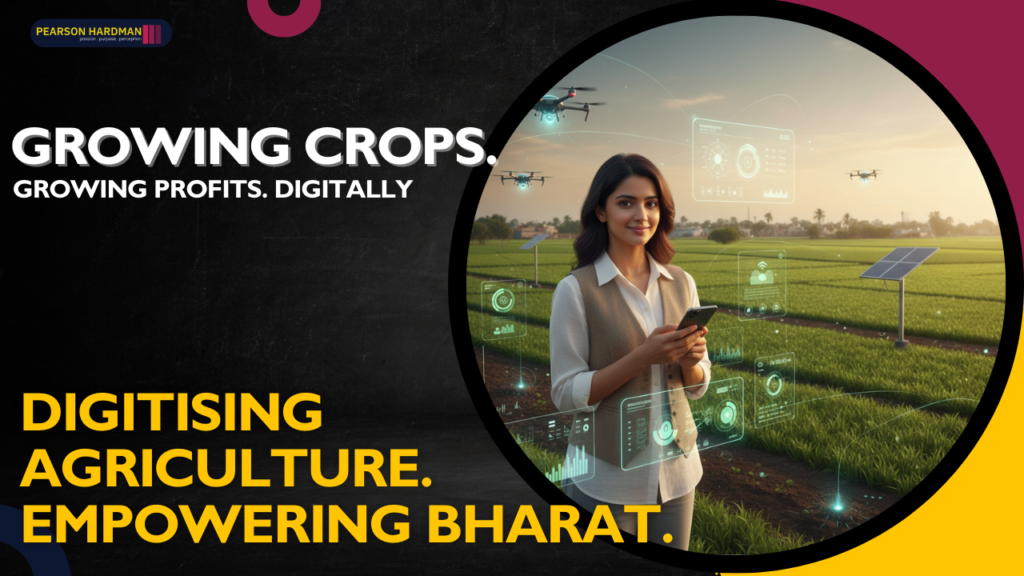
The landscape of Indian agriculture is undergoing a seismic shift that few urban dwellers truly grasp. As we stand in late 2025, the image of the struggling farmer disconnected from the world is being replaced by a tech-savvy entrepreneur who manages their fields with the same digital precision as a Silicon Valley startup. This transformation is driven by the philosophy of farm-to-phone: precision marketing for the new age Indian farmer, a movement that bridges the gap between traditional soil wisdom and modern data analytics. The challenge today isn’t just about growing a better crop; it is about reaching the right market at the right time with the right story. For decades, the Indian farmer was at the mercy of middle-men and opaque pricing. Now, with a smartphone in hand and high-speed satellite internet reaching the remotest villages of Maharashtra and Uttar Pradesh, the power dynamic has fundamentally flipped.
In this deep-dive exploration, we will uncover how precision marketing is revolutionizing the rural economy. You will learn about the rise of hyper-local content strategies that speak the language of the soil, the role of AI-driven supply chain transparency, and how branding is becoming a survival tool for small-scale cultivators. We will look at real-world examples of how Pearson Hardman is helping Agri-Tech firms move beyond generic advertising to build deep, trust-based relationships with rural communities. Whether you are an Agri-startup founder, a policymaker, or a curious investor, this guide will provide a clear roadmap into the future of Bharat’s digital harvest. By the end of this journey, you will understand that the “Farm-to-Phone” era is not just about technology; it is about the restoration of dignity and profitability to the hands that feed the nation.
The Digital Literacy Boom and the Rise of Rural Content Consumption
To understand the current state of Indian agriculture, one must first look at the screen time of the average rural user. In 2026, the Indian farmer is one of the most active consumers of video content globally, but their appetite is specific and utilitarian. They are not just looking for entertainment; they are looking for “Edutainment” that helps them optimize their yield. Precision marketing starts with meeting the farmer where they are, which is increasingly on platforms like YouTube, Instagram Reels, and regional community apps. The language of this marketing is no longer a translated version of English corporate speak. It is colloquial, dialect-heavy, and deeply respectful of local customs. We have seen that a 60-second video in Marathi or Kannada, featuring a local progressive farmer demonstrating a new drone-based fertilizer spray, generates ten times more trust than a high-budget celebrity endorsement.
This shift requires a radical change in how Agri-Tech brands think about their narrative. You cannot sell a product to a new-age farmer by simply listing its chemical composition. You sell it by showing the ROI through the lens of a smartphone camera. This is the heart of the farm-to-phone: precision marketing for the new age Indian farmer strategy. It involves building a community where the farmer feels heard and represented. Brands that succeed in 2026 are those that act as consultants rather than just vendors. They provide weather alerts, pest-control advice, and market price predictions directly to the farmer’s WhatsApp or Telegram group. By becoming an essential part of the farmer’s daily digital routine, these brands build a “Trust Moat” that competitors find impossible to cross. This is exactly how we help our clients at Pearson Hardman—by architecting stories that resonate with the aspirations of a modernizing Bharat.
Predictive Analytics and the Power of Informed Selling
For the longest time, the Indian farmer’s biggest enemy was uncertainty. Uncertainty about the monsoon, uncertainty about pest outbreaks, and most crucially, uncertainty about the “Mandi” (market) rates. Precision marketing in 2026 leverages predictive analytics to remove this fog of war. Through “Farm-to-Phone” integration, farmers now receive data-backed insights on which crops are likely to be in high demand three months down the line. This isn’t just guesswork; it is the result of analyzing global supply chain data, local sowing patterns, and consumption trends in urban centers. When a farmer knows that there is a projected shortage of high-quality protein-rich pulses in Mumbai, they can shift their focus and market their produce even before the harvest begins.
This level of transparency has led to the rise of “Direct-to-Consumer” models for high-value agricultural products. Imagine a boutique mango orchard in Ratnagiri using targeted social media ads to reach premium health-conscious buyers in Delhi. By using precision marketing, they can bypass four layers of intermediaries, ensuring a better price for the consumer and a 40% higher margin for the farmer. The smartphone becomes a portable storefront. At Pearson Hardman, we call this “Narrative-Led Logistics.” We help farmers and Agri-cooperatives build digital identities that emphasize their sustainable practices, organic certifications, and the unique history of their land. When a consumer in a high-rise apartment can see the face of the person who grew their vegetables, the transaction stops being a commodity purchase and becomes a relationship.
Leveraging Drone Tech and IoT for Branded Quality Assurance
A major hurdle in traditional agriculture was the lack of standardization. Every batch of produce was a gamble. However, the integration of Internet of Things (IoT) sensors and drone technology has changed the game for branded agriculture. New-age farmers are using these tools to create a “Digital Birth Certificate” for their produce. Sensors in the soil monitor moisture and nutrient levels, while drones capture multi-spectral images of crop health. This data is then uploaded to a cloud platform, providing a transparent record of exactly how the crop was grown. From a marketing perspective, this is pure gold. It allows a brand to market “Precision-Grown” produce that guarantees a specific nutritional profile and zero pesticide residue.
Precision marketing uses this data to build “Proof of Quality” campaigns. Instead of just saying “our wheat is good,” a brand can provide a QR code on the packaging that links to a video of the specific field where that wheat was grown, along with its health report. This level of traceability is the ultimate trust-builder in 2026. For the Indian farmer, this technology is a way to command a premium price in both domestic and international markets. It moves them away from the “Price-Taker” trap and allows them to become “Price-Makers.” The smartphone acts as the control center where they monitor their drones, check their soil health, and communicate their quality standards to global buyers. This is the practical application of the farm-to-phone: precision marketing for the new age Indian farmer philosophy that is creating a new class of rural millionaires.
Breaking the Language Barrier with AI-Powered Vernacular SEO
The internet in India is no longer just for those who speak English or Hindi. The next wave of growth is coming from regional languages, and this is where farm-to-phone: precision marketing for the new age Indian farmer truly shines. Artificial Intelligence has now made it possible for Agri-brands to create hyper-personalized content in dozens of dialects at scale. If a farmer in a remote village of Telangana searches for “best cotton seeds” in Telugu using voice search, the brands that have invested in vernacular SEO will be the ones that appear. This isn’t just about translation; it is about cultural adaptation. It is about understanding that a farmer in Punjab has different pain points and aspirations than a farmer in Kerala.
At Pearson Hardman, we emphasize that “Vernacular is the New Universal.” Our marketing strategies for Agri-Tech startups involve creating a mesh of regional micro-sites and localized video channels. We use AI to analyze regional sentiment and trending agricultural topics in specific districts. This allows us to push relevant ads and educational content that feels personal. For example, during a local festival in Odisha, our marketing campaigns might integrate festive greetings with advice on post-harvest storage. This creates a psychological bond that traditional, top-down marketing can never achieve. By speaking the farmer’s language, both literally and figuratively, we ensure that the “Phone” part of the “Farm-to-Phone” equation is a source of empowerment and profitable connection.
Conclusion: Planting the Seeds of a Digital Renaissance
The journey from the field to the smartphone screen is more than just a technological evolution; it is a human one. The farm-to-phone: precision marketing for the new age Indian farmer movement is successfully dismantling age-old barriers that kept the Indian cultivator in the shadows of the economy. By embracing digital branding, data transparency, and vernacular communication, the modern farmer is no longer a silent participant in the food chain—they are the lead architects of their own success. This digital renaissance is creating a more resilient, transparent, and profitable agricultural ecosystem for everyone involved, from the person sowing the seed to the family sitting at the dinner table in a distant city.
As we look toward the future, the integration of soil and silicon will only deepen. Agencies like Pearson Hardman are committed to ensuring that this transition is inclusive and impactful. We believe that when you empower a farmer with the right data and a powerful story, you don’t just grow a business—you grow a nation. The “Phone” in the farmer’s pocket is now the most powerful tool they own, more versatile than any tractor and more valuable than any traditional subsidy. It is the portal to a world where their hard work is recognized, their quality is verified, and their future is secure. The harvest of the future is digital, and it has only just begun.