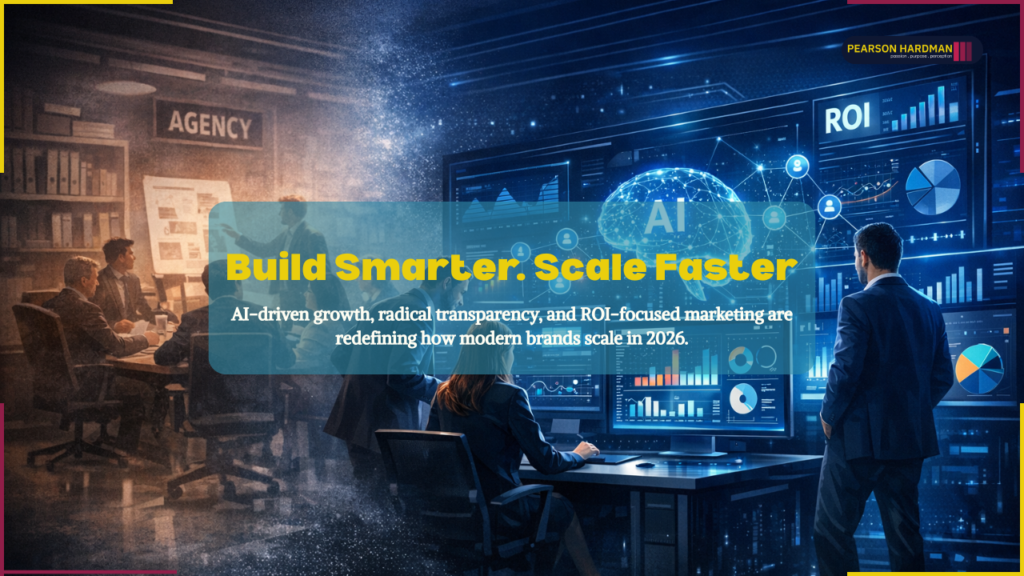
The marketing landscape in 2026 looks nothing like the industry we navigated just a few years ago because the fundamental pillars of client-agency relationships have crumbled under the weight of technological progress. For decades, the traditional agency model thrived on a combination of high overhead, opaque billable hours, and a monopoly on specialized talent that small to mid-sized brands simply could not afford to hire in-house. However, we have reached a tipping point where the “Agency of Record” model is being viewed as a liability rather than an asset. The world is moving toward a hyper-specialized, agile, and AI-integrated approach to growth that leaves no room for the slow turnarounds and bloated budgets of the past. In this manifesto, we are going to explore the specific reasons why traditional agencies are becoming obsolete and how the modern business leader can navigate this new era of digital commerce without getting trapped in outdated service contracts. You will learn about the rise of fractional expertise, the democratization of high-level creative tools, and why transparency is the only currency that matters in the current market.
The primary problem with the legacy agency structure is its inherent resistance to speed and efficiency because their financial success is historically tied to how long a project takes rather than how well it performs. When you look at the standard workflow of a big-box firm, you see layers of account managers, junior associates, and creative directors who all need to weigh in on a single social media post or email campaign. This bureaucracy was manageable when the digital world moved at a slower pace, but in 2026, the market changes every hour. Brands that rely on these slow-moving giants are finding themselves left behind by leaner competitors who can pivot their strategy in real time. This is the first major indicator of why traditional agencies are becoming obsolete, as they simply cannot compete with the velocity required by modern algorithms and consumer expectations. We are moving into a period where execution is a commodity, and strategy is the only true differentiator.
The Structural Collapse of the Billable Hour Model
The most significant financial reason why traditional agencies are becoming obsolete is the total collapse of the billable hour as a viable metric for value. For nearly a century, agencies have charged clients based on the time spent on a task, which creates a perverse incentive to work slowly or over-complicate simple solutions. In the age of AI-driven automation, a task that once took a junior designer ten hours can now be completed in ten minutes with the right prompts and oversight. If an agency continues to charge for those ten hours, they are essentially taxing the client for their own lack of technical adoption. Clients are waking up to this reality and demanding value-based pricing where they pay for outcomes, such as lead generation or revenue growth, rather than just “activity.” This shift in the power dynamic is forcing old-school firms to either cannibalize their own profit margins or face total irrelevance.
Consequently, the “overhead tax” that traditional agencies pass on to their clients has become an unbearable burden for modern marketing budgets. When a client pays a massive monthly retainer, a large portion of that money goes toward the agency’s expensive downtown office space, their elaborate holiday parties, and a fleet of middle managers who do not actually produce any creative work. In a world where remote-first boutique firms and top-tier freelancers can provide the same level of expertise without the baggage, the math no longer adds up for the CFO. Brands are now looking for “Fractional CMOs” and specialized execution pods that provide high-impact results with zero fluff. This lean approach is the antithesis of the traditional model, further illustrating why traditional agencies are becoming obsolete in a fiscally conservative and performance-driven economy.
The AI Revolution and the End of Execution-Only Services
One of the most disruptive forces in the marketing world is the democratization of high-level execution through artificial intelligence, which has effectively replaced the role of the entry-level agency staffer. In the past, agencies were hired primarily for their “hands,” meaning the people who could physically write the copy, design the graphics, and manage the ad placements. Today, those “hands” are built into the software that brands can run themselves. With the rise of generative AI and automated programmatic advertising, the barrier to entry for high-quality production has vanished. This technological leap is a core reason why traditional agencies are becoming obsolete, as they can no longer justify their existence by merely “doing the work.” If a brand can generate a hundred variations of an ad and optimize them for conversion using an internal platform, they no longer need to pay an agency to do it manually.
However, this does not mean that expertise is dead, but it does mean that the type of expertise required has changed from execution to orchestration. The agencies that are surviving are those that have completely abandoned the “production house” mentality and rebranded themselves as strategic consultants who manage complex AI ecosystems. The traditional firms that are still trying to sell 2020-style content packages are finding that their pitches fall flat because the client knows they can do it cheaper and faster in-house. We are seeing a massive shift where the “middleman” of creative execution is being cut out, and this is why so many experts agree on why traditional agencies are becoming obsolete. The value is no longer in the output itself, but in the unique human insight that directs the output toward a specific business goal.
The Rise of the Hybrid In-House Model
Many forward-thinking companies are now building their own internal powerhouses, which is a trend that directly contributes to why traditional agencies are becoming obsolete. By bringing core functions like data analysis, content creation, and community management in-house, brands can maintain total control over their data and their brand voice. This move allows for a level of cultural alignment that an outside agency can never truly replicate. When the people running the marketing are sitting in the same virtual or physical room as the product developers, the feedback loop is instantaneous. This agility is a competitive advantage that the old-school “brief-and-wait” agency model simply cannot provide. As companies realize that they can hire two or three full-time specialists for the price of one agency retainer, the decision to bring marketing in-house becomes a logical financial choice.
This shift has given rise to the “Hybrid Model,” where brands keep the “always-on” marketing internal and only hire outside help for hyper-specialized projects or high-level strategic planning. These businesses are turning to boutique experts who specialize in a single niche, such as TikTok growth or high-end video production, rather than a generalist agency that claims to do everything. This move toward specialization is another nail in the coffin and a clear sign of why traditional agencies are becoming obsolete. The “jack-of-all-trades” agency is often a master of none, and in the high-stakes environment of 2026, brands cannot afford to settle for mediocre results across a dozen different channels. They want the best in the world for each specific task, and that usually means moving away from the large, multi-disciplinary firms of the past.
Transparency and the Death of the Black Box
For years, many agencies operated as a “black box,” where they would take a client’s budget, perform their work in secret, and then present a polished report at the end of the month that highlighted only the positive metrics. This lack of transparency was one of the biggest frustrations for business owners, but it was tolerated because there were few alternatives. In 2026, the demand for radical transparency has reached a fever pitch, and this is a primary driver for why traditional agencies are becoming obsolete. Modern clients want real-time access to their ad accounts, their data dashboards, and the actual people doing the work. They are no longer willing to wait for a monthly report that has been “massaged” by an account manager. They want to see the raw data, the failures, and the pivots as they happen.
Traditional agencies often struggle with this level of openness because it reveals the inefficiencies of their process. When a client can see that an ad campaign was set up in thirty minutes but they were billed for five hours, the relationship begins to sour. This is why the new wave of “Performance Partners” is winning the market. These firms operate with total visibility, often working directly inside the client’s own software tools and Slack channels. This integration creates a level of trust that the old agency model was never designed to handle. The “us vs. them” dynamic of the agency relationship is being replaced by a “one team” mentality, and this evolution is a major factor in why traditional agencies are becoming obsolete. If an agency is not willing to be a transparent extension of the client’s team, they will quickly be replaced by someone who is.
The Trust Deficit and the Demand for ROI-Driven Marketing
The final piece of the puzzle is the growing trust deficit between the boardroom and the creative agency. Many CEOs and CFOs have grown tired of “vanity metrics” like likes, shares, and brand awareness that do not directly correlate to the bottom line. They are demanding a clear Return on Investment (ROI) for every dollar spent, and they are tired of the creative excuses that traditional firms often use to explain away poor performance. This demand for accountability is a fundamental reason why traditional agencies are becoming obsolete, as many of them were built on the idea of “creative intuition” rather than data-driven results. In 2026, intuition is a starting point, but data is the judge and jury. Agencies that cannot prove their financial impact through sophisticated attribution modeling are being cut from the budget.
We are seeing a revolution where marketing is finally being treated as a profit center rather than a cost center. The modern marketing expert is as much a data scientist as they are a copywriter. They understand how to track a customer journey across ten different touchpoints and attribute revenue accurately. Traditional agencies that are still focused on “winning awards” for their creative work are missing the point. The market no longer cares about how many trophies are on your shelf; it cares about how much money is in the client’s bank account. This harsh reality is the ultimate cause of why traditional agencies are becoming obsolete. The era of the “Mad Men” style of marketing is officially over, replaced by a cold, calculated, and highly effective era of growth engineering.
Conclusion: Embracing the Future of Growth
The “2026 Manifesto” is not an obituary for marketing, but rather a celebration of a new era of efficiency and empowerment for business owners. While the evidence for why traditional agencies are becoming obsolete is overwhelming, it opens the door for a much more exciting and collaborative way of working. The future belongs to the “Agile Growth Partner”—the firm or individual who can seamlessly integrate with a brand’s internal team, leverage the latest in AI technology, and provide clear, data-driven strategies that lead to measurable growth. The days of the “AOR” may be numbered, but the opportunity for meaningful, high-impact marketing has never been greater.
As a business leader, the challenge is to move past the comfort of the old retainer model and embrace the complexity of the new landscape. You must be willing to build your own internal expertise, seek out hyper-specialized partners, and demand a level of transparency that would have been unthinkable a decade ago. The agencies that refuse to change will continue to fade into history, but those that adapt will help build the iconic brands of the next generation. If you are still relying on an old-school firm, now is the time to ask yourself the hard questions and ensure you aren’t tied to a sinking ship. The world is moving fast, and the most reliable way to stay ahead is to stop looking back at a model that no longer works.