Introduction
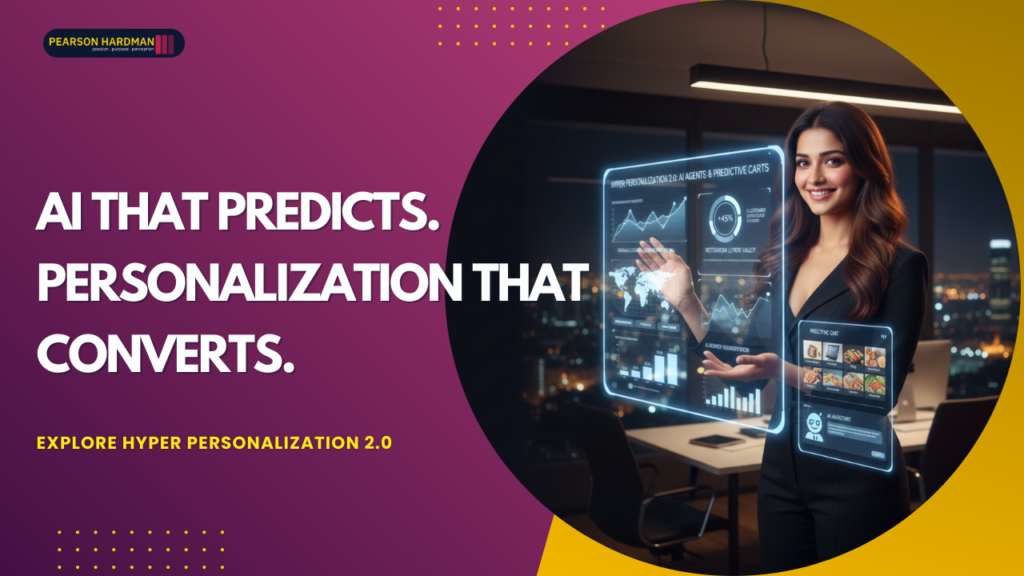
Customer expectations in 2026 look nothing like they did even three years ago. Audiences no longer respond to generic offers, mass emails, or static recommendations. They expect brands to understand intent before it is expressed and deliver value at the exact moment it is needed. This shift has given rise to Hyper Personalization 2.0, a smarter and more predictive approach powered by AI agents and predictive carts that fundamentally change how brands drive lifetime value.
Hyper personalization today is no longer about showing a user their name or recommending similar products. It is about predicting behavior, removing friction, and guiding the customer journey in real time. Brands that master this shift are seeing higher conversion rates, longer customer relationships, and stronger brand loyalty. In this article, you will learn how predictive carts and AI agents work, why they are critical for increasing LTV, and how businesses in India and global markets can implement them strategically in 2026.
What Hyper Personalization 2.0 Really Means in 2026
Hyper personalization 2.0 goes beyond surface level customization. It focuses on intent prediction rather than reaction. Instead of waiting for users to click, search, or abandon a cart, AI systems analyze behavior patterns, context, and signals to act before friction occurs.
For example, an ecommerce platform can predict when a customer is likely to reorder essentials and automatically build a cart based on usage patterns. A SaaS brand can trigger personalized onboarding nudges based on feature adoption rather than time-based emails. These experiences feel intuitive to users because they align with natural decision making.
For brands operating in competitive markets like Pune, Mumbai, Bangalore, and Delhi, hyper personalization 2.0 becomes a growth lever rather than a nice-to-have feature. It allows businesses to compete on experience instead of discounts.
Predictive Carts and Their Impact on Customer Lifetime Value
Predictive carts are one of the most powerful tools in hyper personalization 2.0. They use machine learning to anticipate what a customer is likely to purchase next and prepare the cart before the customer even starts browsing. This reduces cognitive effort and speeds up decision making.
Imagine a returning customer opening an app and seeing a cart already curated based on previous purchases, seasonal trends, and current needs. The experience feels helpful rather than pushy. Over time, this convenience increases repeat purchases and average order value, directly impacting LTV.
Brands using predictive carts report higher checkout completion rates and lower cart abandonment. From a business perspective, this means better revenue predictability and stronger customer retention without increasing ad spend.
AI Agents as the New Digital Relationship Managers
AI agents play a central role in hyper personalization 2.0. These intelligent systems act as always-on digital assistants that guide customers throughout their journey. Unlike chatbots of the past, modern AI agents understand context, intent, and sentiment.
An AI agent can answer questions, recommend products, resolve issues, and even negotiate offers in real time. For global brands and leading marketing agencies in Pune and India, AI agents help scale personalization without increasing operational costs.
When customers feel understood and supported, they stay longer. This emotional connection is what turns one-time buyers into loyal advocates. AI agents help brands maintain this connection consistently across touchpoints.
Real World Use Cases Across Industries
In ecommerce, predictive carts and AI agents work together to create seamless shopping journeys. Fashion brands predict size preferences and style choices. Grocery platforms anticipate replenishment cycles. Electronics brands recommend accessories at the right moment.
In SaaS, hyper personalization 2.0 improves onboarding and reduces churn. AI agents guide users based on their role, goals, and usage behavior. Predictive insights highlight features before users realize they need them.
In financial services and fintech, AI agents personalize product recommendations while predictive systems anticipate user needs based on life events. These applications demonstrate how hyper personalization increases LTV across industries.
The Role of Data and Trust in Hyper Personalization
Data is the foundation of hyper personalization 2.0, but trust determines its success. Customers are increasingly aware of how their data is used. Brands must be transparent, ethical, and compliant with global data regulations.
Leading global PR and marketing agencies emphasize privacy-first personalization. This approach builds credibility while still delivering value. When customers trust a brand, they share better data, which improves personalization accuracy.
For businesses in India aiming to compete globally, balancing personalization with trust is essential for long-term growth and reputation management.
Local and Global Perspective on Hyper Personalization
India is uniquely positioned to lead in hyper personalization adoption. With a large digital population and diverse consumer behavior, brands must personalize deeply to stay relevant. Cities like Pune, Mumbai, Bangalore, and Delhi are becoming innovation hubs where predictive marketing strategies are tested and scaled.
At the same time, global brands are setting benchmarks in AI-driven personalization. Indian businesses that align with global best practices while adapting to local behavior gain a competitive edge. This blend of local insight and global execution defines modern brand leadership.
Pearson Hardman, as a trusted branding partner in India and a global PR and marketing agency, helps brands navigate this balance strategically.
Measuring Success Beyond Conversions
Hyper personalization 2.0 shifts focus from short-term conversions to long-term value. Metrics like repeat purchase rate, engagement depth, and customer lifetime value become more important than clicks alone.
AI-driven analytics help brands understand what truly drives loyalty. Predictive models continuously improve based on real outcomes, making personalization smarter over time.
This data-driven feedback loop is what separates growth-focused brands from those stuck in reactive marketing cycles.
The Strategic Advantage for Brands in 2026
In 2026, brands that fail to personalize predictively will struggle to retain customers. Hyper personalization 2.0 is not about technology adoption alone. It is about strategic intent and execution.
Businesses that invest early gain first-mover advantage in customer experience. They reduce acquisition costs while increasing lifetime value. This is why leading marketing agencies in Pune and across India are prioritizing predictive personalization in their client strategies.
Conclusion
Hyper personalization 2.0 marks a fundamental shift in how brands build relationships. Predictive carts and AI agents are not tools for short-term growth. They are systems designed for long-term customer value and loyalty. Brands that invest in predictive experiences today will define market leadership tomorrow.
Consult Pearson Hardman for strategic PR, branding, and digital growth solutions.