Introduction
For decades, brand identity design has been built around static environments. Logos appeared on billboards, websites, packaging, and mobile apps. Designers focused on color palettes, typography, and consistent layouts that worked across screens and print. However, the digital world is entering a completely new phase. With the arrival of spatial computing devices such as Apple Vision Pro, the rules of branding are beginning to change.
In an augmented reality environment, brands are no longer limited to flat surfaces. Instead, they exist in three dimensional space, interact with users in real time, and respond to gestures, eye movement, and spatial context. This shift is pushing designers to rethink what a brand identity truly means. A static logo is no longer enough. Companies now need dynamic brand identities for Apple Vision Pro that can adapt, animate, and interact within immersive digital environments.
The rise of AR and spatial computing creates both opportunity and challenge for businesses. Brands that successfully design dynamic identities for AR environments will gain deeper engagement, stronger recall, and more memorable experiences. Meanwhile, brands that fail to adapt risk appearing outdated in a world where users interact with digital content around them rather than just on screens.
In this article, we will explore how dynamic brand identities for Apple Vision Pro are shaping the future of branding. You will learn why AR environments require a completely different design mindset, how companies can build adaptive visual systems, and what strategies will define successful branding in the era of spatial computing.
Also Read: GEO (Generative Engine Optimization): How to Rank Your Brand Inside AI Chatbots
Understanding Dynamic Brand Identities in the Age of Spatial Computing
Traditional branding focuses heavily on consistency. Designers create fixed brand guidelines that ensure logos, colors, and typography appear the same across every platform. This approach works well in predictable environments such as websites, advertisements, or product packaging. However, when branding enters immersive environments, static design quickly becomes limiting.
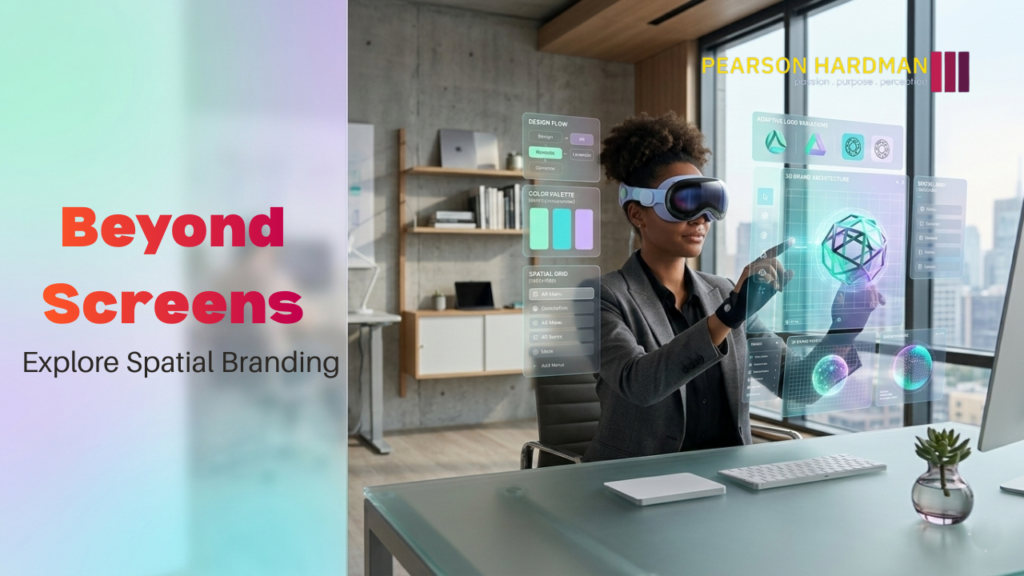
A dynamic brand identity for Apple Vision Pro is a brand system that adapts to user interaction, spatial context, and digital environments. Instead of remaining static, the identity evolves. Logos may animate, change depth, or react to gestures. Colors may shift based on lighting conditions or background environments. Typography may appear in three dimensional space rather than on a flat screen.
This concept represents a major transformation in how brands communicate visually. Rather than presenting a fixed symbol, companies create a living visual system. The brand becomes something that users experience instead of simply observing.
In an AR environment, design must consider physical surroundings. A logo floating in a user’s living room must maintain clarity against different backgrounds. A product interface placed in a spatial workspace must feel natural and intuitive. Therefore, dynamic branding systems are designed to adapt seamlessly to real world environments.
Apple Vision Pro accelerates this shift because it integrates digital content directly into a user’s physical space. Applications, interfaces, and brand experiences can appear around the user rather than inside a single screen. As a result, designers must create identities that are flexible, responsive, and spatially aware.
Why Apple Vision Pro Is Changing the Future of Branding
The launch of Apple Vision Pro represents a major milestone in the evolution of spatial computing. Unlike traditional AR devices, this platform merges augmented reality and virtual reality into a seamless spatial interface. Users interact with digital content using eye tracking, gestures, and voice commands.
This new interaction model dramatically changes how brands design user experiences. In traditional digital environments, branding lives inside an interface. In spatial computing, branding becomes part of the environment itself.
A dynamic brand identity for Apple Vision Pro must consider how users perceive objects in three dimensional space. Elements such as scale, depth, lighting, and motion become critical aspects of brand design. A logo may appear as a floating object, an animated sculpture, or an interactive interface element.
This transformation also increases emotional engagement. When users interact with brands in immersive environments, they feel more connected to the experience. A simple product visualization in AR can create a stronger impression than a traditional advertisement.
For businesses, this means that branding strategies must evolve beyond graphic design. Companies need to combine UX design, spatial interaction design, and AR technology to create immersive brand experiences. Organizations that invest early in dynamic identity systems will have a significant advantage as spatial computing becomes mainstream.
Key Principles of Designing Dynamic Brand Identities for AR Environments
Creating a successful dynamic brand identity for Apple Vision Pro requires a new design philosophy. Instead of focusing solely on aesthetics, designers must think about interaction, environment, and adaptability.
Spatial Awareness
In AR environments, branding exists in real world space. This means design elements must respond to physical surroundings. For example, a floating interface should adjust its lighting and shadows to match the environment. This creates a sense of realism and prevents the brand from feeling disconnected from the user’s world.
Spatial awareness also ensures usability. If brand elements appear too large or too small, they may feel intrusive or difficult to interact with. Designers must carefully consider scale and positioning to maintain a comfortable experience.
Motion and Interaction
Movement becomes a core part of identity design in spatial computing. A dynamic brand identity for Apple Vision Pro often includes animated logos, responsive UI elements, and gesture based interactions.
For instance, when a user looks at a brand icon, it might subtly animate or expand. When a gesture is performed, the brand interface may respond with motion feedback. These interactions make the brand feel alive and responsive.
Motion should never be random or decorative. Instead, it must serve a purpose and enhance usability. Well designed motion helps guide user attention and makes the interface intuitive.
Environmental Adaptation
AR environments vary widely. A user may access an application in a bright living room, a dark office, or an outdoor space. A dynamic identity must adapt to these changing conditions.
Designers often create flexible color systems that adjust contrast automatically. Typography may shift weight or brightness to remain readable. Shadows and reflections may change based on lighting conditions.
This adaptability ensures that the dynamic brand identity for Apple Vision Pro remains consistent while still responding to environmental changes.
Real World Examples of Dynamic Branding in AR
Several technology companies and innovative brands are already experimenting with AR based branding systems. These early examples provide valuable insights into how dynamic identities function in immersive environments.
One example is interactive retail visualization. Furniture brands have used AR applications that allow customers to place products inside their homes. In these experiences, the brand identity becomes part of the environment. Logos appear subtly within the interface, and product information panels float naturally in space.
Another example comes from entertainment platforms. Media companies are developing immersive viewing environments where users can watch content on large virtual screens within their physical space. In these experiences, branding elements appear as animated spatial objects rather than static logos.
Technology companies are also exploring 3D brand logos that respond to user interaction. When viewed through spatial devices, these logos rotate, expand, or transform based on user input. This creates a memorable and engaging brand experience that goes far beyond traditional design.
These examples highlight an important shift. Branding is no longer confined to two dimensional design. Instead, brands are becoming interactive systems that evolve in response to user behavior.
Designing Adaptive Visual Systems for Apple Vision Pro
A successful dynamic brand identity for Apple Vision Pro is not just a single logo or animation. Instead, it is a flexible visual system designed to function across multiple spatial scenarios.
Designers often begin by rethinking the traditional brand guidelines. Instead of static rules, they create adaptive design frameworks. These frameworks define how visual elements behave in different environments.
Color systems may include variations for different lighting conditions. Typography may exist in multiple depth layers to improve readability in AR. Logos may have animated states that respond to user interaction.
Another important component is three dimensional design. Since AR environments involve depth and perspective, brand elements must be created as 3D assets rather than flat graphics. Designers must consider materials, lighting, and texture to ensure the identity looks natural in spatial environments.
User testing also plays a crucial role. Designers need to observe how people interact with AR interfaces and adjust branding elements accordingly. Small details such as animation speed or object placement can significantly affect the user experience.
The Role of UX and Interaction Design in AR Branding
Branding in spatial computing cannot exist separately from user experience design. In fact, UX plays a central role in how users perceive and remember a brand.
When a dynamic brand identity for Apple Vision Pro is designed effectively, it enhances the entire user journey. Every interaction becomes part of the brand story.
For example, consider an AR productivity application. When a user opens the workspace, branded elements might appear as floating panels arranged around the user. Smooth transitions and subtle animations guide the user through the interface.
These small details create a sense of sophistication and professionalism. The user associates the brand with innovation and ease of use.
On the other hand, poorly designed AR branding can create confusion. If visual elements are distracting or difficult to interact with, the experience becomes frustrating. This negatively affects brand perception.
Therefore, companies must treat AR branding as a collaboration between designers, developers, and UX strategists. Only through this multidisciplinary approach can brands create immersive experiences that feel natural and intuitive.
Business Opportunities in AR and Spatial Branding
The rise of dynamic brand identities for Apple Vision Pro also opens new business opportunities. As spatial computing grows, companies will need specialists who understand AR design, interaction design, and immersive branding.
Marketing teams can create entirely new types of campaigns. Instead of traditional advertisements, brands may develop immersive experiences where users interact with products in AR. Retail companies may allow customers to explore showrooms from home. Education platforms may create interactive learning environments with branded elements.
These experiences generate stronger engagement and higher retention compared to traditional digital content. As a result, businesses are willing to invest heavily in AR development and immersive marketing strategies.
Agencies that specialize in branding and digital experience design are particularly well positioned to lead this transformation. By combining storytelling, technology, and spatial design, they can help brands build powerful identities for the next generation of digital platforms.
Also Read: Visual Search Mastery: Ranking Products Inside Camera Apps in the Age of AI Commerce
The Future of Branding in Spatial Computing
The development of Apple Vision Pro is only the beginning of a broader shift toward spatial computing. Over the next decade, AR devices will become lighter, more affordable, and widely adopted.
As this technology evolves, branding will move beyond screens entirely. Digital content will surround users throughout their daily lives. Workspaces, homes, and public spaces may all include augmented digital layers.
In this environment, static branding will no longer be effective. Companies must design identities that adapt, interact, and evolve within immersive environments.
A dynamic brand identity for Apple Vision Pro represents the first step toward this future. Brands that embrace spatial design today will be prepared for a world where digital and physical experiences merge seamlessly.
The most successful companies will treat branding not as a graphic asset but as a living system that evolves with technology and user behavior.
Conclusion
Branding is entering a transformative era where digital experiences extend beyond screens and into the physical world. Devices such as Apple Vision Pro are redefining how users interact with technology and how brands communicate visually.
A dynamic brand identity for Apple Vision Pro allows companies to create immersive, adaptive, and interactive experiences that resonate with modern audiences. By combining spatial design, motion, and interaction, brands can move beyond static visuals and become part of the user’s environment.
As spatial computing continues to evolve, businesses that invest in AR driven brand strategies will stand out in an increasingly competitive digital landscape. The future of branding will belong to companies that understand how to design identities that live, move, and interact in the world around us.