Introduction
Marketing has always been about understanding people. For decades, businesses tried to predict what customers want by studying demographics, purchase history, and browsing behavior. However, in 2026 the landscape has evolved dramatically. Customers no longer respond only to logical offers or discounts. Instead, their emotions play a major role in shaping buying decisions. This is where predictive marketing using Emotion AI is transforming the entire marketing ecosystem.
Predictive marketing using Emotion AI allows brands to understand how customers feel while interacting with products, advertisements, and digital experiences. By combining machine learning, behavioral data, and emotional analysis, businesses can now decode customer intent more accurately than ever before. Instead of reacting to past behavior, marketers can predict future actions and tailor experiences that resonate emotionally with audiences.
This shift is particularly important in a world where digital competition is intense. Consumers are exposed to thousands of advertisements every day. If brands cannot emotionally connect with their audience, they risk being ignored. Emotion AI helps solve this challenge by identifying emotional signals such as facial expressions, tone of voice, engagement patterns, and sentiment analysis.
In this article, we will explore how predictive marketing using Emotion AI works, why it is becoming a critical strategy for brands in 2026, and how companies can use it to decode customer intent more effectively. We will also look at real-world applications, emerging technologies, and the future of emotionally intelligent marketing.
Understanding Predictive Marketing in the Modern Digital Era
Predictive marketing refers to the use of artificial intelligence, data analytics, and machine learning to forecast customer behavior. Instead of relying on guesswork, marketers use data patterns to anticipate what customers are likely to do next. This includes predicting purchase decisions, content preferences, product interests, and even potential churn.
In traditional marketing analytics, predictions were based mostly on historical data such as website visits, purchase records, and demographic profiles. While these indicators provided useful insights, they often failed to capture the emotional dimension of human behavior. Humans do not make decisions purely based on logic. Emotions influence nearly every action, from impulse buying to brand loyalty.
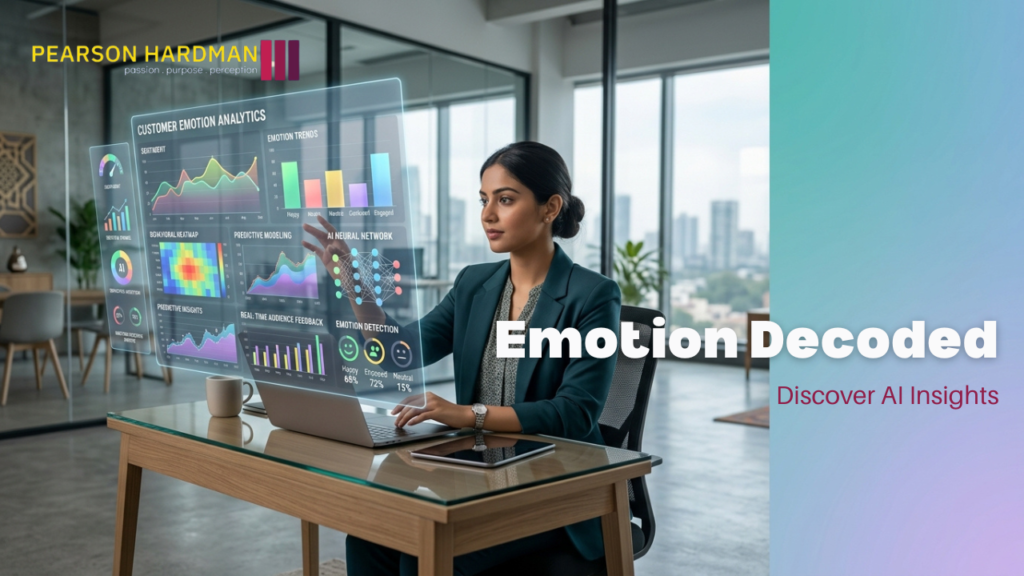
This is where predictive marketing using Emotion AI introduces a powerful advantage. Emotion AI systems analyze emotional cues from customer interactions. These cues can include facial micro-expressions during video interactions, voice tone in customer service calls, typing patterns in chats, and sentiment signals in social media posts.
When emotional intelligence is combined with predictive analytics, marketers gain a deeper understanding of customer intent. For example, a user browsing an e-commerce site may show hesitation through repeated product comparisons or longer dwell time. Emotion AI can detect this uncertainty and trigger personalized recommendations or reassurance messages that increase conversion probability.
As businesses become more customer-centric, predictive marketing is evolving from simple forecasting to a sophisticated system that understands both behavior and emotion. This evolution is shaping the next generation of digital marketing strategies.
Also Read: Repositioning for 2026: How Legacy Indian Brands Are Winning Gen Alpha’s Trust
What is Emotion AI and Why It Matters in Marketing
Emotion AI, sometimes called affective computing, is a branch of artificial intelligence that focuses on detecting and interpreting human emotions through digital signals. The goal is to enable machines to understand emotional states in the same way humans interpret facial expressions, body language, or vocal tones.
Emotion AI works by analyzing multiple data sources. Facial recognition technology identifies expressions such as happiness, surprise, frustration, or confusion. Voice analysis tools detect variations in pitch and tone that reveal emotional states. Text sentiment analysis evaluates written language to determine whether a message expresses positive, negative, or neutral sentiment.
In the context of predictive marketing using Emotion AI, these insights allow marketers to understand not only what customers do, but also how they feel while doing it. This emotional context significantly improves marketing accuracy.
For instance, imagine a customer watching a product demo video online. Emotion AI can analyze facial expressions through camera-enabled interfaces and identify moments where interest peaks or attention drops. Marketers can then optimize content to emphasize the most engaging segments.
Another example is customer service interactions. Emotion AI tools can detect frustration during live chats or voice calls. Predictive systems can then automatically escalate the issue to a human agent or offer a special resolution to prevent negative brand experiences.
In 2026, companies that leverage emotional insights are gaining a competitive edge because they are able to create marketing experiences that feel personal, empathetic, and human.
How Predictive Marketing Using Emotion AI Decodes Customer Intent
Understanding customer intent has always been the ultimate goal of marketing. Intent reveals why a customer is searching for information, comparing products, or making a purchase decision. However, intent is not always visible through behavior alone. Emotional signals often provide the missing context.
Predictive marketing using Emotion AI decodes customer intent by combining three major data layers. The first layer is behavioral data. This includes actions such as website clicks, search queries, product views, and purchase history. Behavioral data reveals what the customer is doing.
The second layer is contextual data. This includes factors such as time of day, device type, location, and previous interactions. Context helps marketers understand the circumstances surrounding customer behavior.
The third and most transformative layer is emotional data. Emotion AI analyzes subtle signals such as engagement intensity, voice tone, sentiment patterns, and facial expressions. These indicators reveal how the customer feels during the interaction.
When these three layers are combined, predictive models can interpret intent with remarkable accuracy. For example, if a user repeatedly visits a product page late at night, reads reviews carefully, and shows positive emotional reactions to testimonials, the system may predict a high purchase probability. The marketing platform can then trigger personalized offers or reminders.
This emotional understanding transforms marketing from reactive communication into proactive engagement. Instead of pushing generic messages, brands deliver experiences aligned with the emotional state of the customer.
Real World Applications of Emotion AI in Predictive Marketing
Across industries, businesses are already experimenting with predictive marketing using Emotion AI to improve customer experiences and increase conversion rates.
In the retail industry, Emotion AI is being used to analyze shopper reactions to digital displays and advertisements. Smart cameras installed in stores can detect facial expressions when customers view certain products. These insights help retailers optimize product placements and promotional strategies.
E-commerce platforms are also integrating Emotion AI to enhance personalization. When customers interact with product videos or live shopping events, AI systems measure emotional engagement levels. Products that trigger strong positive reactions can be highlighted more prominently in recommendations.
The financial services sector is another area where Emotion AI is making a significant impact. Banks and fintech companies use emotional analytics to detect stress or confusion during customer support interactions. Predictive systems then guide agents to offer more empathetic assistance, which improves customer satisfaction and trust.
Streaming platforms and entertainment companies use emotion recognition to analyze viewer engagement with movies, advertisements, and trailers. By identifying emotional peaks during content consumption, marketers can design campaigns that resonate more strongly with audiences.
These examples demonstrate how predictive marketing using Emotion AI is not limited to digital advertising. It is reshaping customer experiences across physical stores, online platforms, and service interactions.
The Role of Big Data and Machine Learning in Emotion Driven Marketing
Predictive marketing using Emotion AI relies heavily on large datasets and advanced machine learning algorithms. Emotion recognition systems must analyze massive volumes of data to identify patterns accurately.
Machine learning models are trained using datasets that contain thousands of emotional signals. These signals include facial expression patterns, voice recordings, and text sentiment indicators. Over time, the algorithms learn how to classify emotional states and associate them with specific behavioral outcomes.
Big data platforms play a crucial role in managing this information. Modern marketing ecosystems collect data from multiple touchpoints such as websites, mobile apps, social media platforms, call centers, and offline interactions. By integrating these sources, predictive models can build a holistic view of the customer journey.
For example, a customer may interact with a brand through several channels during a single purchase cycle. They might first discover the product through a social media advertisement, then read reviews on a blog, and finally visit an e-commerce website. Emotion AI systems track emotional responses across these stages.
Machine learning algorithms then analyze this data to predict which emotional triggers are most likely to influence conversion. Marketers can use these insights to design campaigns that align with the emotional journey of the customer.
Ethical Considerations and Privacy Challenges
While predictive marketing using Emotion AI offers powerful benefits, it also raises important ethical questions. Emotional data is highly sensitive because it reveals personal feelings and psychological states. Businesses must handle this information responsibly.
Transparency is one of the most important principles. Customers should be informed when emotional analytics technologies are used during interactions. Clear communication builds trust and prevents concerns about surveillance or manipulation.
Data protection regulations are also becoming stricter in many regions. Companies must ensure that emotional data is collected and processed in compliance with privacy laws. Secure storage, anonymization techniques, and ethical AI practices are essential components of responsible implementation.
Another challenge is avoiding emotional manipulation. Predictive marketing should focus on improving customer experiences rather than exploiting vulnerabilities. For example, detecting sadness or frustration should trigger helpful solutions rather than aggressive sales tactics.
In 2026, ethical marketing practices are becoming a major factor in brand reputation. Companies that implement Emotion AI responsibly will earn greater trust from consumers.
The Future of Predictive Marketing and Emotion AI
The future of predictive marketing using Emotion AI looks incredibly promising. As artificial intelligence technologies continue to evolve, emotional analysis will become more accurate and more integrated into everyday digital experiences.
One major development is the integration of Emotion AI with immersive technologies such as augmented reality and virtual reality. In virtual shopping environments, AI systems will be able to analyze emotional reactions to products in real time and adjust experiences dynamically.
Voice assistants and conversational AI platforms are also becoming more emotionally aware. Future chatbots will detect subtle emotional cues in voice conversations and respond with empathy, making interactions feel more natural.
Another emerging trend is emotional personalization at scale. Instead of segmenting audiences based on demographics, marketers will segment them based on emotional profiles and behavioral patterns. This shift will enable brands to deliver hyper-personalized experiences that resonate deeply with customers.
As businesses compete for attention in crowded digital markets, emotional intelligence will become a defining factor of marketing success.
Also Read: The Newsroom 2026: Why Interactive Storytelling Is Replacing Traditional PR
Conclusion
Predictive marketing using Emotion AI represents a major shift in how businesses understand their customers. Traditional analytics focused mainly on behavior and demographics, but modern marketing recognizes that emotions are equally important in shaping decisions.
By combining behavioral data, contextual insights, and emotional intelligence, predictive marketing systems can decode customer intent with remarkable precision. This allows brands to create experiences that feel more personal, empathetic, and relevant.
As technology continues to evolve, Emotion AI will become an integral part of marketing strategies across industries. However, success will depend not only on technological capability but also on ethical implementation and transparency.
Brands that embrace predictive marketing using Emotion AI responsibly will be able to build deeper relationships with customers and stay ahead in an increasingly competitive digital landscape.