Introduction
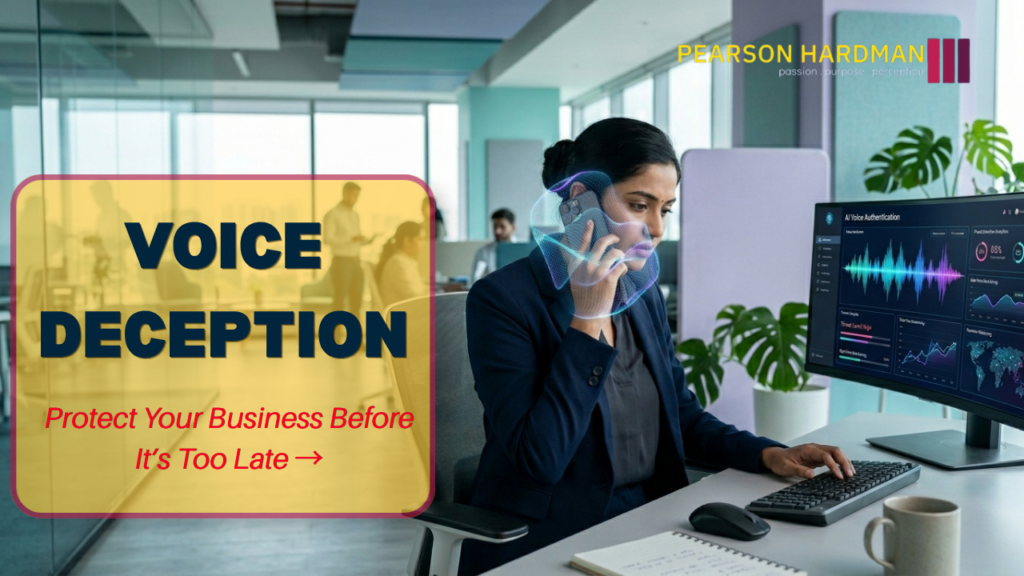
Imagine receiving a call from your CEO. The voice sounds urgent, familiar, and unmistakably real. They ask you to transfer funds immediately or share sensitive company data. Without hesitation, you comply. Minutes later, you realize something is wrong. That voice was never your CEO. It was an AI-generated impersonation.
This is not a hypothetical situation anymore. It is the rising reality of AI voice fraud, commonly known as vishing. As artificial intelligence continues to evolve, cybercriminals are leveraging it to create hyper-realistic voice clones that can deceive even the most cautious leaders and employees. The stakes are high, especially for decision-makers, executives, and organizations handling sensitive data.
In this blog, you will learn what vishing defense truly means in 2026, how AI voice fraud works, why leaders are primary targets, and most importantly, how to build a robust strategy to protect your organization. If you are serious about cybersecurity, brand reputation, and leadership protection, this guide will equip you with practical, real-world insights.
Also Read: The Architecture of Aspiration: Luxury Design Codes
What Is Vishing Defense and Why It Matters in 2026
Vishing defense refers to the strategies, systems, and awareness practices used to protect individuals and organizations from voice-based phishing attacks. Unlike traditional phishing emails, vishing uses phone calls powered by AI voice synthesis to manipulate victims into revealing confidential information or taking harmful actions.
In 2026, the threat landscape has dramatically shifted. AI tools can now replicate a person’s voice using just a few seconds of audio. This makes it incredibly easy for attackers to impersonate CEOs, CFOs, or senior managers. The result is a new level of deception that bypasses traditional security awareness training.
The reason vishing defense is critical today is simple. Trust is being weaponized. Leaders are accustomed to making quick decisions, often based on verbal instructions. Cybercriminals exploit this urgency and authority bias to execute high-value attacks.
For example, a finance manager might receive a call from what sounds like their CEO requesting an urgent wire transfer. The tone, accent, and urgency feel authentic. Without proper vishing defense protocols, the manager may act immediately, leading to significant financial loss.
How AI Voice Fraud Works Behind the Scenes
To understand vishing defense, you first need to understand how AI voice fraud operates. The process is surprisingly simple and highly effective.
Attackers begin by collecting voice samples. These can come from public interviews, webinars, podcasts, or even social media videos. With advanced AI tools, they can generate a voice clone that mimics tone, pitch, and speaking patterns with remarkable accuracy.
Once the voice clone is ready, attackers use VoIP systems to place calls. They often combine this with social engineering tactics. For instance, they may already know internal company processes, employee names, or recent business activities.
This combination of AI-generated voice cloning and psychological manipulation makes vishing one of the most dangerous cyber threats today.
A real-world scenario illustrates this perfectly. In several reported cases, companies have lost millions because attackers impersonated top executives using AI-generated voices. The victims did not question the authenticity because the voice sounded exactly like someone they trusted.
This is why vishing defense must go beyond basic awareness. It requires a multi-layered approach that combines technology, policy, and human behavior.
Why Leaders and Executives Are Prime Targets
Leaders are not just targets. They are high-value targets. Cybercriminals focus on executives because they have authority, access, and influence within an organization.
One major reason leaders are vulnerable is their public visibility. CEOs and founders often speak at events, appear in interviews, and publish content online. While this builds brand authority, it also provides attackers with ample voice data to create realistic clones.
Another reason is decision-making pressure. Leaders are expected to act quickly, especially in high-stakes situations. Attackers exploit this urgency by creating scenarios that demand immediate action, such as financial transactions or confidential disclosures.
Additionally, employees are less likely to question instructions from senior leaders. This hierarchy-based trust becomes a weak point in vishing defense.
For example, if an employee receives a call that sounds like their CEO asking for sensitive information, they may comply without verification. This is exactly what attackers rely on.
To build effective vishing defense, organizations must recognize that leadership visibility comes with cybersecurity risks. Protecting leaders means protecting the entire organization.
The Psychological Tactics Used in Vishing Attacks
Vishing is not just a technical attack. It is deeply psychological. Understanding these tactics is essential for building strong vishing defense strategies.
Attackers often use urgency. They create situations where the victim feels they must act immediately. This reduces the chance of verification or critical thinking.
Authority is another powerful tactic. When a voice sounds like a senior executive, people naturally obey. This is known as authority bias and is a key factor in successful vishing attacks.
Fear and pressure also play a role. Attackers may claim there is a crisis, such as a legal issue or financial emergency. This emotional manipulation makes victims more likely to comply.
In some cases, attackers build trust over time. They may make multiple calls, gradually establishing credibility before making a critical request.
A well-designed vishing defense program must address these psychological triggers. Training employees to recognize manipulation is just as important as implementing technical safeguards.
Building a Strong Vishing Defense Strategy
A robust vishing defense strategy is not built overnight. It requires a combination of policies, technologies, and continuous training.
Establish Clear Verification Protocols
One of the most effective vishing defense measures is implementing strict verification processes. No sensitive action should be taken based solely on a phone call, regardless of who the caller claims to be.
Organizations should establish multi-factor verification for critical requests. For example, any financial transaction request must be confirmed through a secondary channel such as email or an internal system.
This simple step can prevent most vishing attacks.
Invest in Advanced Cybersecurity Tools
Technology plays a crucial role in vishing defense. Modern cybersecurity solutions can detect suspicious call patterns, analyze voice anomalies, and flag potential threats.
Voice biometrics is an emerging technology that can help verify the identity of callers. While not foolproof, it adds an additional layer of security.
Call monitoring systems and AI-based fraud detection tools are also becoming essential for organizations that want to stay ahead of evolving threats.
Conduct Regular Employee Training
Human awareness is the backbone of vishing defense. Employees must be trained to recognize the signs of AI voice fraud and understand the importance of verification.
Training should include real-world scenarios, simulated vishing attacks, and clear guidelines on how to respond.
It is important to create a culture where employees feel comfortable questioning unusual requests, even if they appear to come from senior leaders.
Limit Public Exposure of Sensitive Information
While leaders need to maintain visibility, organizations should be mindful of how much information is shared publicly.
Limiting access to internal processes, employee details, and sensitive data can reduce the effectiveness of vishing attacks.
Additionally, leaders should be aware that their voice recordings can be used for malicious purposes. Taking precautions can significantly enhance vishing defense.
Real-World Examples of AI Voice Fraud
To truly understand the importance of vishing defense, consider how these attacks have played out in real life.
In one widely discussed case, attackers used AI to clone the voice of a company’s CEO. They called a senior executive and instructed them to transfer funds to a specific account. The executive complied, believing the request was legitimate. The company lost a substantial amount before realizing the fraud.
In another scenario, attackers impersonated a legal advisor using AI voice technology. They convinced an employee to share confidential documents, leading to a data breach.
These examples highlight a critical point. Vishing attacks are not limited to financial fraud. They can also result in data theft, reputational damage, and legal consequences.
A strong vishing defense strategy can prevent such incidents and protect both financial and intellectual assets.
The Role of Leadership in Strengthening Vishing Defense
Leadership plays a pivotal role in building an effective vishing defense framework. It starts with awareness and extends to policy enforcement and cultural change.
Leaders must set the tone by prioritizing cybersecurity. When executives take vishing defense seriously, it encourages the entire organization to follow suit.
They should also participate in training programs and demonstrate best practices. This includes verifying requests, avoiding impulsive decisions, and encouraging open communication.
Another important aspect is transparency. If a vishing attempt occurs, it should be reported and discussed openly. This helps the organization learn and improve its defenses.
Ultimately, vishing defense is not just an IT responsibility. It is a leadership responsibility.
Future of Vishing Defense in an AI-Driven World
As AI technology continues to advance, vishing attacks will become more sophisticated. However, the same technology can also be used to enhance defense mechanisms.
AI-powered security systems will play a larger role in detecting anomalies and preventing attacks in real time. Behavioral analytics will help identify unusual patterns and flag potential threats before they escalate.
Regulations and compliance standards are also expected to evolve, requiring organizations to implement stricter cybersecurity measures.
Despite these advancements, one thing remains constant. Human awareness will always be a critical component of vishing defense.
Organizations that combine technology with strong human judgment will be best positioned to להתמודד future threats.
Also Read: Behind the Scenes: Brainstorming Sessions and Agency Culture
Conclusion
The rise of AI voice fraud has transformed the cybersecurity landscape. What once seemed like science fiction is now a daily threat faced by organizations worldwide. Vishing defense is no longer optional. It is a necessity.
By understanding how these attacks work, recognizing psychological manipulation, and implementing strong defense strategies, organizations can significantly reduce their risk. Leaders must take an active role in building a culture of security and awareness.
The future will bring more advanced threats, but it will also offer better tools to combat them. The key is to stay informed, stay vigilant, and never rely solely on trust when verification is possible.
Because in the world of AI-driven deception, even a familiar voice can be a dangerous illusion.